Prague
LockedA rare city-specific geometric language: national modern ornament already behaving like architectural wallpaper.
Open Prague detailModernist origin studies in small batches. This is not final PDP copy. It is a research and concept review surface for choosing believable visual-origin stories before writing polished product descriptions or Print Stories.
Modernist origins / working board
This top board is the art-direction layer. The detailed research remains below, but the decision should be readable here without scrolling through every reference.
These have a specific visual hook and enough place logic to become PDP copy or Print Story foundations.
A rare city-specific geometric language: national modern ornament already behaving like architectural wallpaper.
Open Prague detail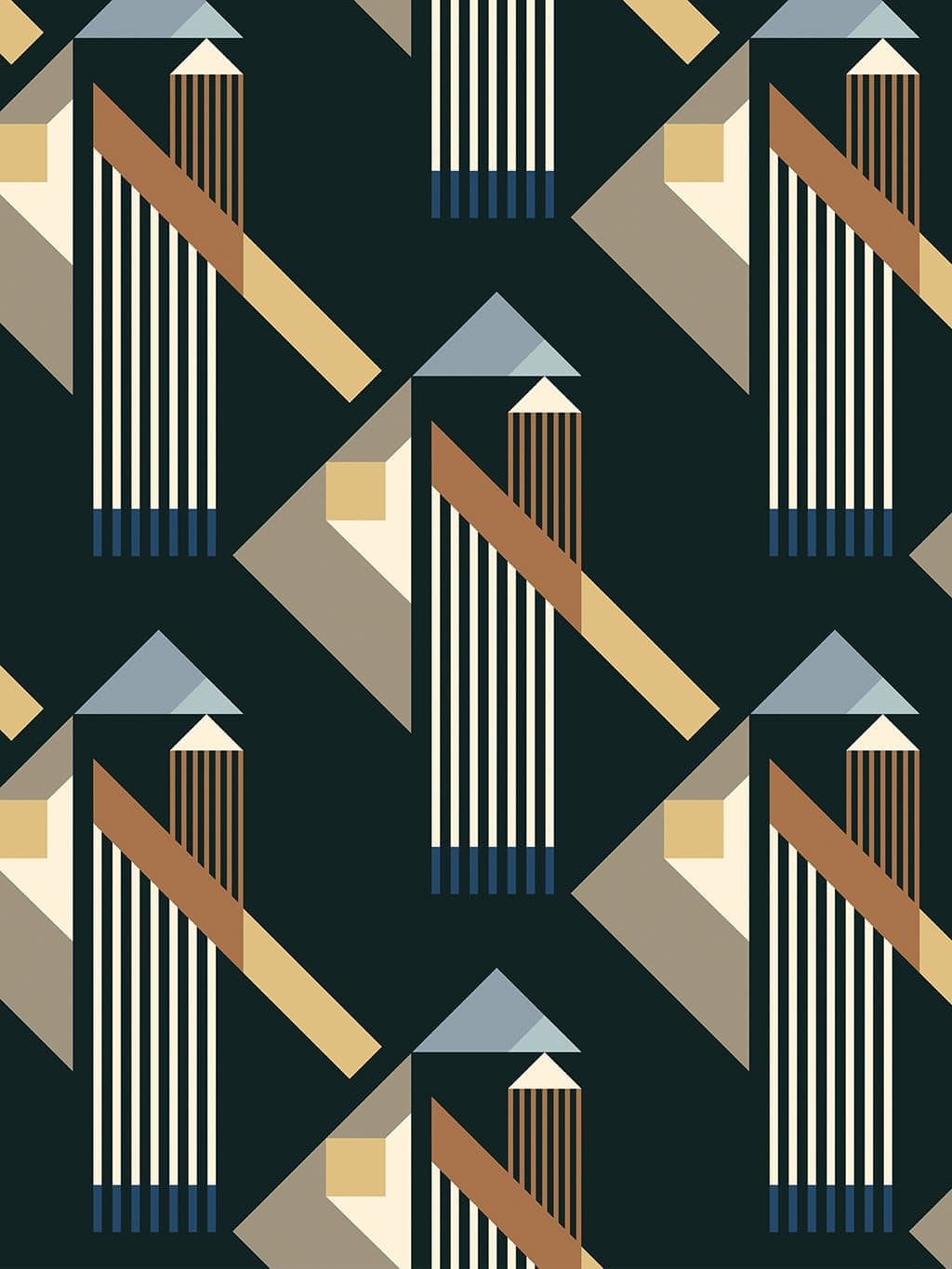
The story feels lived rather than postcard: ancient vertical memory broken into modern paving, steps, fragments, and rhythm.
Open Athens detail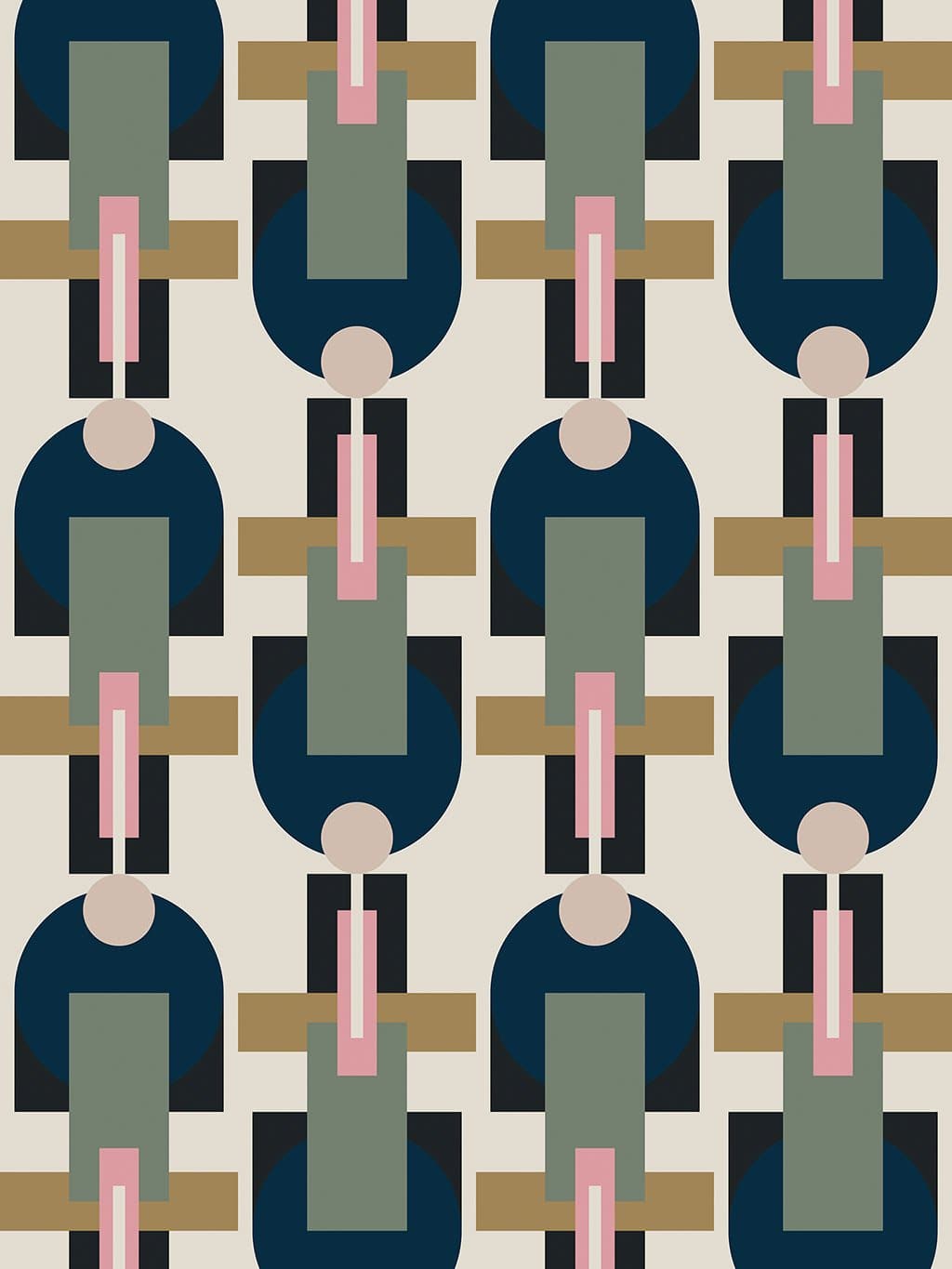
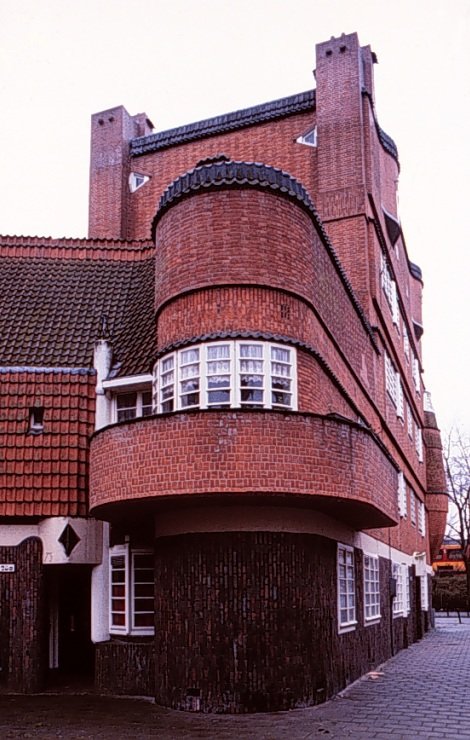
Expressive brickwork, arched detail, and built ornament give the print a believable Amsterdam source.
Open Amsterdam detail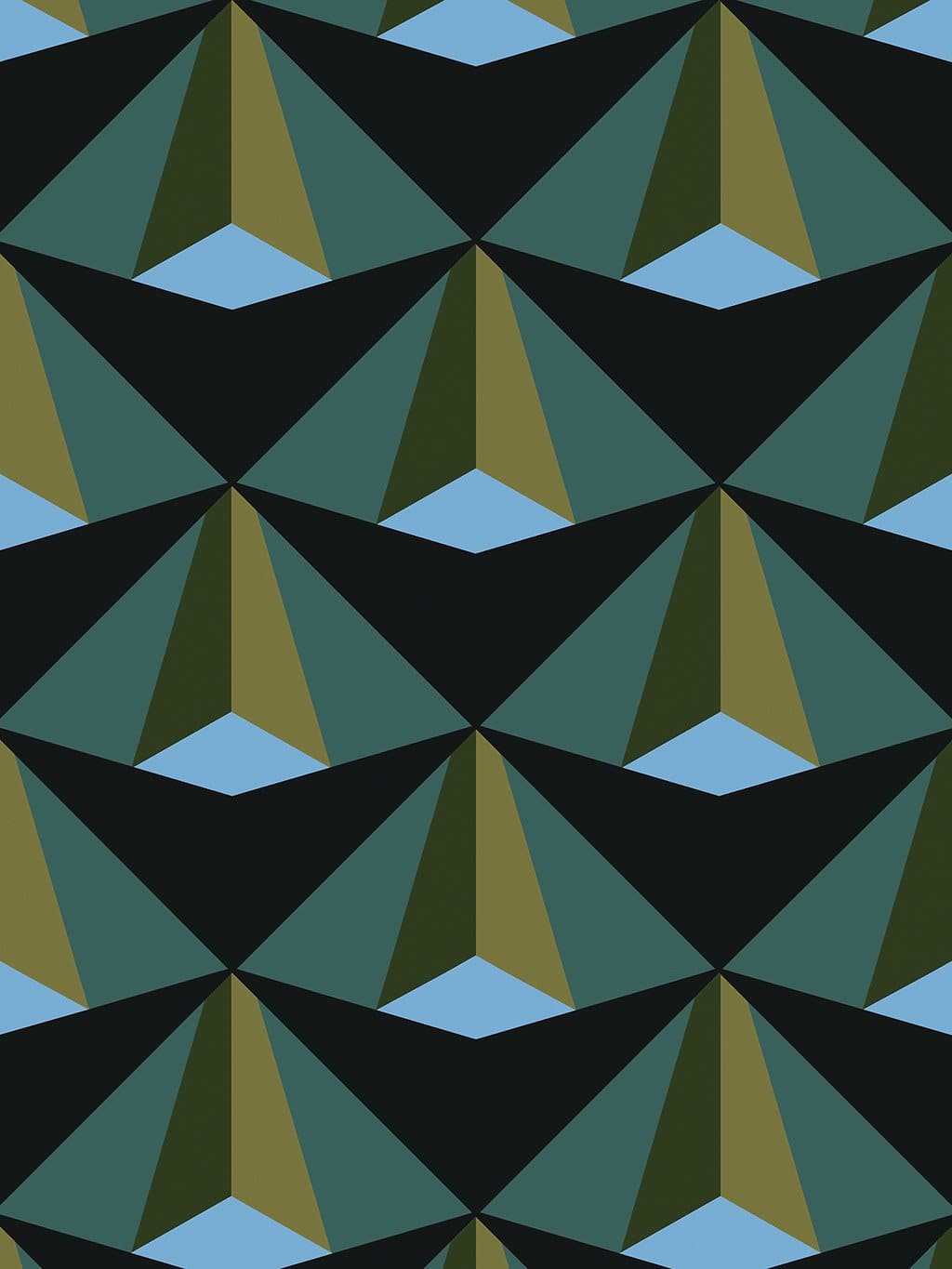
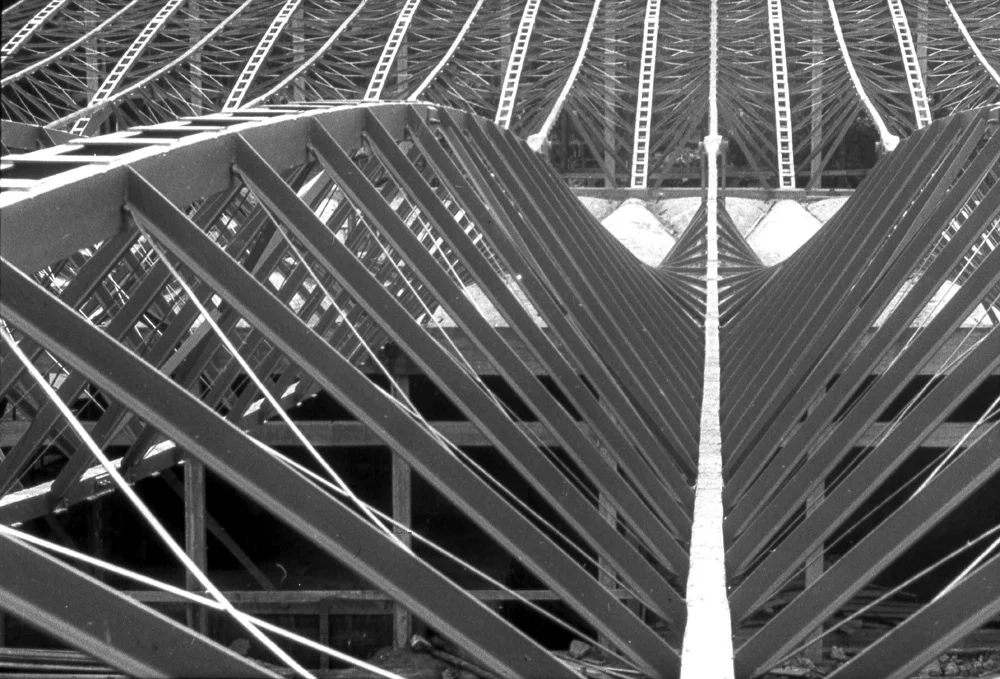
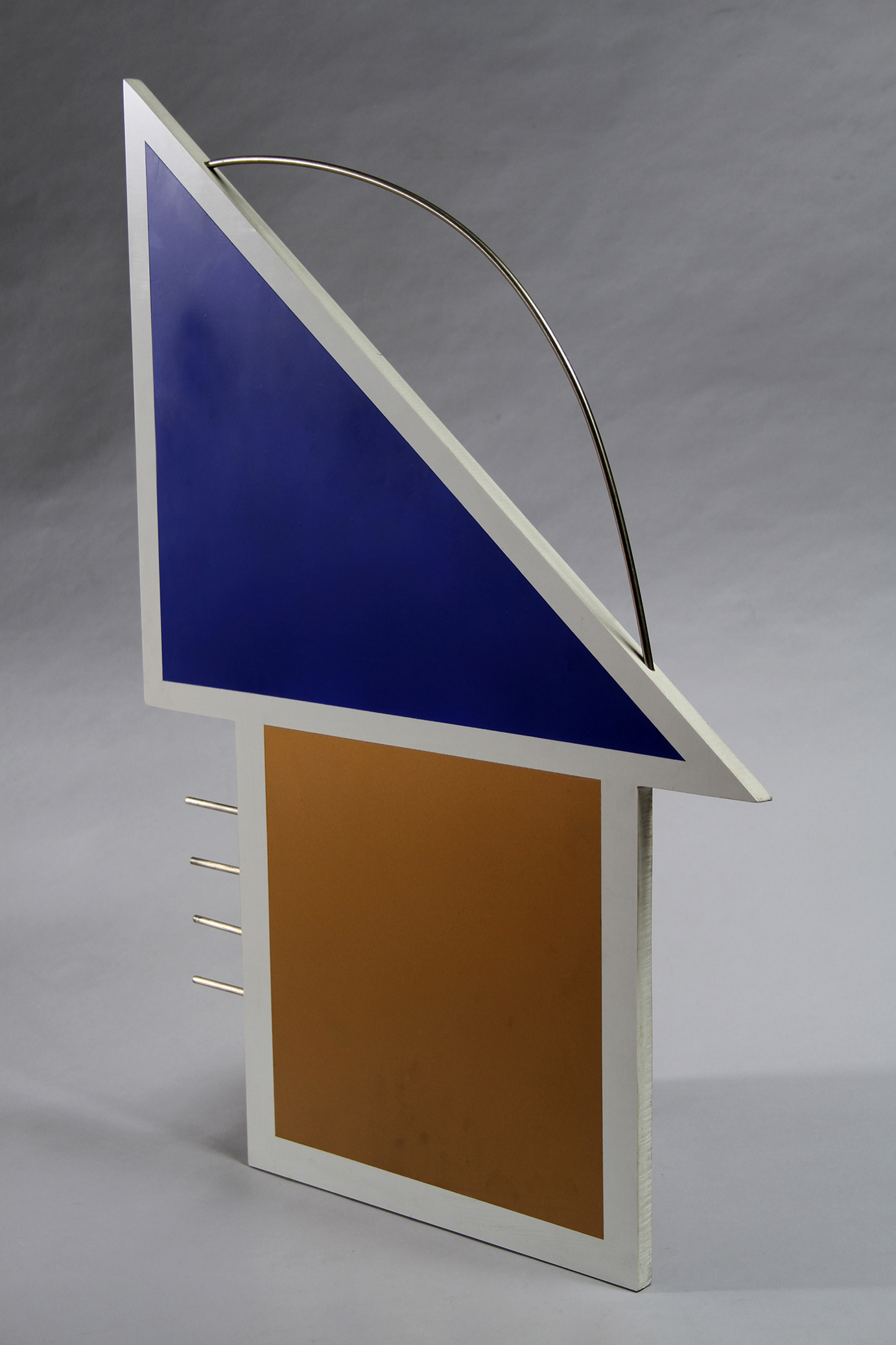
Obscure but strong: a demolished postwar structure whose folded roof gives the print its structural memory.
Open Warsaw detail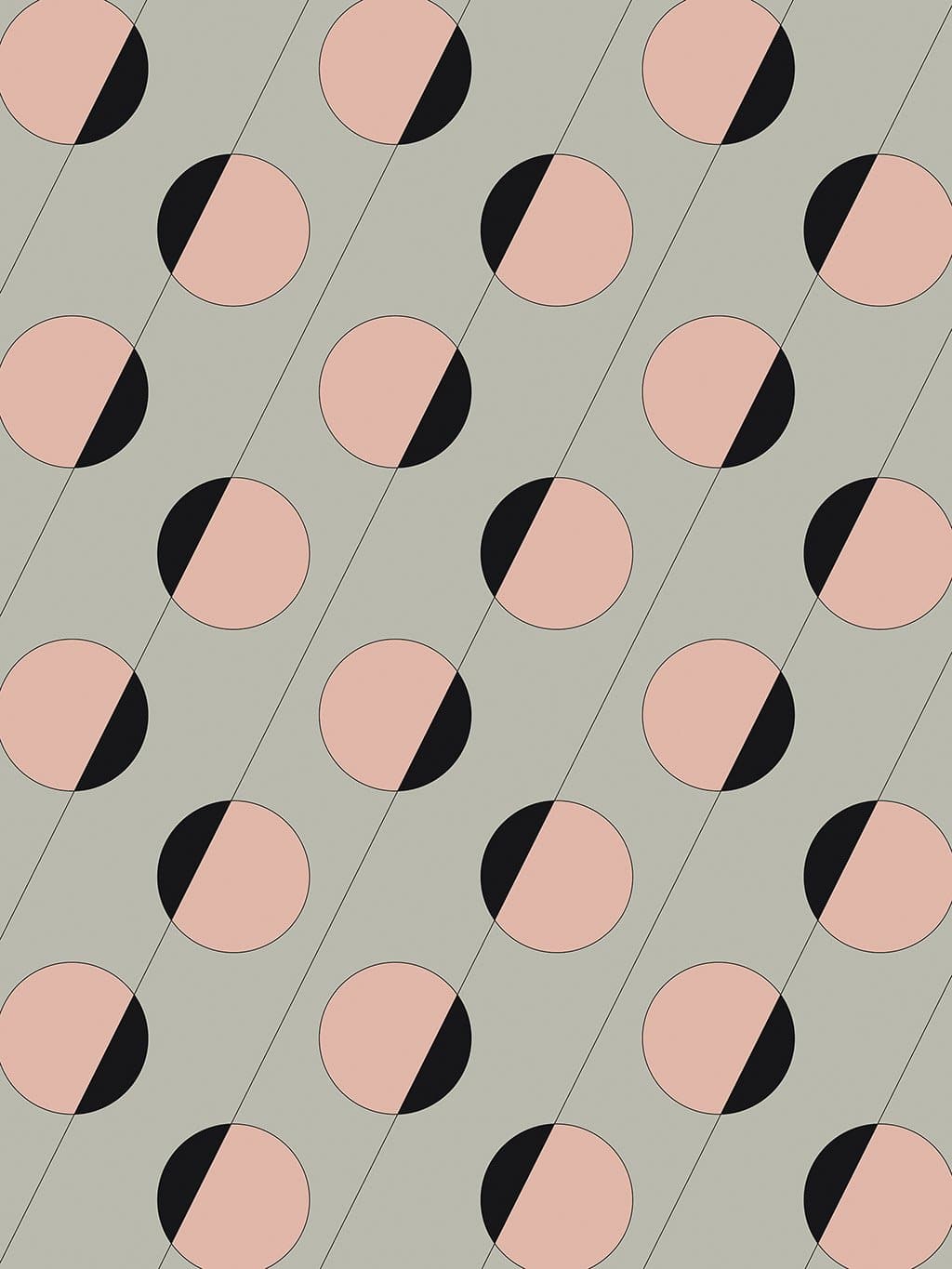
The circles, cuts, and diagonal scoring still read closer to shutter, reel, lens, and projection than to Jacquard weave.
Open Lyon detailThese are not failures. They are approved directions that may have a sharper, less generic version waiting underneath.
Cercle et Carre is real but thin. Delaunay is more useful if the print needs a Paris surface-design lineage.
Open Paris detail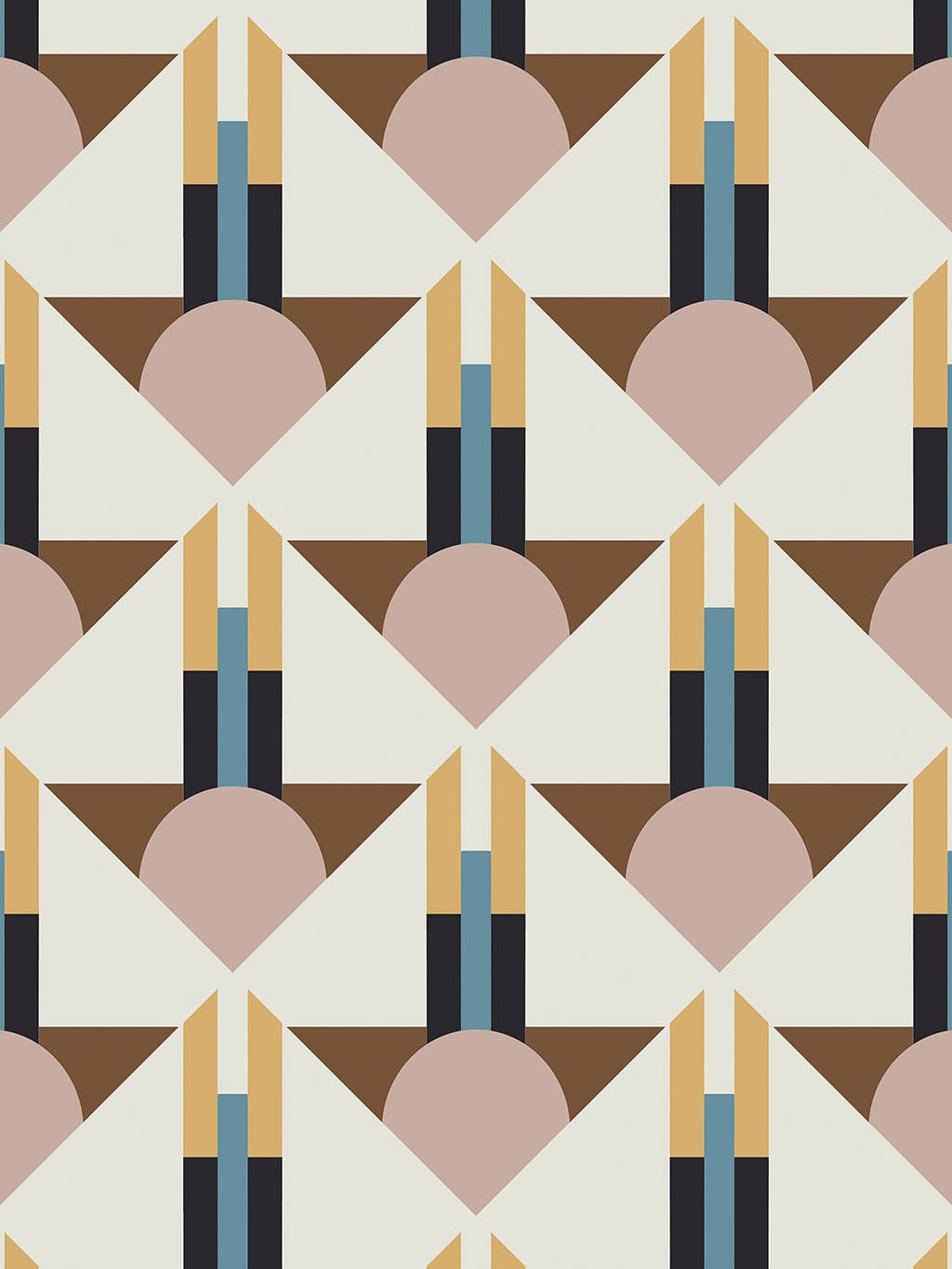
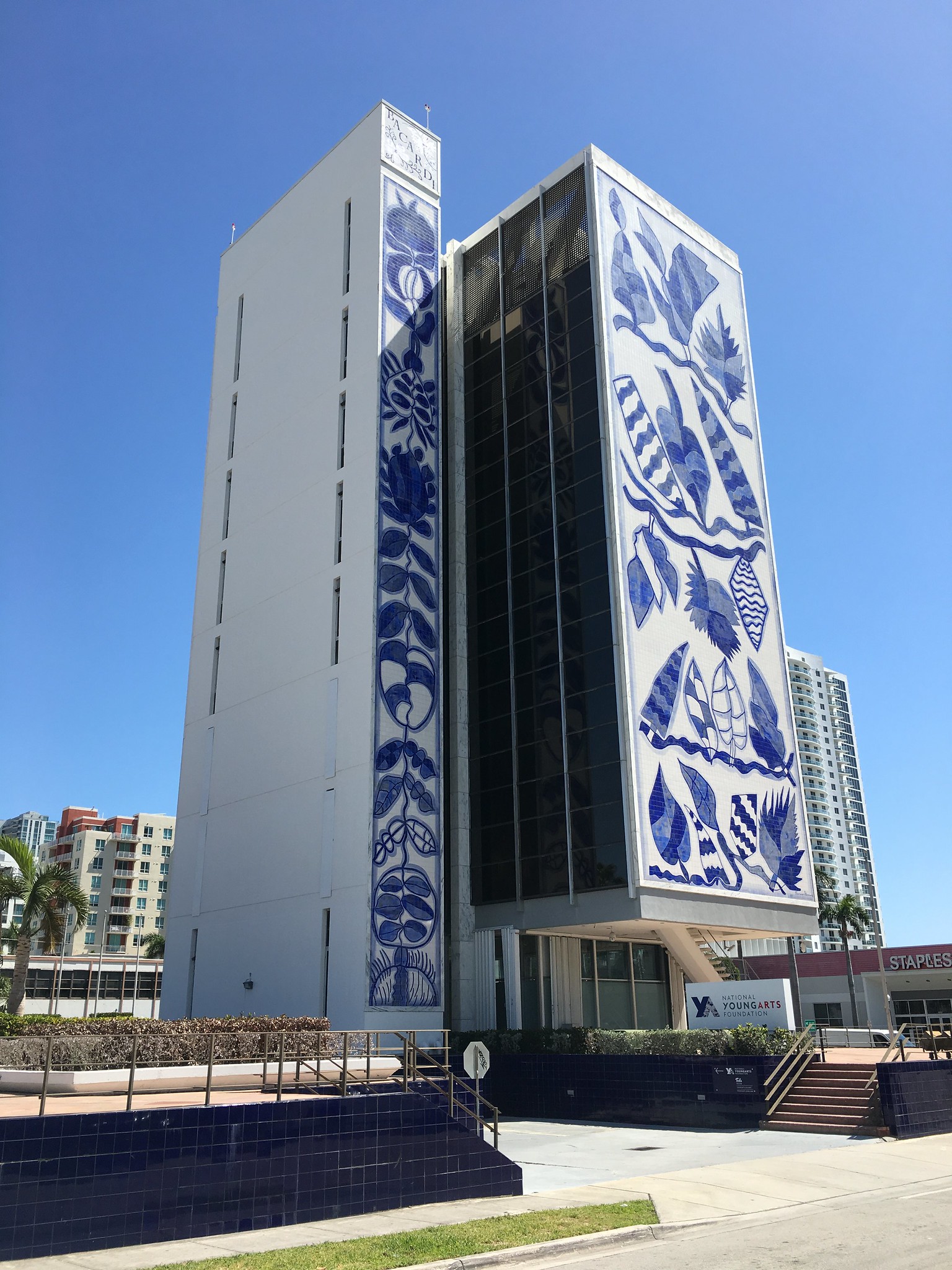
Pastel Deco works as atmosphere, but Lapidus interiors, breeze blocks, or Bacardi mosaic may sell the visual link harder.
Open Miami detail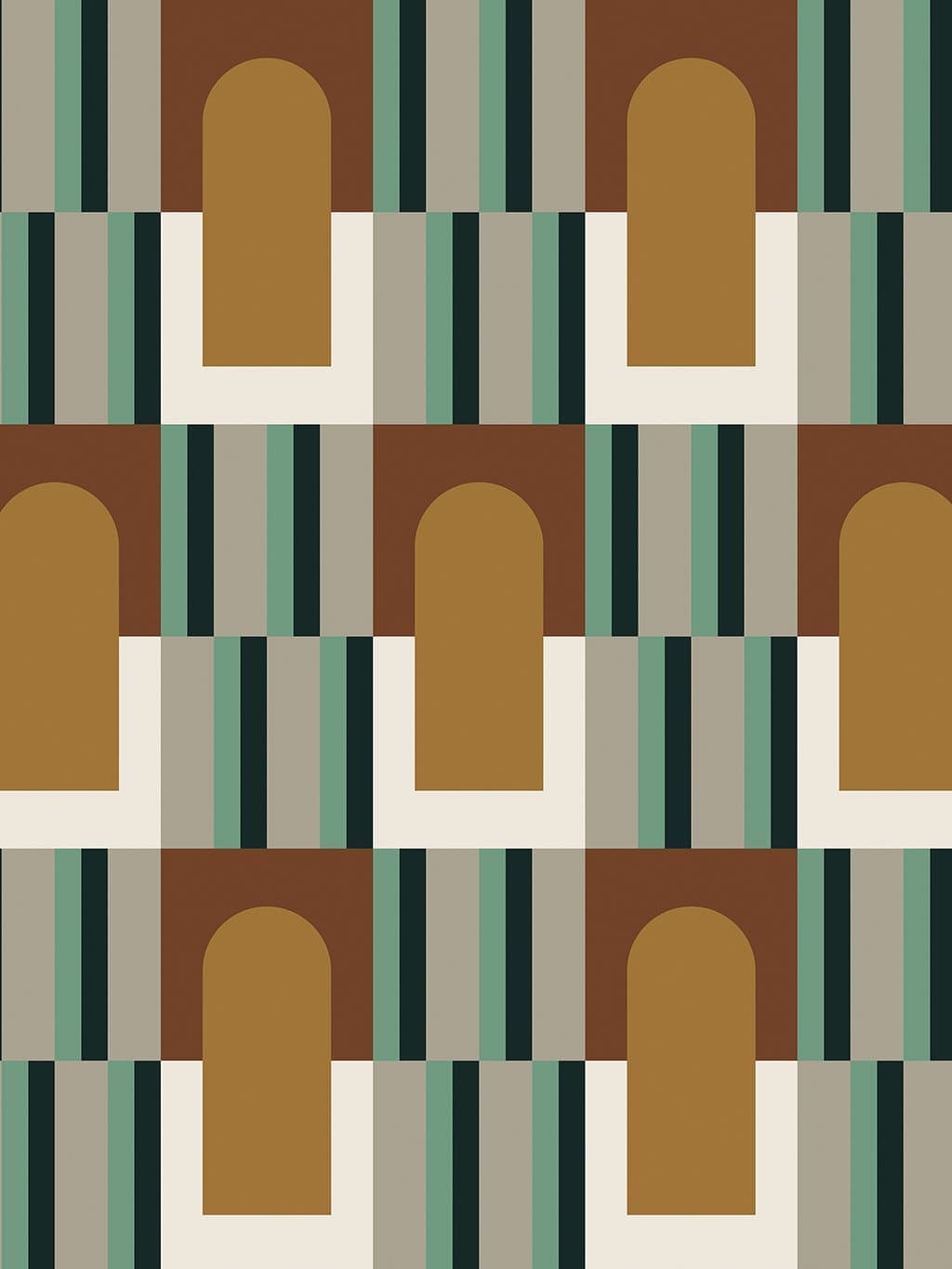
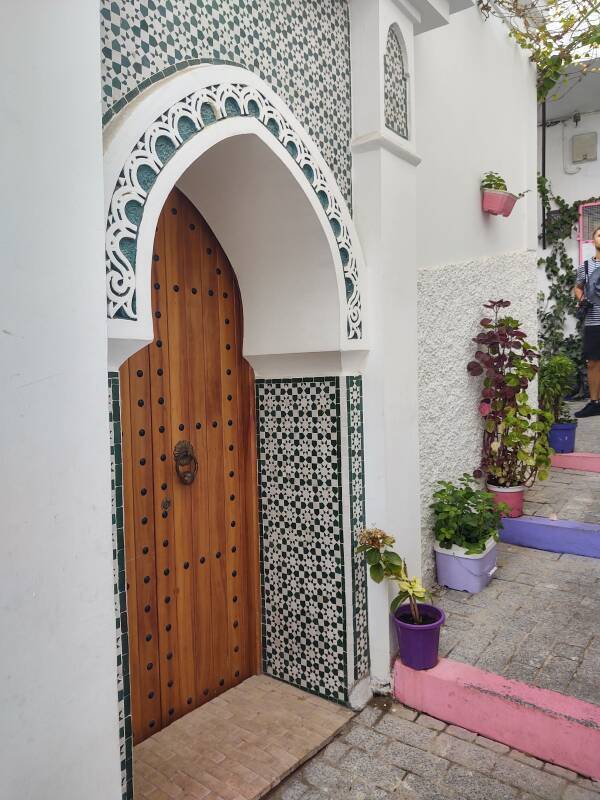
Use the older route: gates, plaster arches, green tile bands, ochre-brown shadow, and striped shade as a Tangier threshold memory.
Open Tangiers detail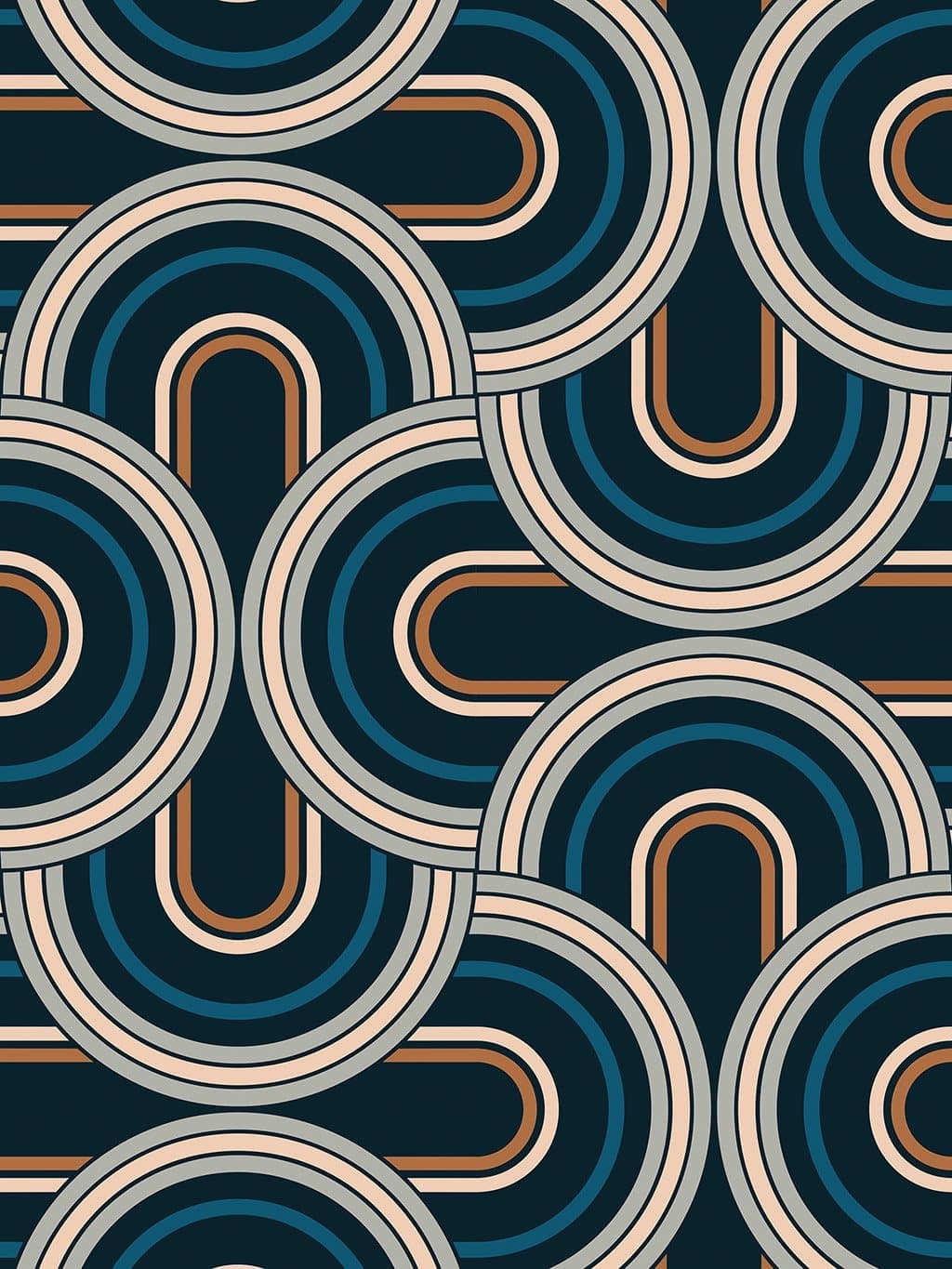

Dancheong is Korean, not uniquely Busan. Gamcheon may connect the print to stacked colour, hillside modules, and city memory.
Open Busan detail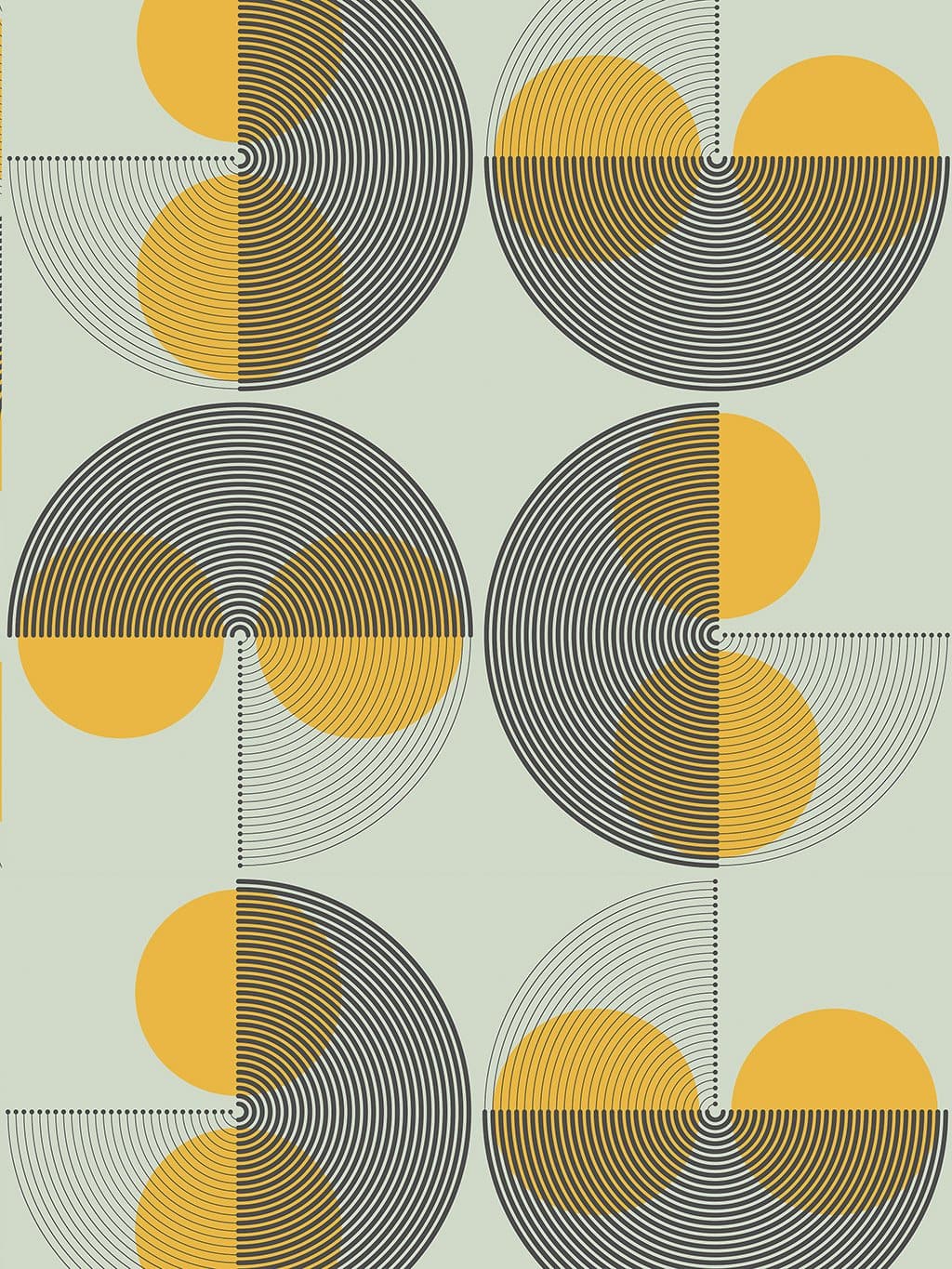
Fresnel is elegant but global. Sea Ranch supergraphics, Asawa loops, or de Young copper screen need a visual test.
Open San Francisco detailKeep these lean. Each needs one convincing image or one better conceptual bridge before it deserves a full story.
These can stay in the archive of thought, but they should not dominate the dashboard unless new visual evidence appears.


Pale grey-green ground with repeated peach circles, each partly cut by a black segment. Thin diagonal lines run through the field and set the circles into a stepped, slanting cadence. The design is clean and spare: circles, cuts, and diagonal scoring rather than a dense all-over structure.
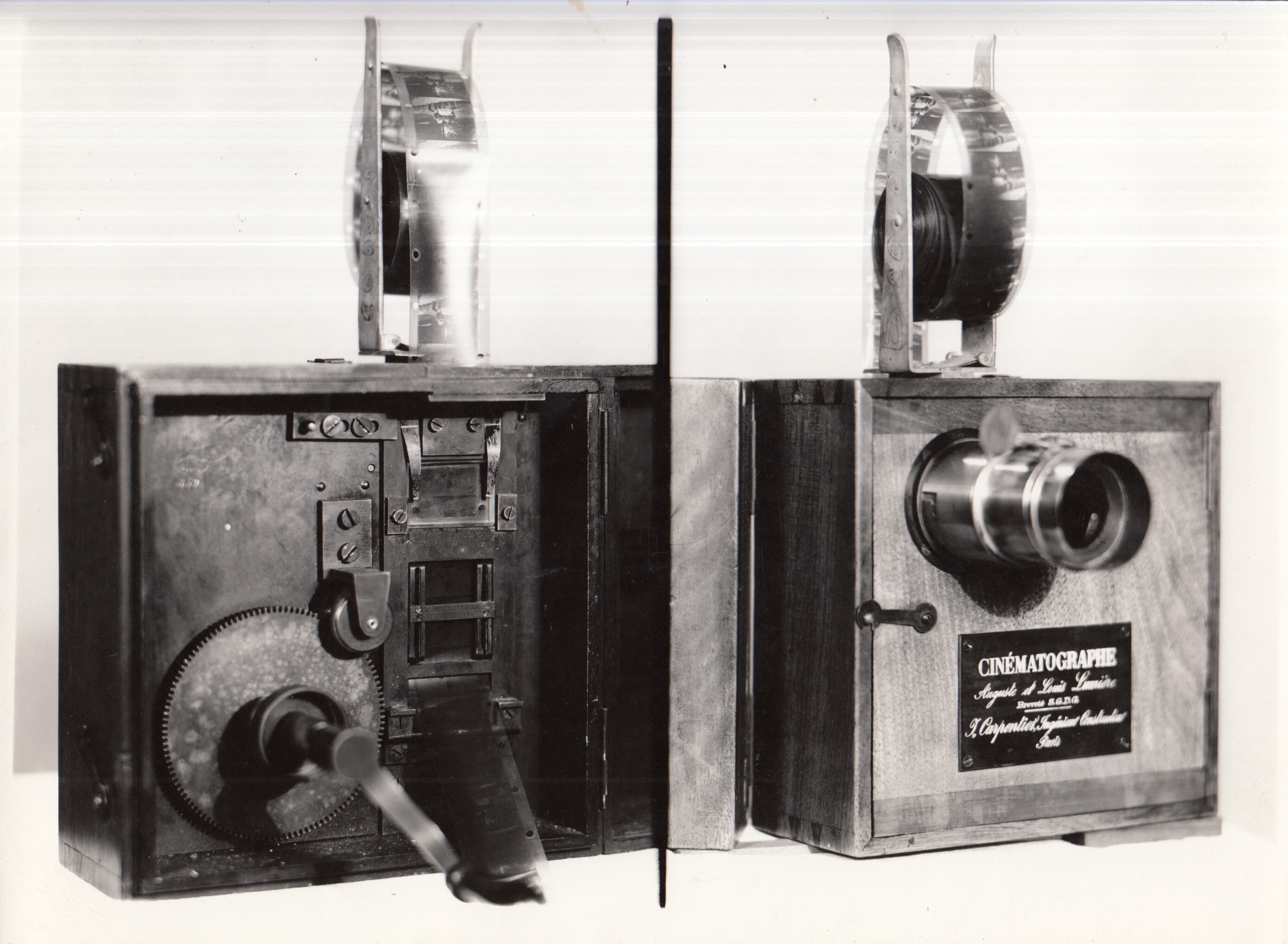
Jacquard is probably too far away as the lead. The closer Lyon hook is Lumiere and the birth of cinema: circular reels and lenses, a shutter-like black interruption, and diagonal projection lines moving across a pale ground. The print feels less like woven instruction and more like a quiet optical machine.
Peach circles with black cut-outs, diagonal guide lines, soft grey-green ground.
Real reference: lens, reels, shutter mechanics, black casing, and early projection apparatus.
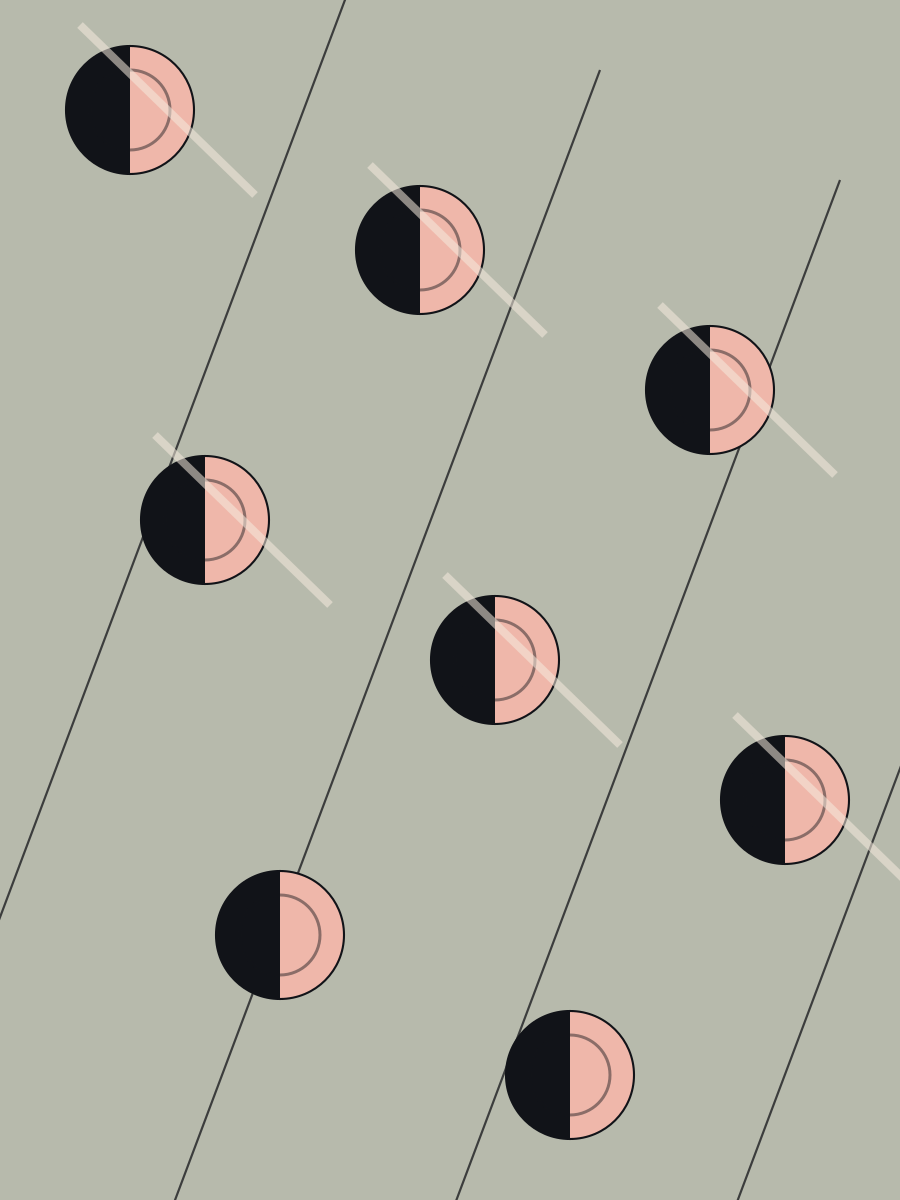
Fabricated review image: reels, shutter cuts, and projection lines pushed toward the print's rhythm.
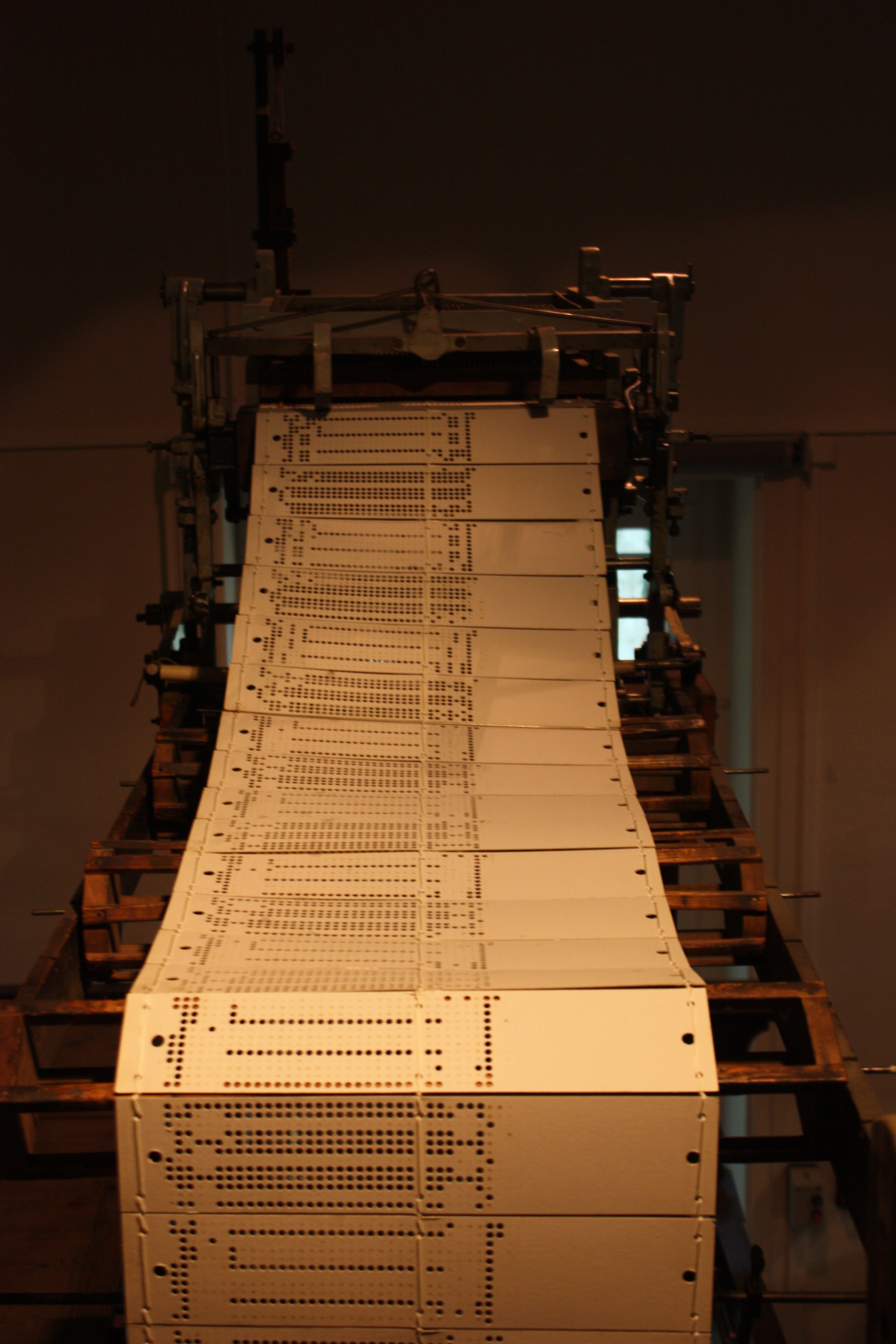
Real reference: still city-specific, but visually more distant than the Lumiere / optical route.
Lumiere projection afterimage. This is a stronger candidate than Jacquard because it uses what the print actually shows: discs, shadow cuts, diagonal optical movement, and a calm mechanical rhythm. It is Lyon-specific without forcing silk history onto a pattern that does not quite behave like weaving.
Repeat measurement not verified. Exact official colour taxonomy not verified. Direct Jupiter10 design intent not verified. Lumiere route is a concept hypothesis, not a factual origin claim.
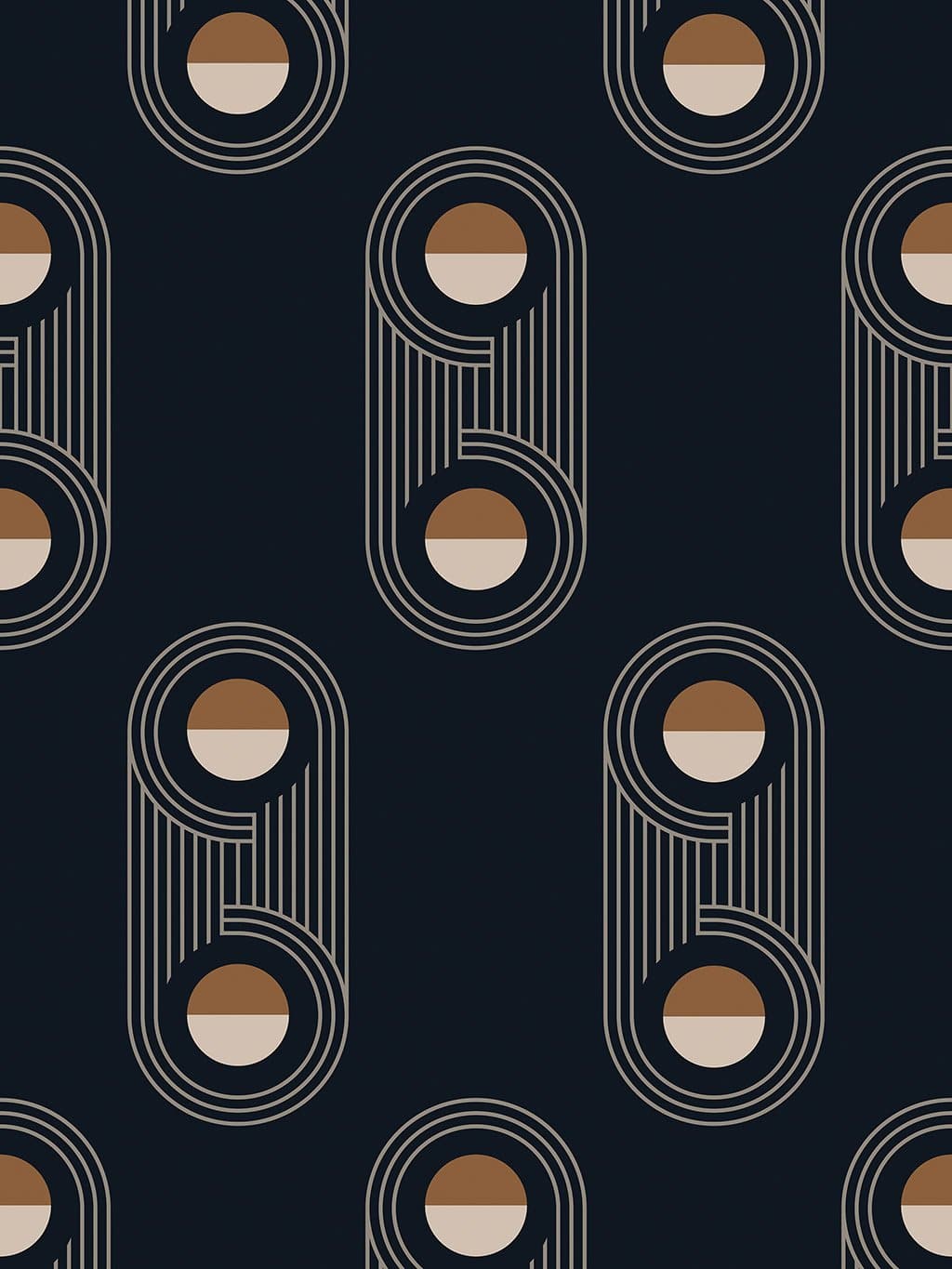
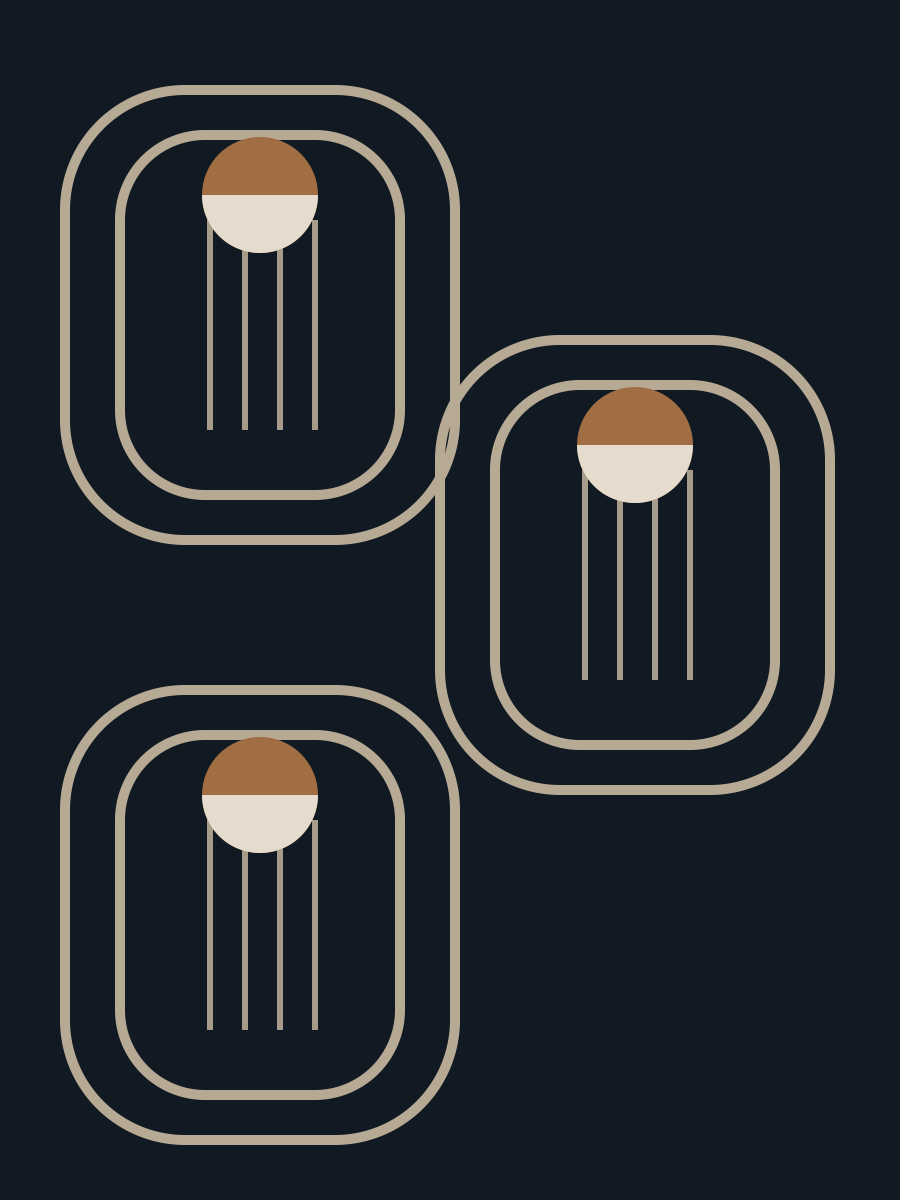
Dark navy ground with repeated tall looped forms. Each motif is made from nested cream linework, vertical bars, and circular inserts split between warm brown and pale cream. The rhythm is upright and spacious, with the motifs sitting apart rather than forming a continuous stripe.
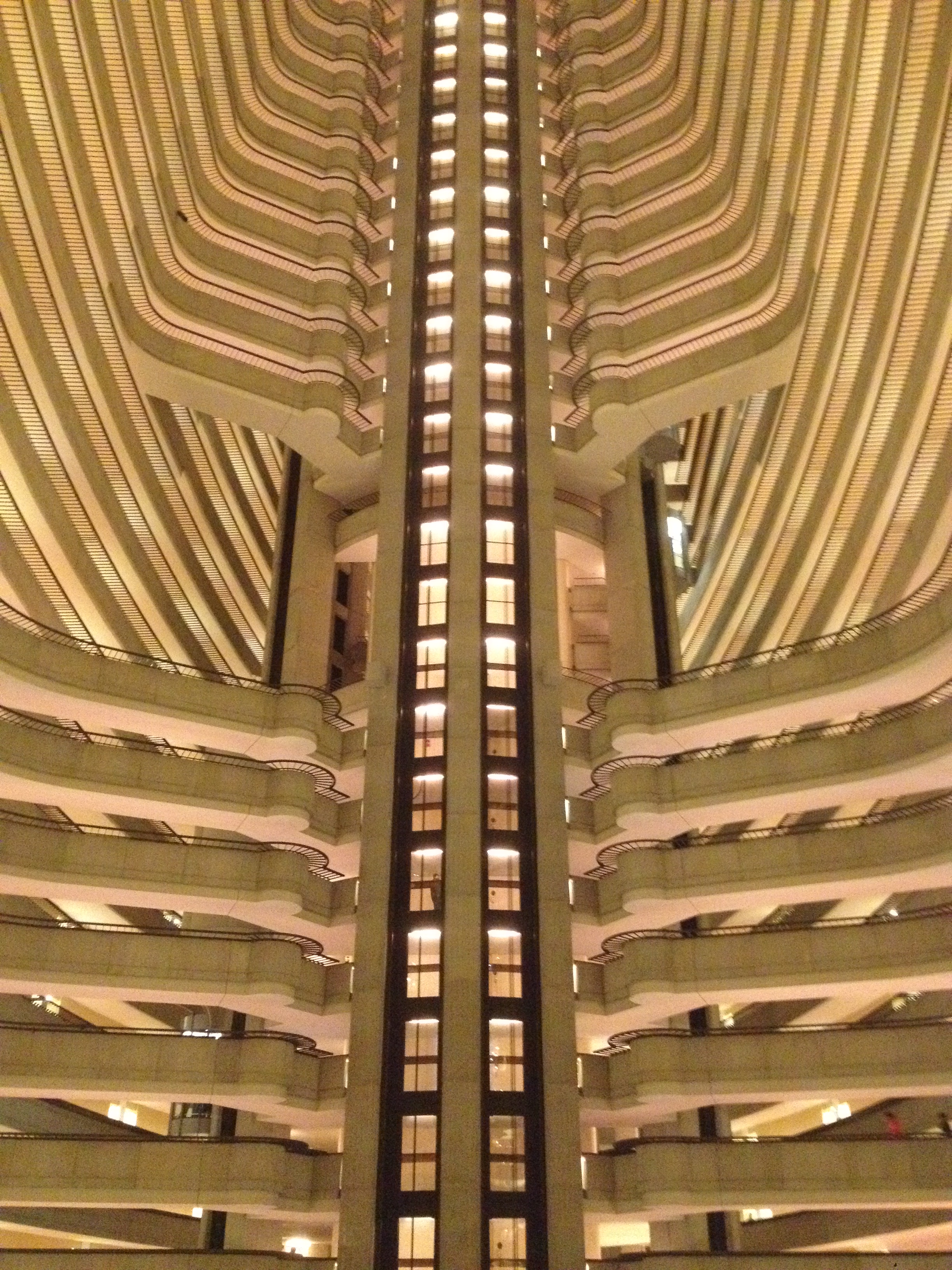
The Atlanta hook remains John Portman's atrium language, but it is not locked as a wow route. It gives a believable structure: long vertical voids, stacked balconies, elevator shafts, and rounded internal edges. The print can carry the memory of looking up inside a downtown atrium, where loops, ribs, and circular elevator cores become a repeating wall rhythm.
Tall looped motifs, nested lines, vertical ribs, circular warm/pale inserts.
Real reference: stacked balconies, vertical rise, central shaft, and curved internal ledges.
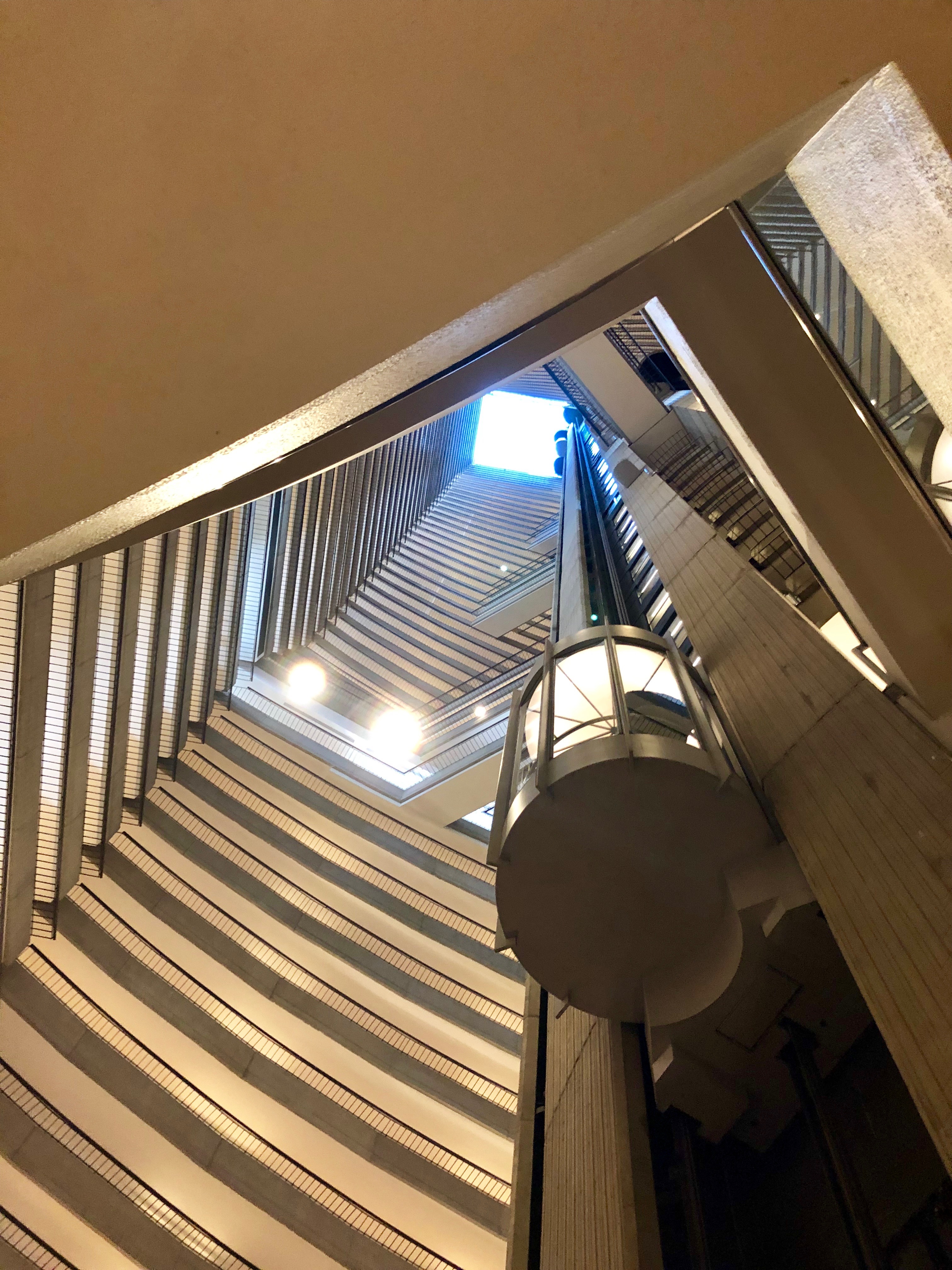
Real reference: cylindrical elevator core, vertical ribs, open height, and repeated balcony edges.
Fabricated review image: Portman atrium loops reduced into nested linework and circular cores.
Portman atrium loops, for now. This is visually defensible: the print's nested loops, vertical ribs, and circular cores speak in atrium language. It gives Atlanta a genuine design-led origin, but it is not yet at the level of Prague or Athens. Keep it as the current best while we allow a better Atlanta object to surface.
Repeat measurement not verified. Exact official colour taxonomy not verified. Direct Jupiter10 design intent not verified. Portman route is a concept hypothesis, not a factual origin claim.
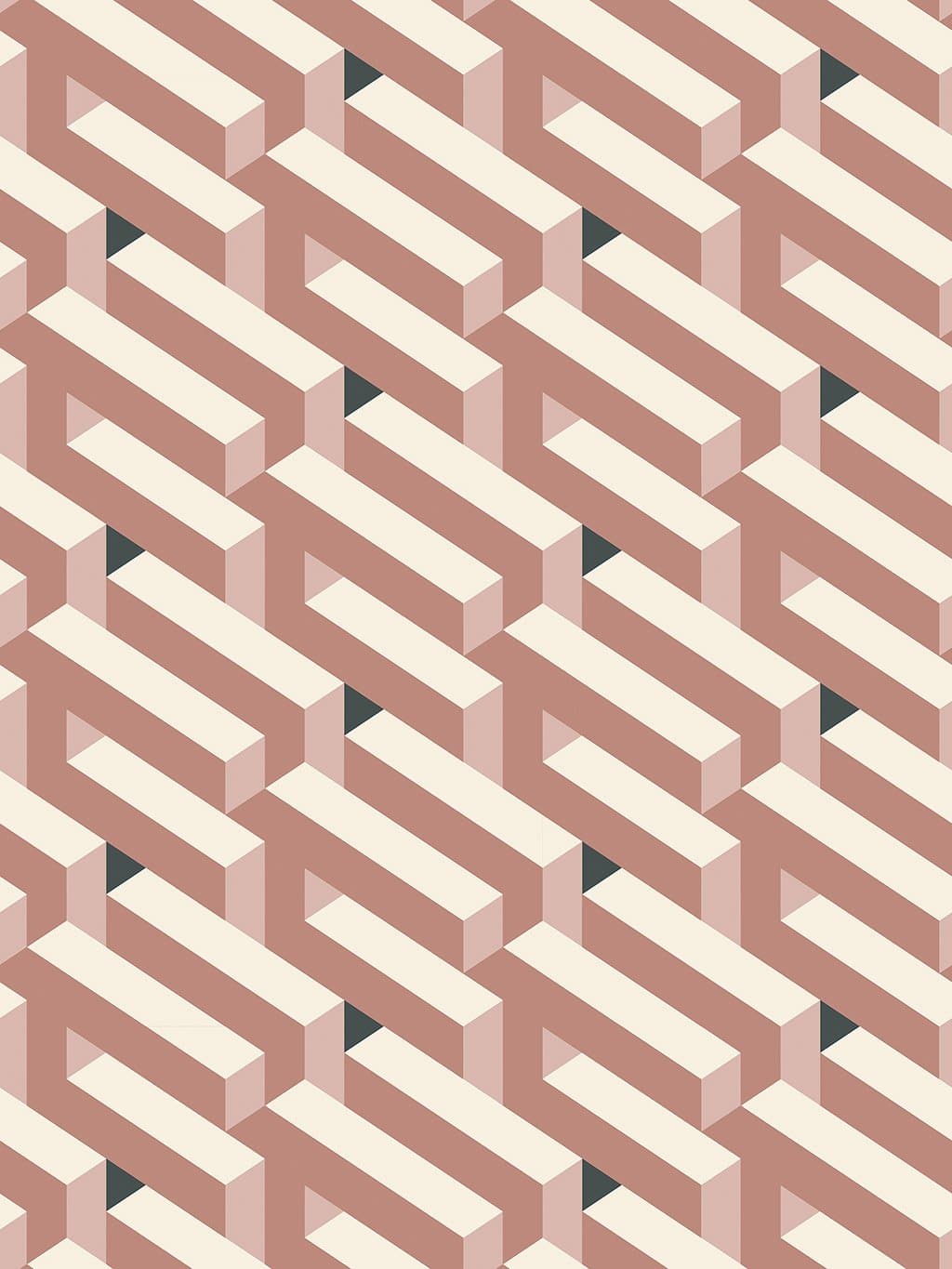
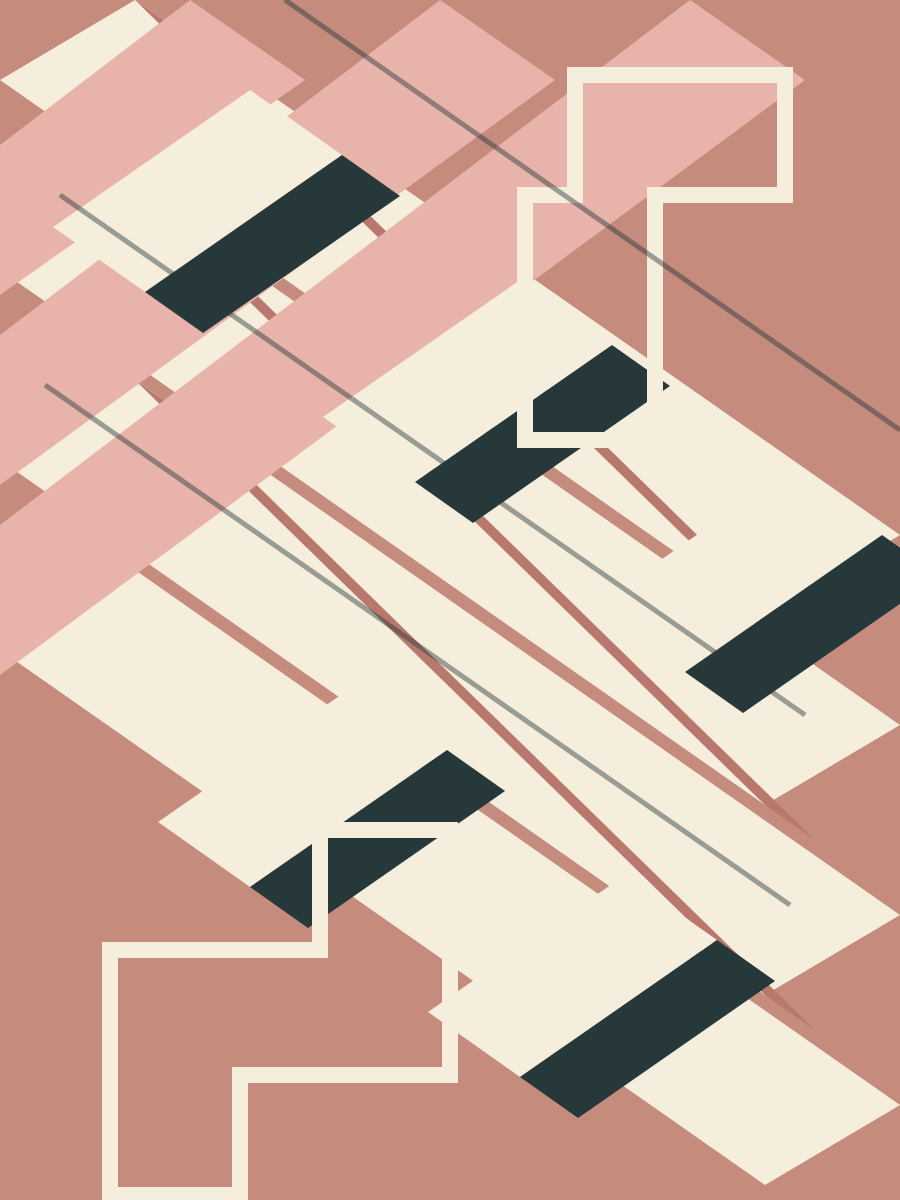
Interlocking cream and dusty rose forms create a repeated three-dimensional weave. The shapes read as beams, frames, and folded blocks, with small dark triangular voids appearing where the structure opens. The surface is ordered, architectural, and optical, built from repeated mass and gap.
Banco de Londres is now parked. The better Buenos Aires test is Argentine geometric abstraction: Madí and Arte Concreto-Invención, where shaped frames, interlocking planes, polygons, relief objects, and invented structures were treated as art in themselves. This is closer to the print's impossible-beam logic than the building reference.
Dusty rose and cream interlocking beams with repeated dark voids.
Real reference: irregular frame, geometric planes, object-painting logic, and playful structural invention.
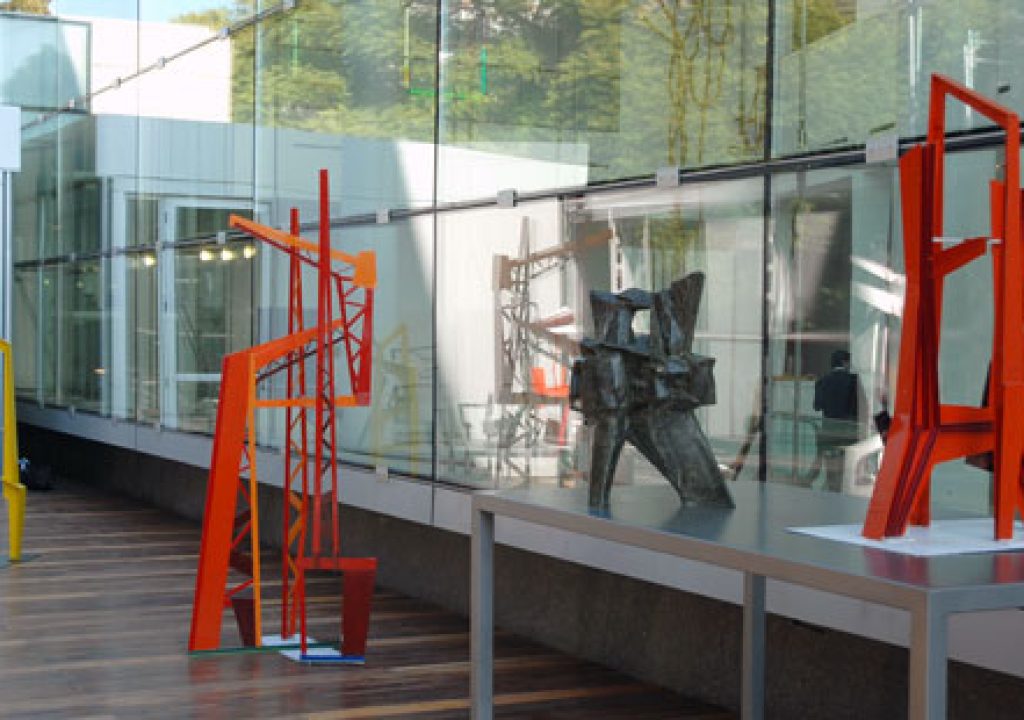
Real reference: open geometric frames, angled supports, urban projection, and sculpture as constructed drawing.
Fabricated review image: cut-frame geometry pushed toward the print's dusty rose, cream, and dark void system.
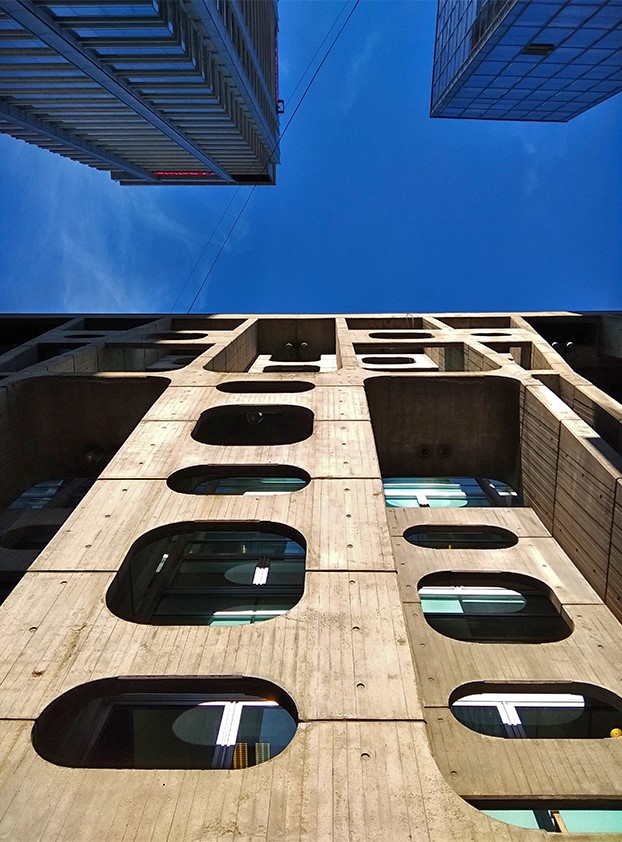
Rejected for now: strong building, but the reference still does not explain the print with enough surprise or closeness.
Madí cut-frame architecture. This is the better next test. It keeps Buenos Aires in a real modernist/concrete-art world and explains the print through invented geometry, cut frames, interlocking planes, and object-like structure. Banco de Londres is parked as no pass for now.
Repeat measurement not verified. Exact official colour taxonomy not verified. Direct Jupiter10 design intent not verified. Madí / Arte Concreto route is a concept hypothesis, not a factual origin claim. Banco de Londres is no pass for now.
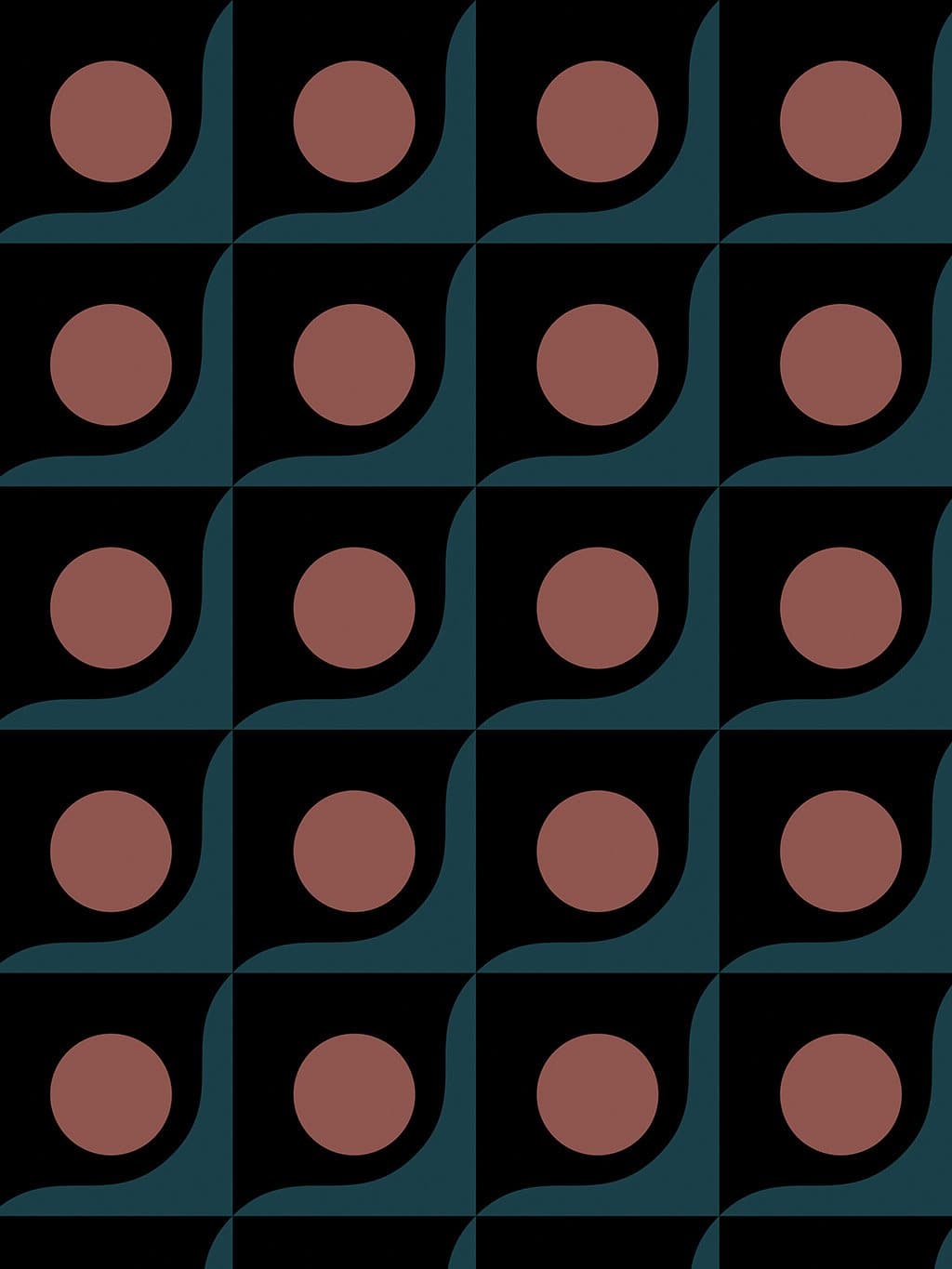
Deep black square modules repeat in a strict grid. Each cell carries a teal curved sweep along one edge and a muted rose circle held inside the dark field. The design is not a dot pattern alone; it is a tiled curve-and-roundel system, with the circle and the curling teal form acting together.
Antwerp is parked. The tile / Art Nouveau and De Roos routes have partial visual relationships, but neither creates the immediate hook needed for a believable Print Story foundation. Keep these notes only as discarded research unless a much stronger visual object appears.
Black tile cells, teal curling forms, rose circular roundels, repeated modular order.
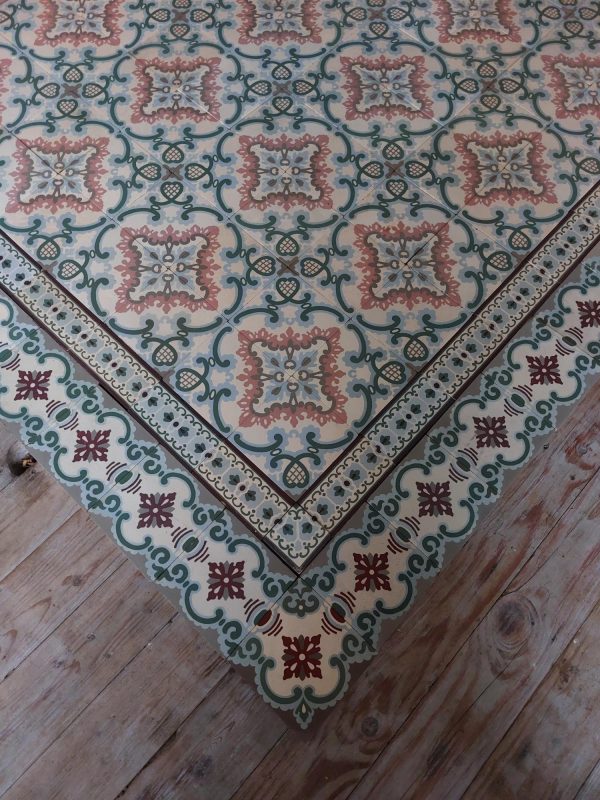
Real reference, rights not cleared: reclaimed Belle Epoque floor near Antwerp with curves, pink/green/black palette, and four-tile tessellation logic.
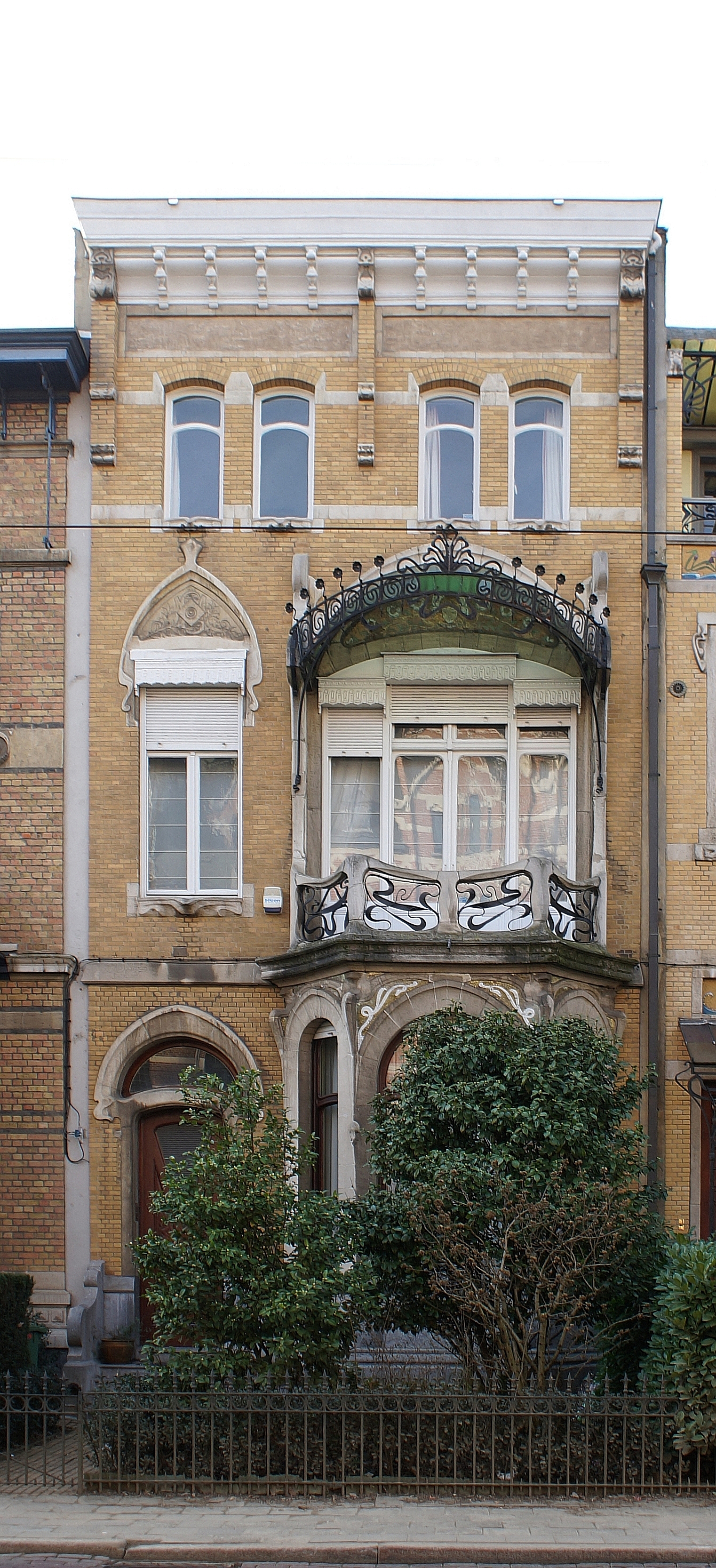
Real reference: Antwerp, Cogels-Osylei 46. The rose/canopy idea is more specific than broad Art Nouveau, but still needs scrutiny.
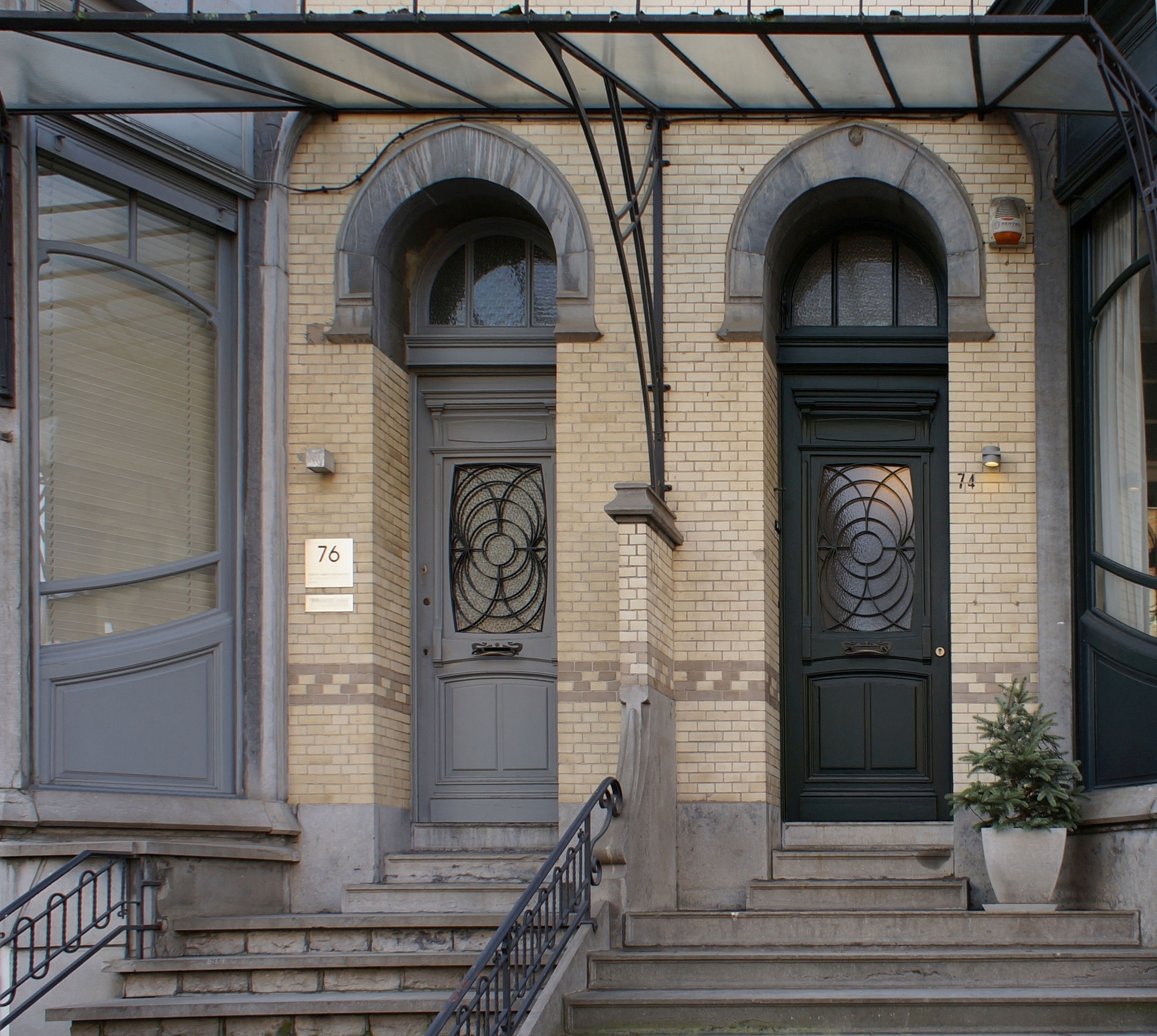
Real reference: Antwerp Art Nouveau threshold language, curved frames, dark joinery, and decorative enclosure.
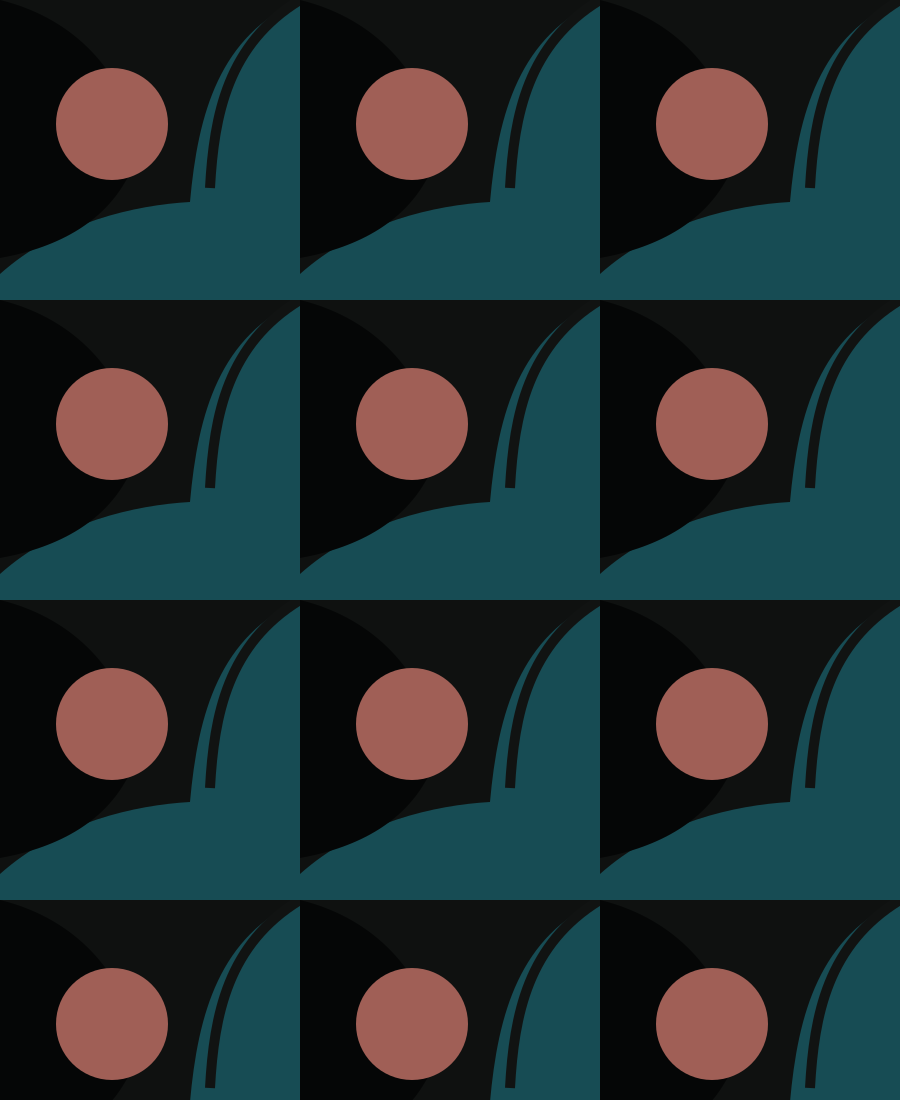
Fabricated review image: Antwerp tile curves and roundels pushed toward the print's teal, black, and rose system.
Parked. The Zurenborg tile story is too weak, and De Roos does not convince as a visual hook. Do not develop Antwerp until a stronger, more immediate source is found.
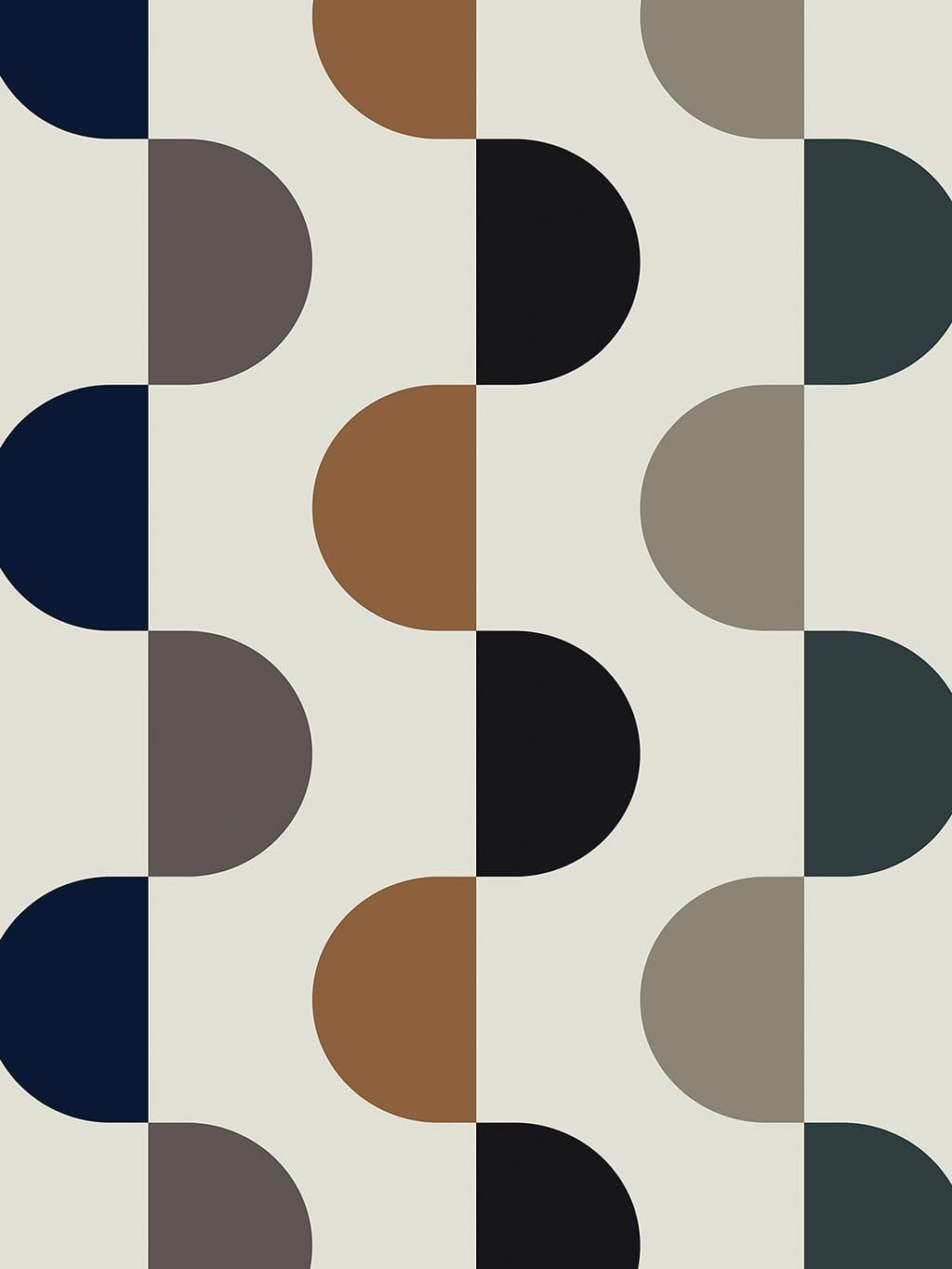
Cream ground divided into vertical bands. Large half-circles and quarter-circles sit against the band edges in navy, caramel brown, grey, black, and dark green. The rhythm is clean, architectural, and modular, with rounded forms interrupting a very disciplined rectangular order.
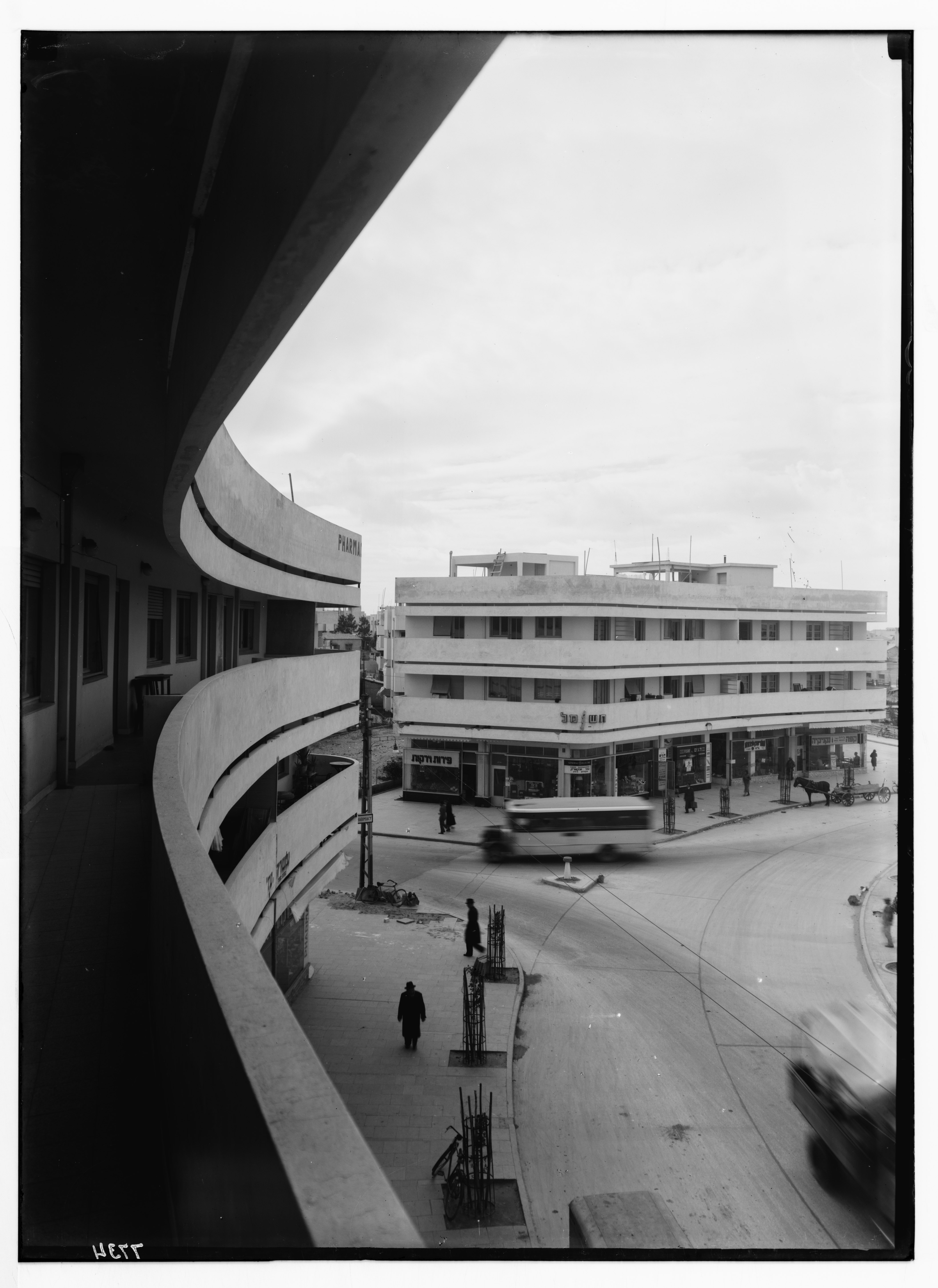
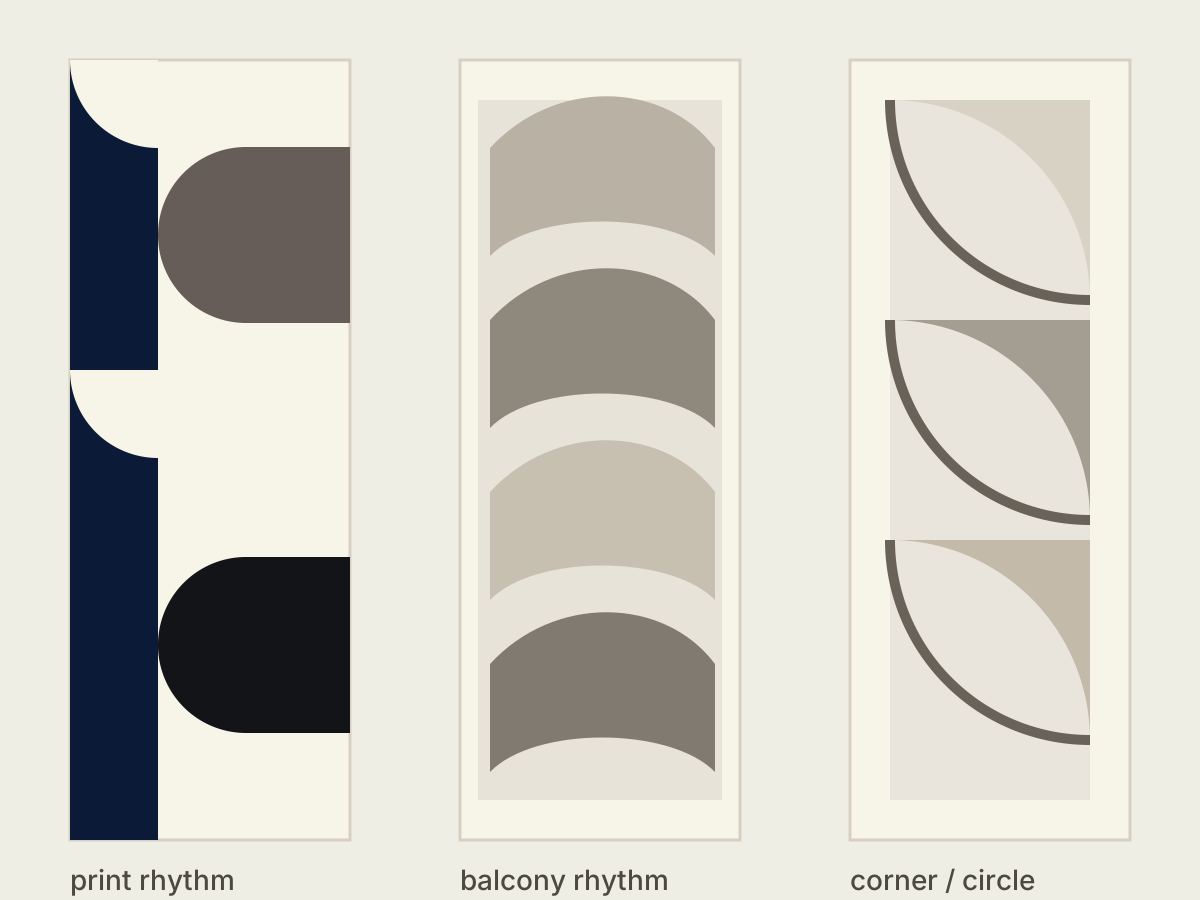
The generic White City balcony route was too weak when treated as one loose reference. The stronger logic is a repeated Tel Aviv semi-circular grammar: Dizengoff Circle's circular balconies, Bialik-area rounded balconies, curved corner buildings, shade-making balcony fronts, and the civic circle itself. The print can carry that rhythm through the whole surface rather than pointing to one facade.
Cream bands, half-round colour forms, dark shadow modules, caramel and slate blocks.
Real reference: round balcony edges, cream facade, repeated curved shadows.
Real public-domain reference: 1934-1939 circular balconies, stronger and more specific than the generic balcony route.
Fabricated review diagram: half-round balcony, rounded corner, and print module treated as one repeat language.
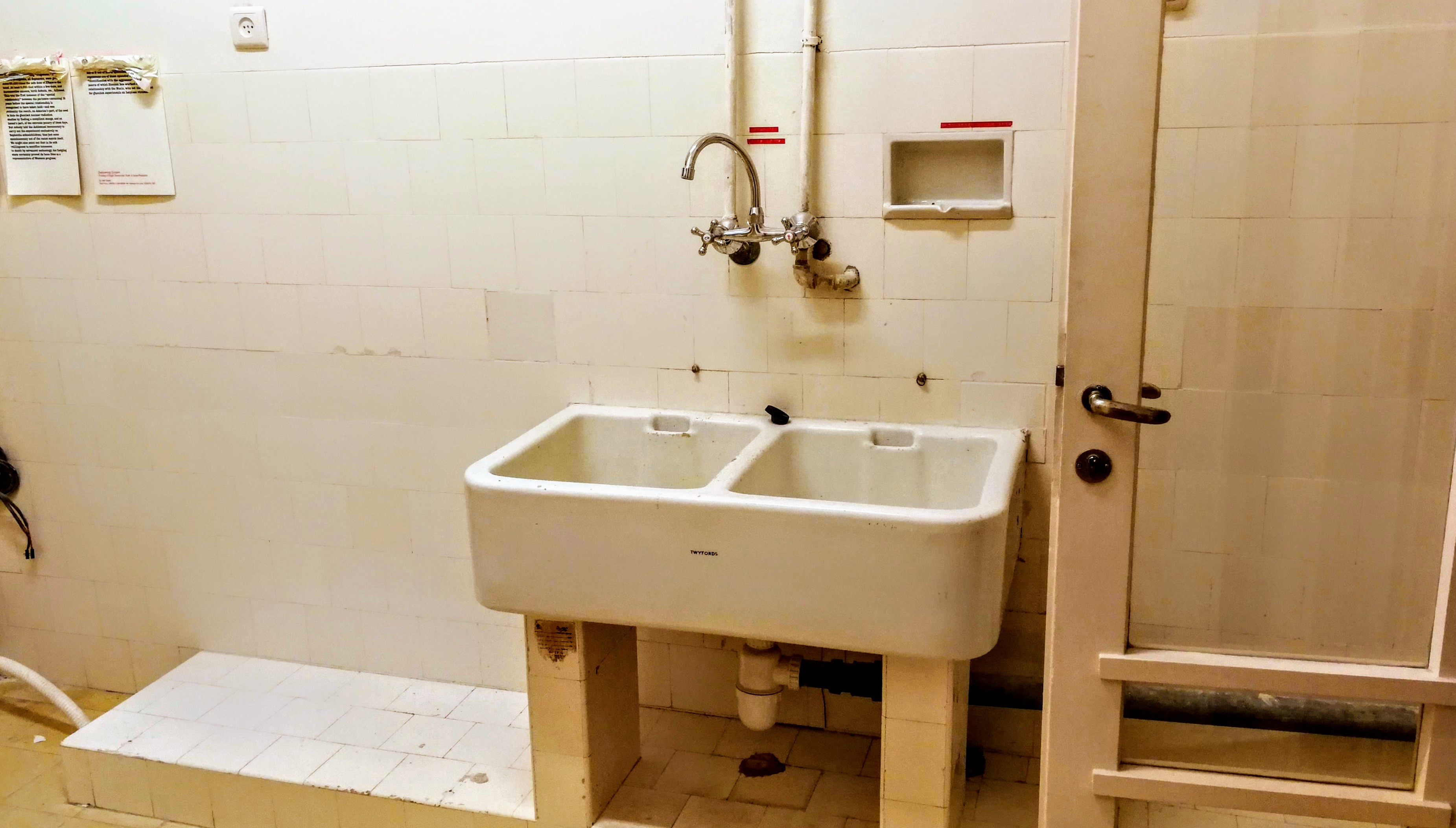
Real reference: White City modernism, recessed openings, rounded internal details, cream architecture.
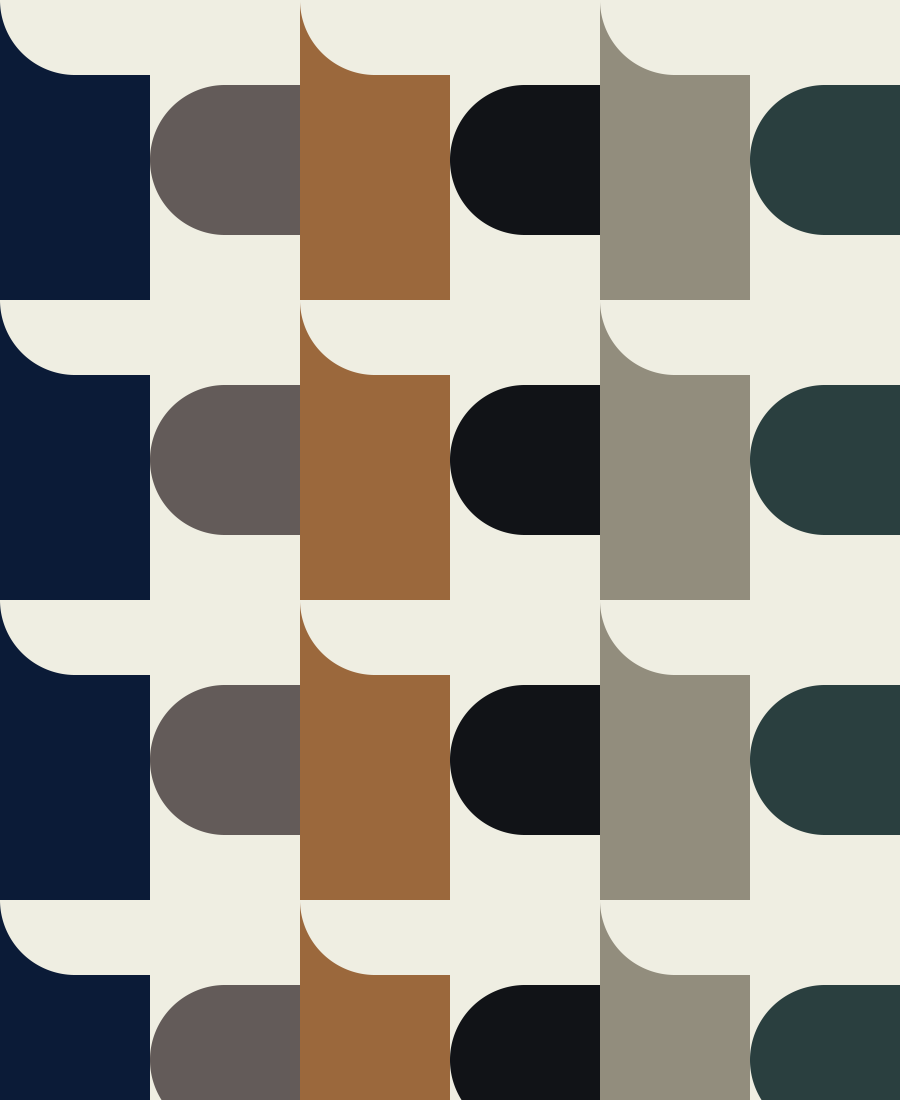
Fabricated review image: half-round balconies and sun shadows translated into the print's modular circle/band system.
Revised best test: semi-circular balcony rhythm. Use Dizengoff Circle as the anchor, then carry the half-round language through Bialik/Shlomo Hamelech rounded balconies, curved corner buildings, shade, and facade bays. Stronger than a single-image story, but still review side by side before locking.
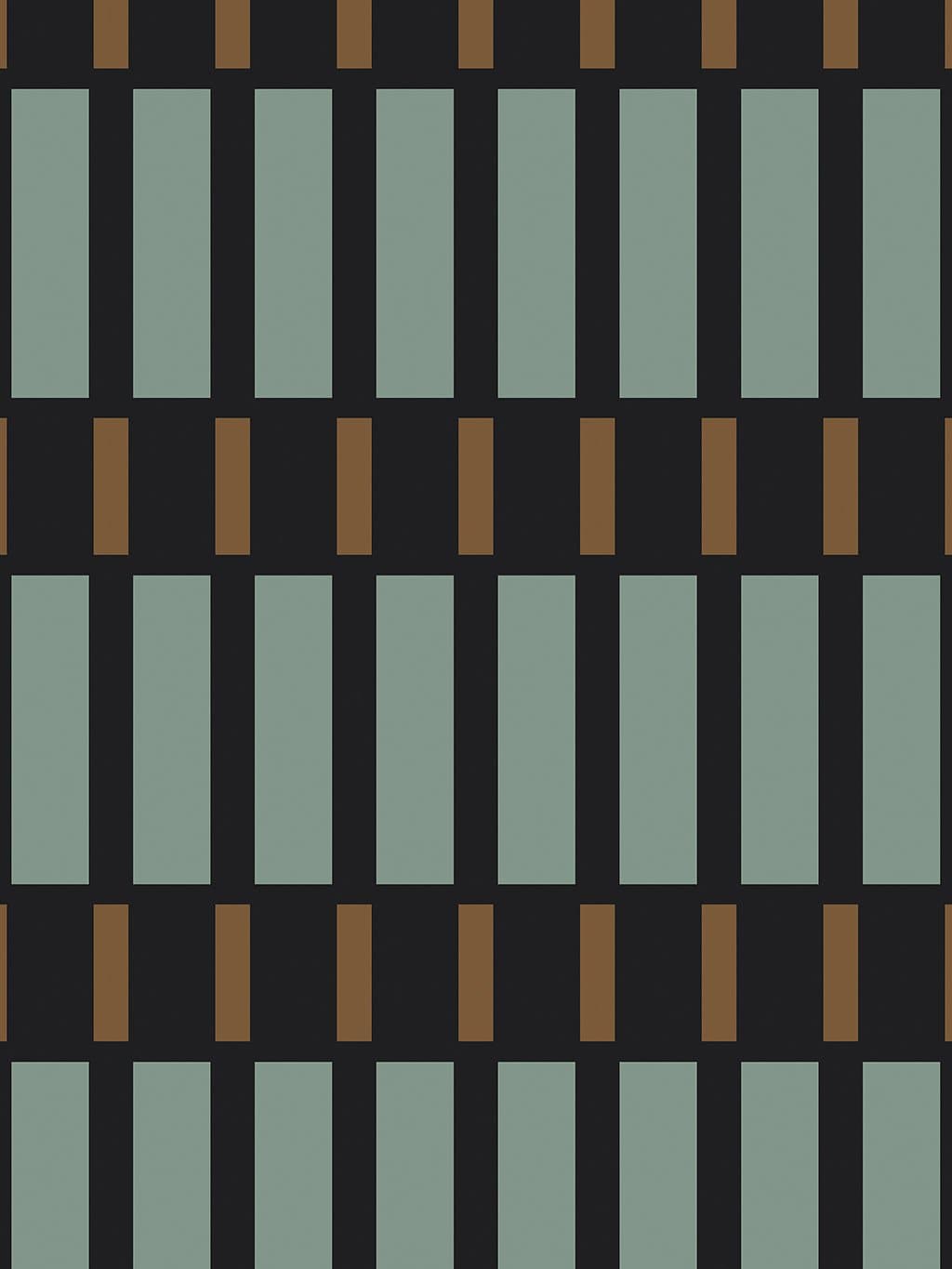
Black ground with repeated pale green vertical rectangles arranged in clean rows. Narrow black intervals separate each upright panel, while short brown vertical bars sit between bands. The pattern is strict and rhythmic, but it can be softer than a control panel: more like windows, compartments, platforms, and repeated journeys.
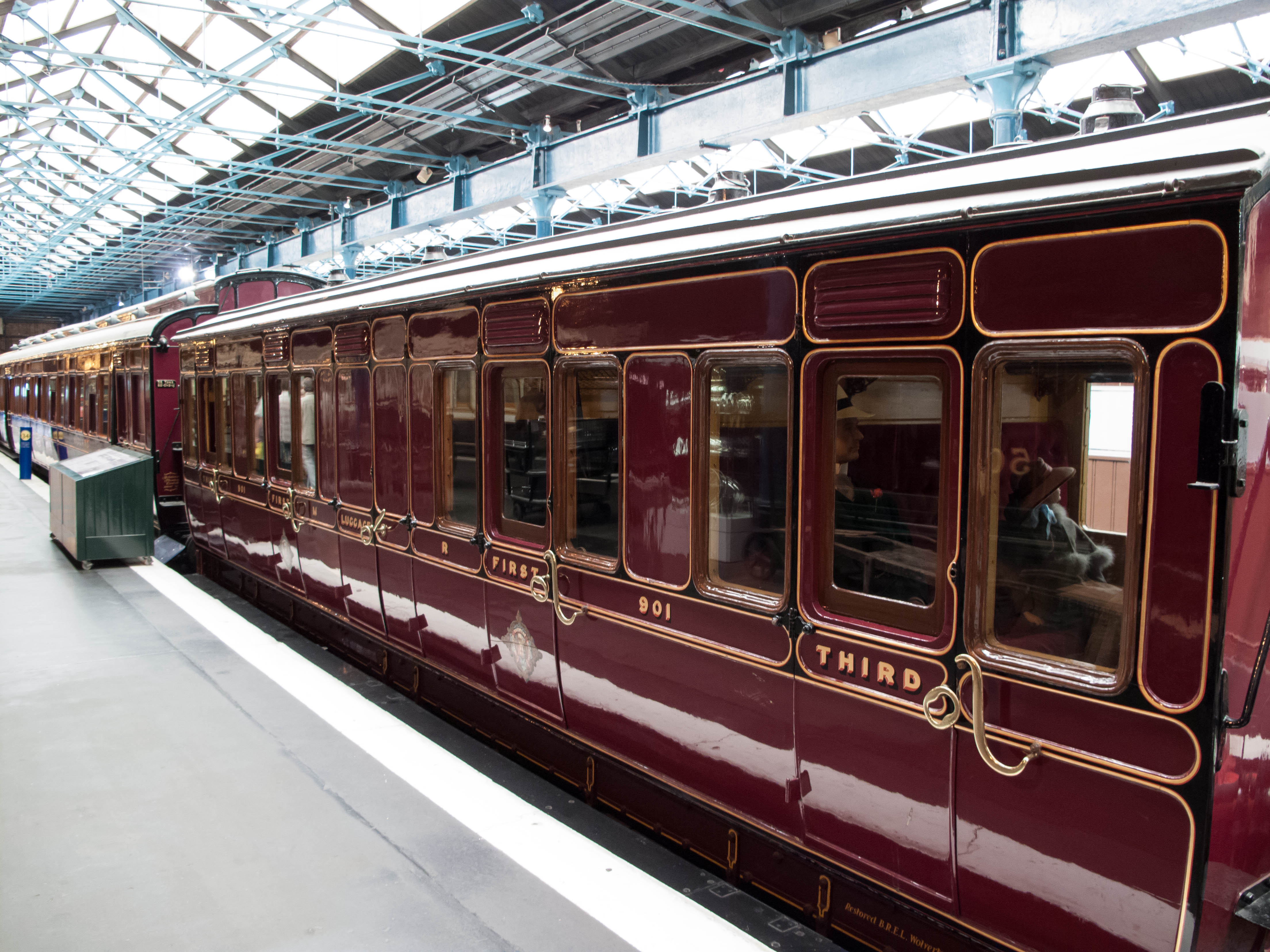
The rail connection is worth keeping, but the logic is better through carriage-window and station-hall rhythm than through controls. The print can be read as a stripped railway side elevation: repeated panes, dark intervals, brown framing, and greenish glass. It gives York a rail memory without making the wallpaper feel like machinery.
Pale green verticals, black intervals, brown markers, repeated window cadence.
Real reference: repeated panes, dark framing, warm trim, journey and compartment structure.

Real reference: glass, iron, platforms, dark roof, repeated vertical and arched station rhythm.
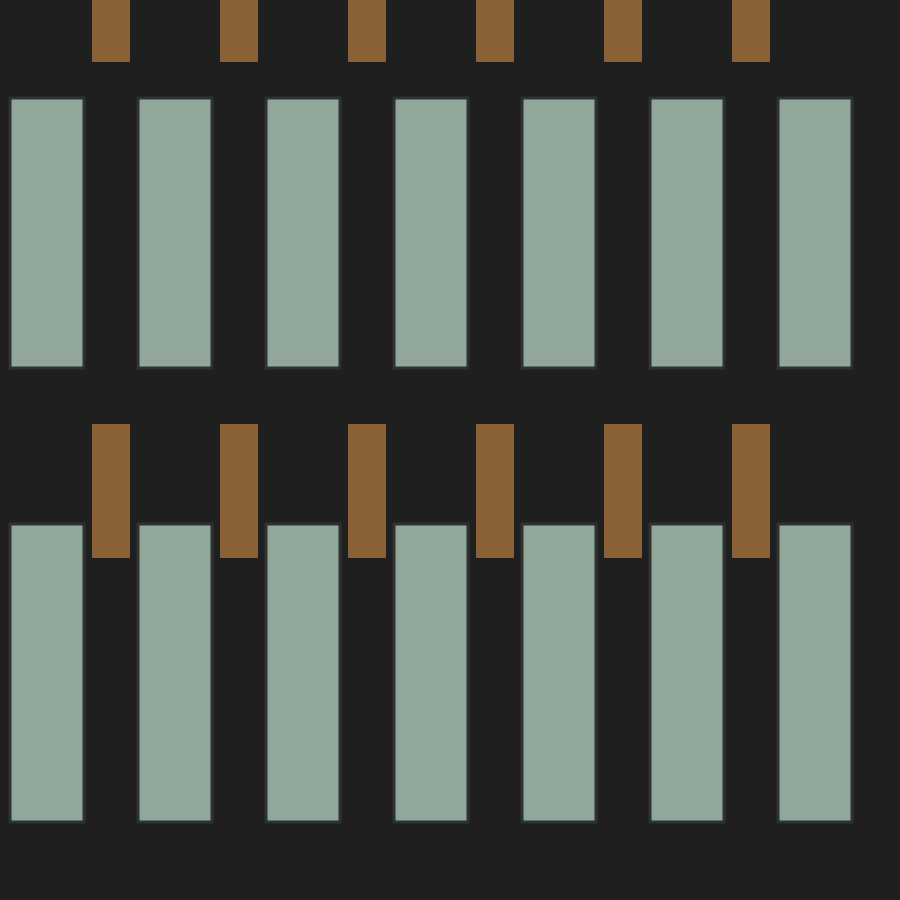
Fabricated review image: carriage windows reduced into the print's green/brown/black order.
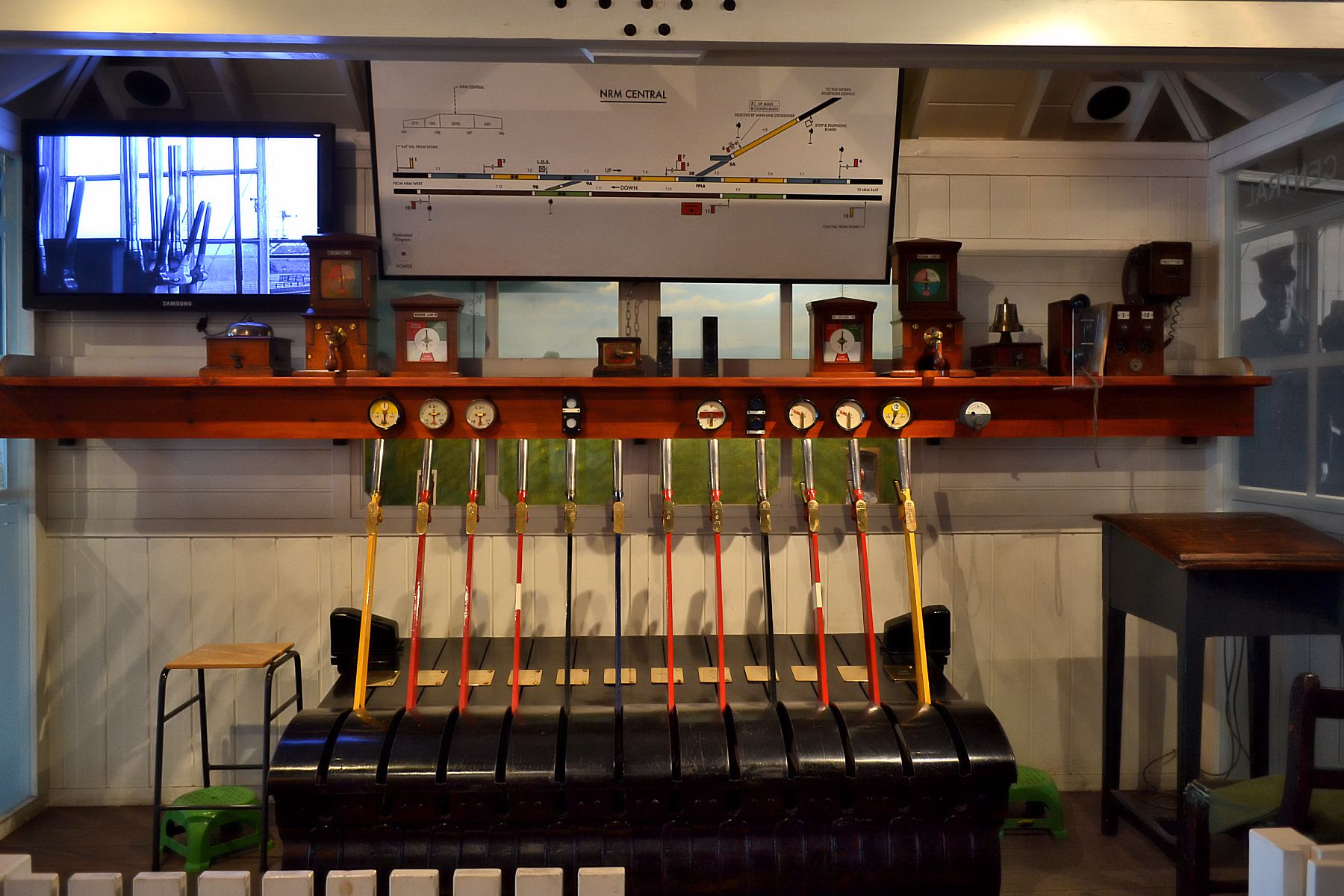
Good rail evidence, weak main logic. Keep only as a secondary rhythm reference.
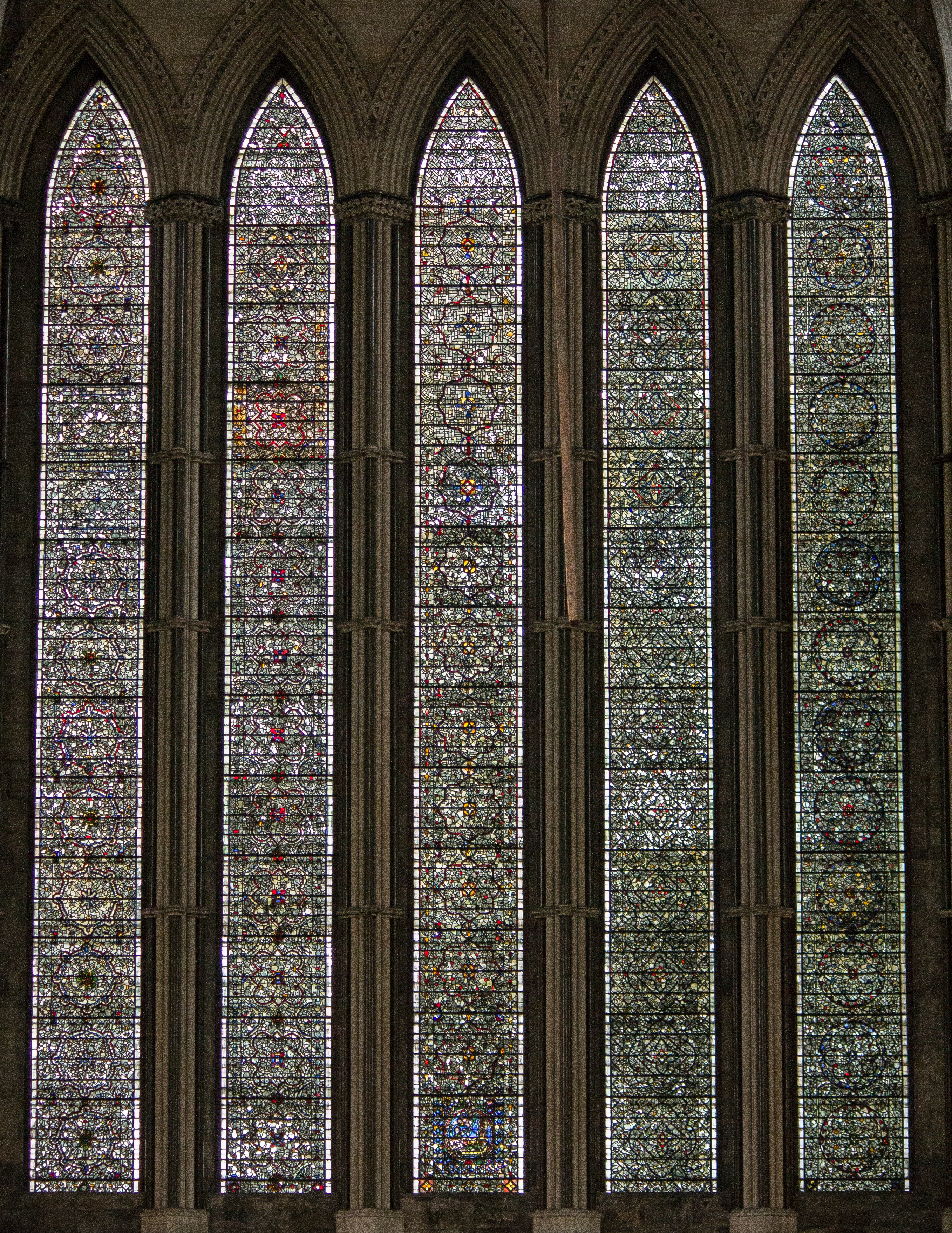
Visually valid, but more expected and more ecclesiastical than the rail route.
Not locked yet. New best test: Carriage-window rhythm. Keep York rail, but make the rail memory about windows, compartments, station sheds, and journeys rather than control levers. Controls and Five Sisters stay as backups.
Black ground with a repeated tessellation of triangular folded forms. Teal, dark green, olive, and pale blue planes meet at sharp points, creating a roof-like sequence of pyramids, valleys, and prisms. The surface is precise, dimensional, and highly architectural.
Warsaw's strongest hook is the vanished Supersam supermarket roof: a post-war modern structure known for its dramatic hanging roof and pleated geometry. The wallpaper's folded triangular planes can be read as a colour-memory of that roof system, translated from black-and-white structure into teal, olive, dark void, and pale blue light.
Tessellated triangular planes, dark voids, teal/olive folds, pale blue openings.
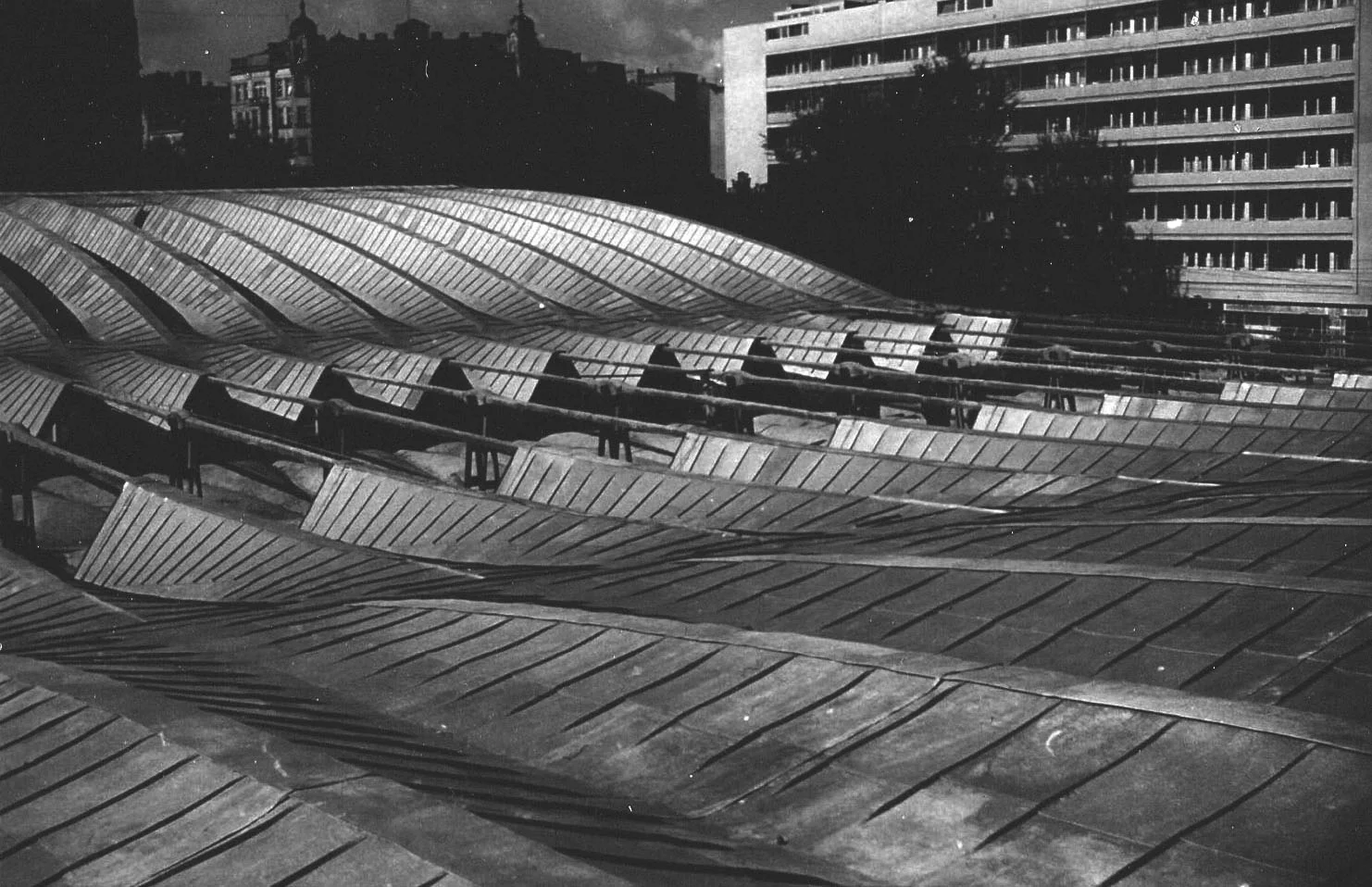
Real reference, rights not cleared: pleated roof planes, structural rhythm, dark-light folds.
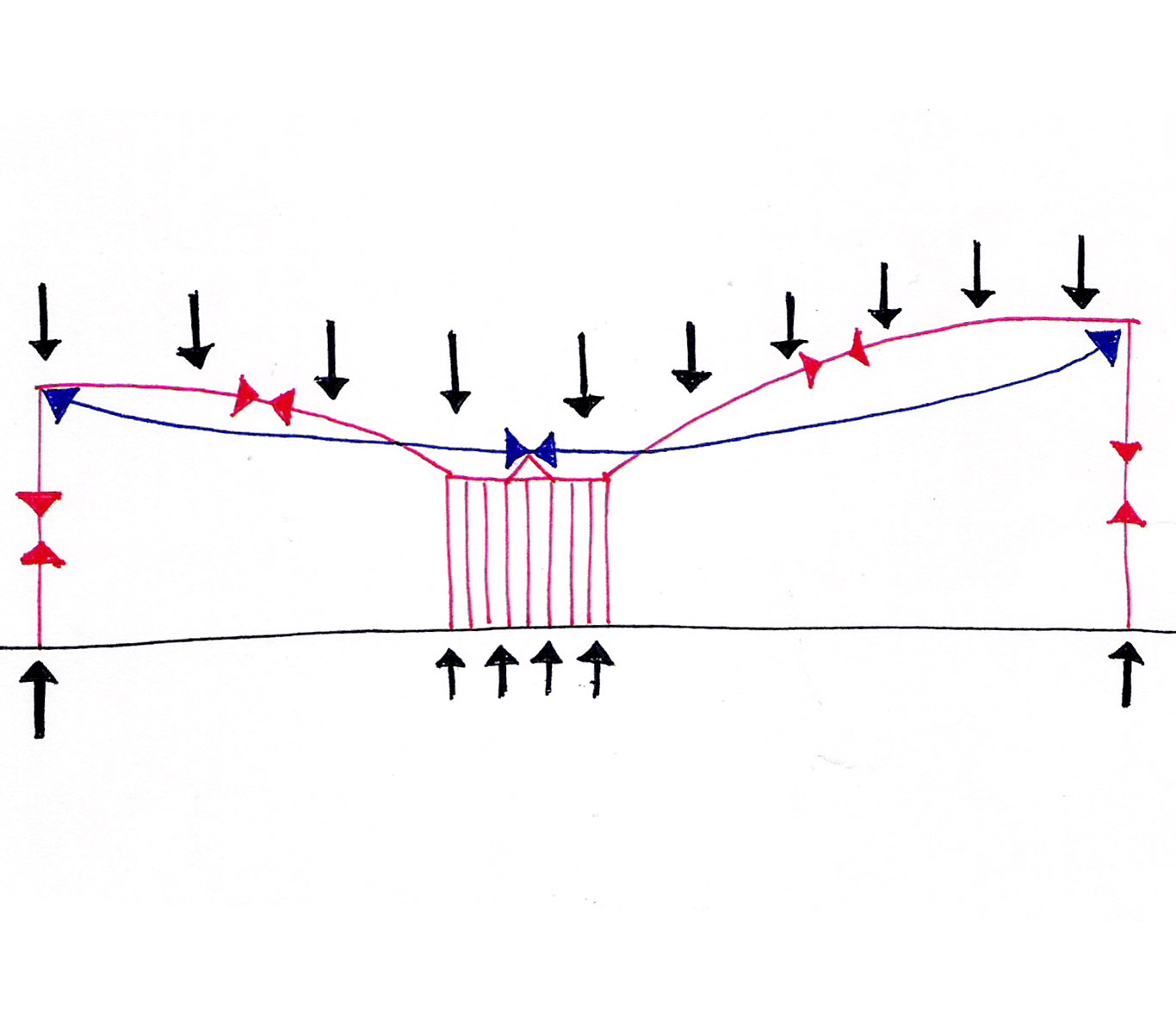
Real reference: hanging roof logic and engineering system as a source for folded composition.
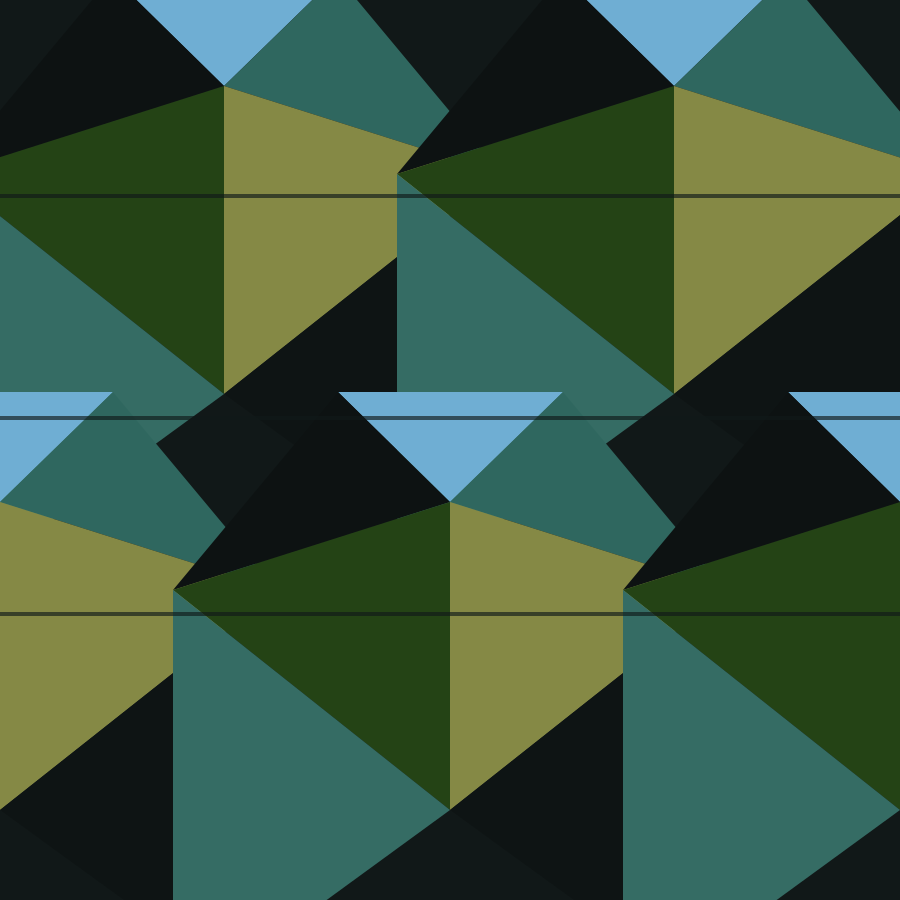
Fabricated review image: Supersam folds pushed toward the print's triangular colour system.
Locked: Supersam pleated roof. It is the strongest Warsaw lead. It is local, modernist, visually close, and carries a useful emotional charge because the building is gone: the print can become a remembered roof structure rather than a generic geometric pattern.
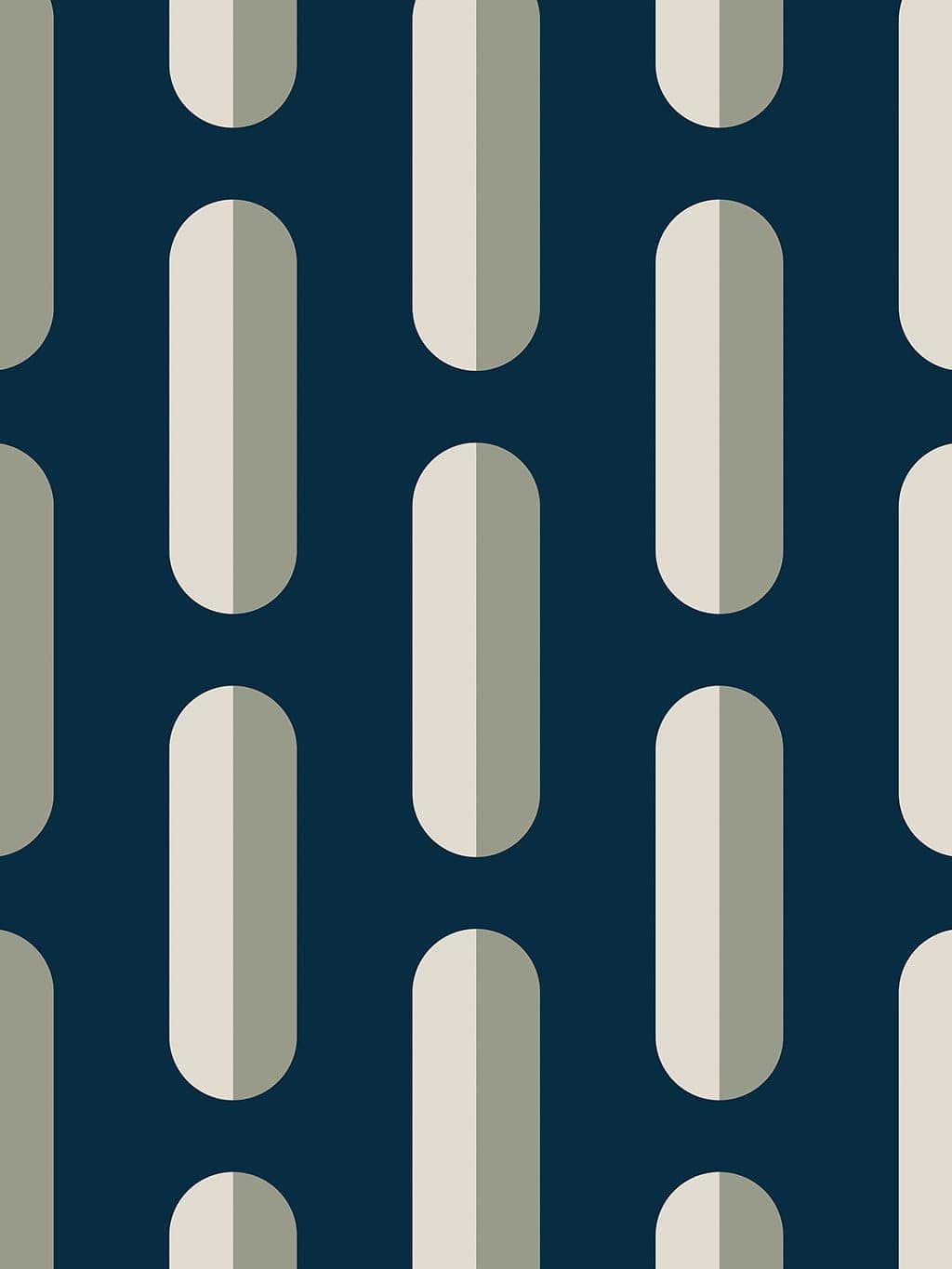
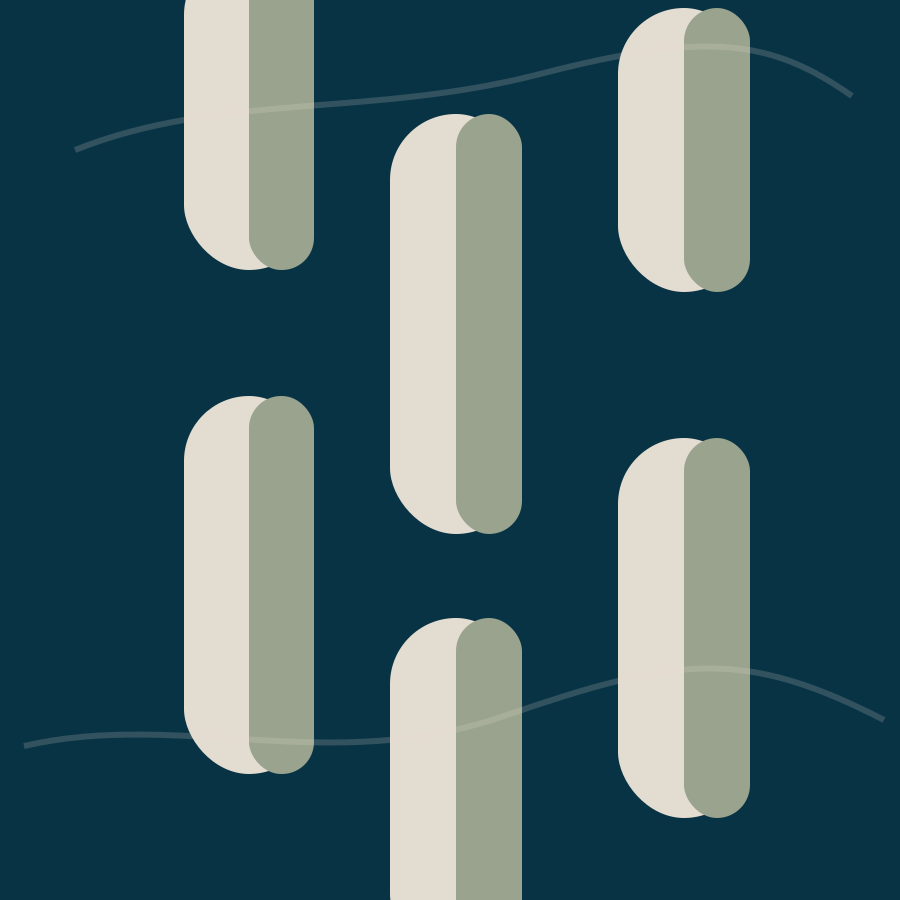
Dark navy-blue ground with staggered vertical capsule forms. Each capsule is split into pale cream and muted sage halves, with longer and shorter rounded columns placed in a strict but softened rhythm. The pattern reads like floating landforms, mooring marks, or elongated islands held in dark water.
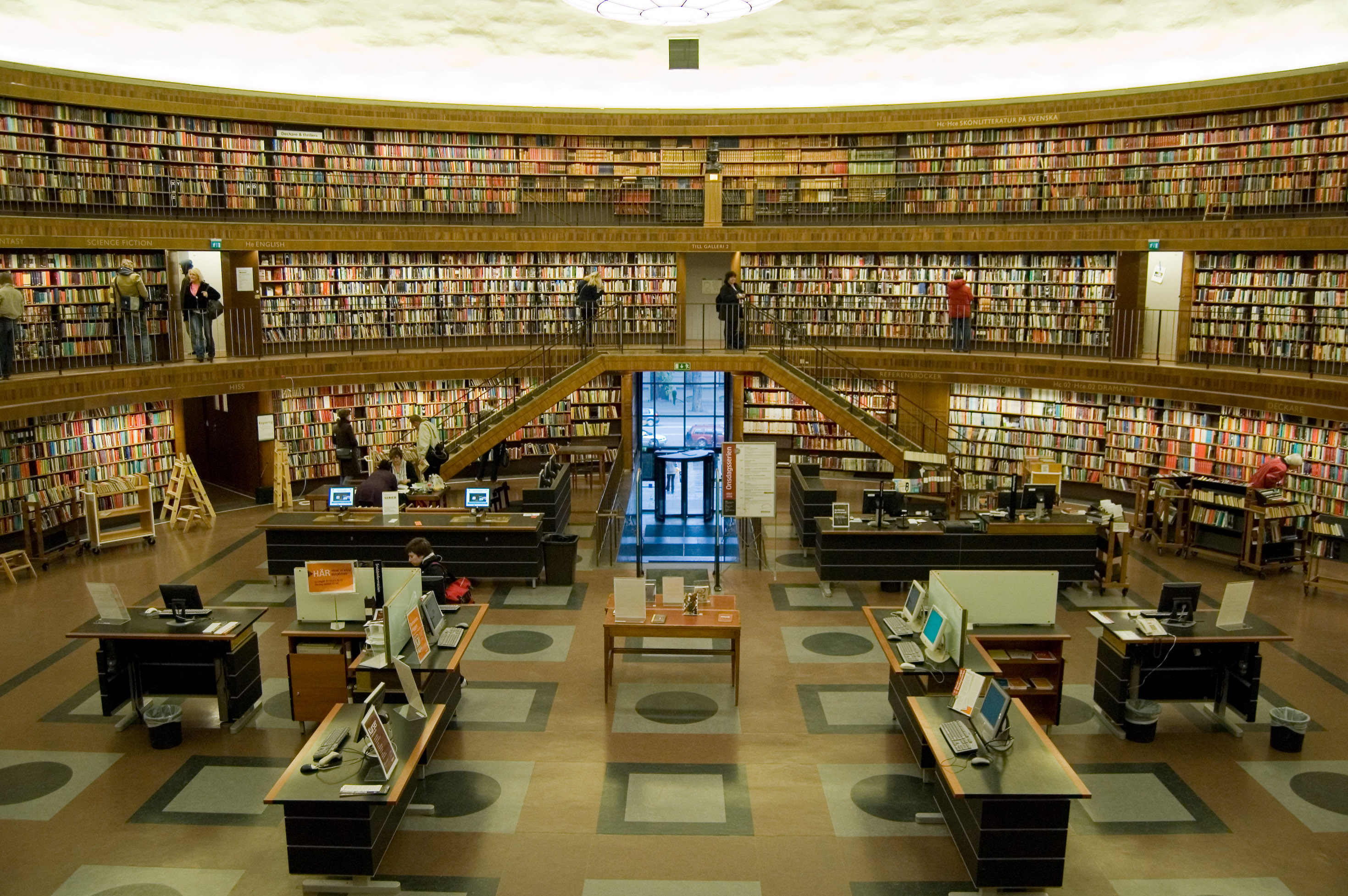
The stronger, more livable Stockholm test is the archipelago: elongated islands, pale shorelines, green interiors, and dark water. It keeps the visual strength of the previous landscape idea without asking the customer to live with a cemetery reference. The product can become a memory of water, routes, and islands rather than a memorial field.
Staggered vertical capsules, cream/sage split faces, dark blue-green ground.

Real reference: dark water, green islands, pale shorelines, scattered spacing.
Fabricated review image: elongated islands translated into the print's capsule rhythm.
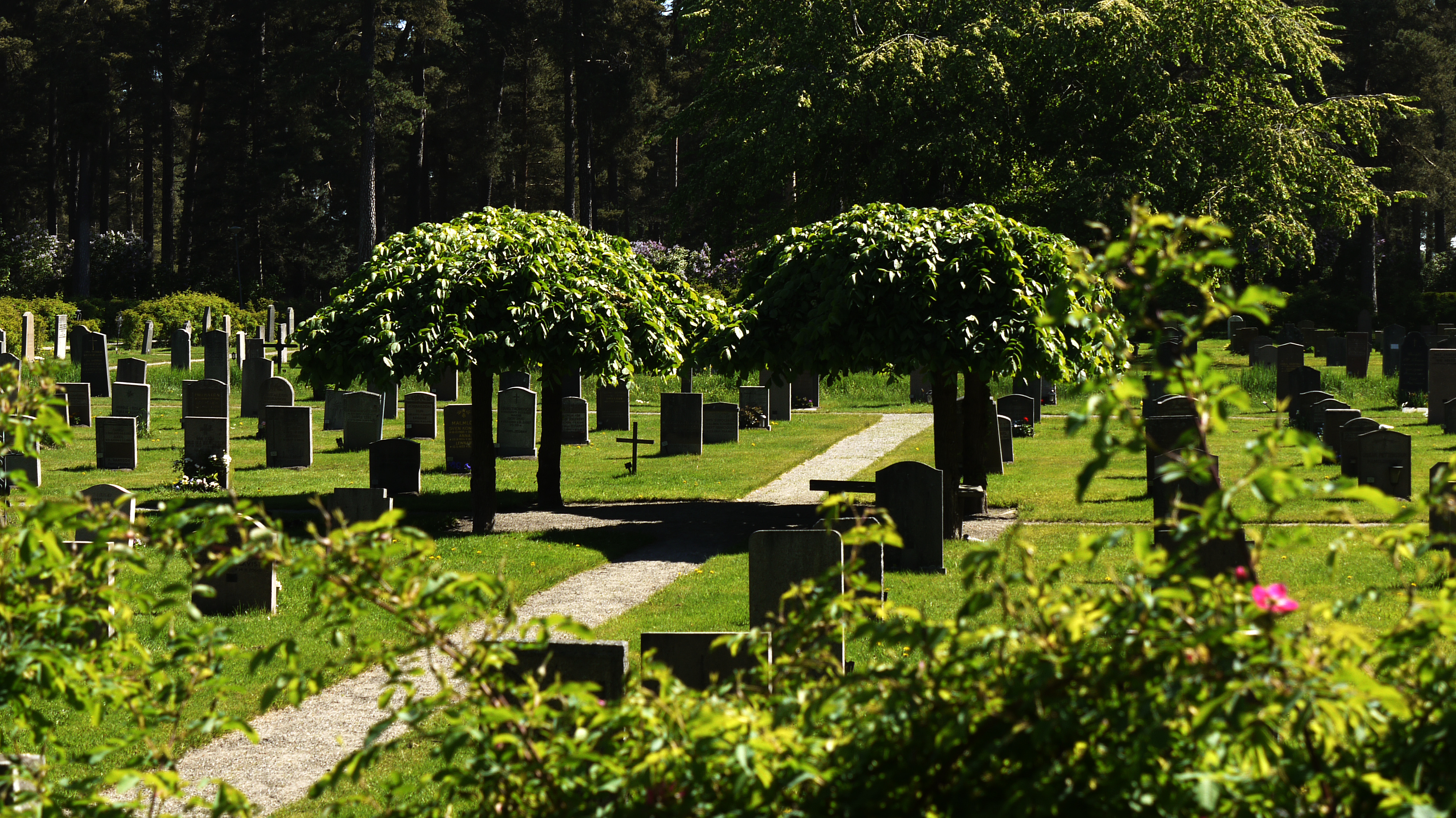
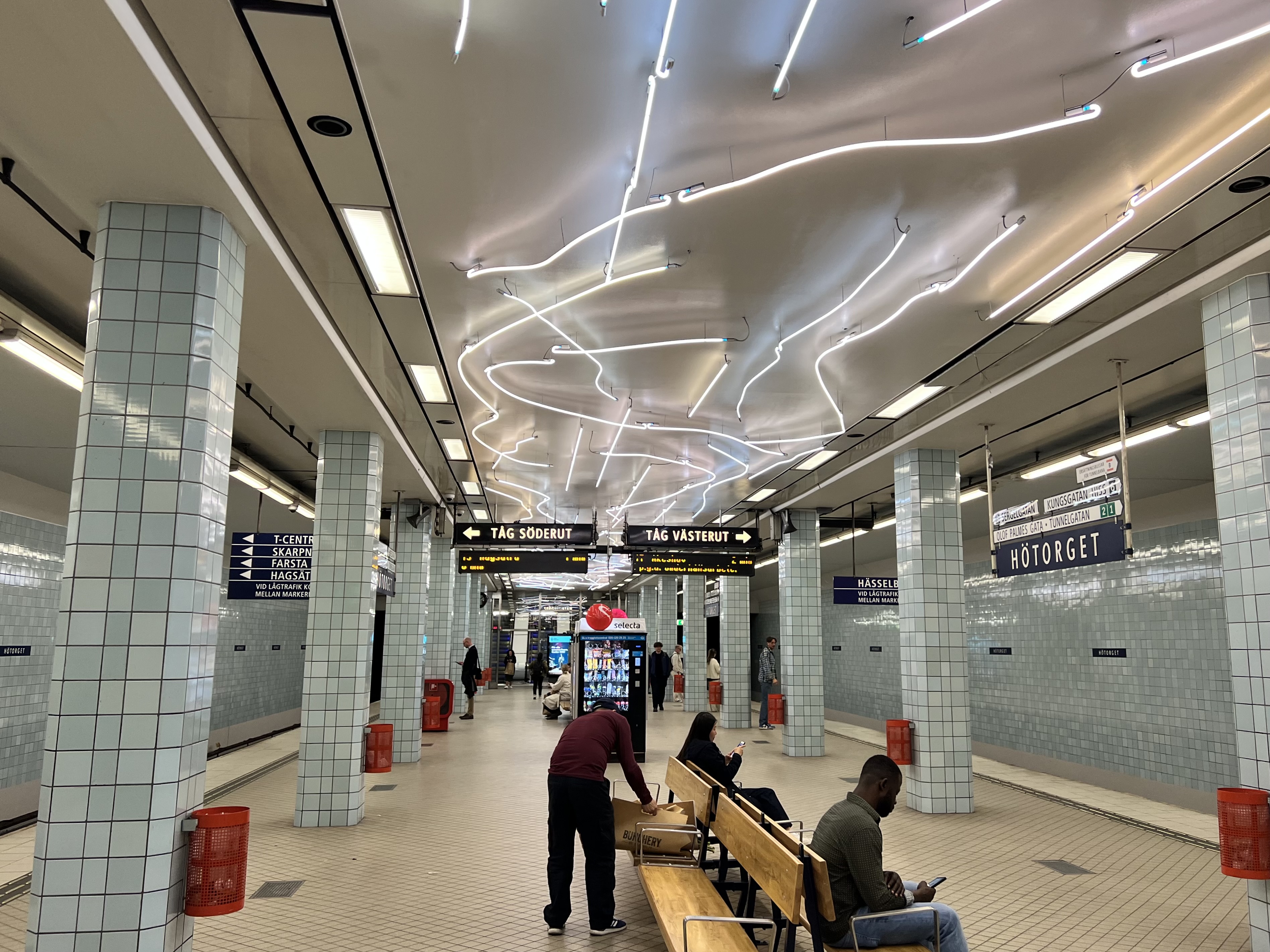
Visual logic was strong, but the room-world is wrong for wallpaper. Do not use as main story.
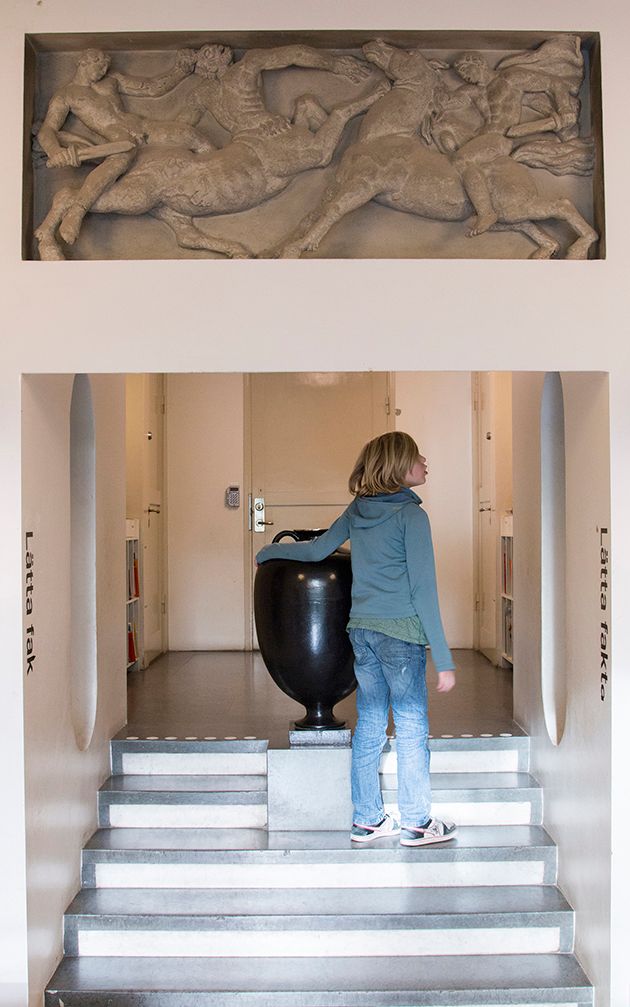
Useful architectural detail, but smaller and less emotionally open than the archipelago route.
Pinned weak choice: Archipelago island rhythm. Keep it visible as the best Stockholm route for now, but do not lock it. It solves the room-world problem better than the graveyard reference, yet still needs a sharper, more surprising Stockholm memory before final PDP writing.
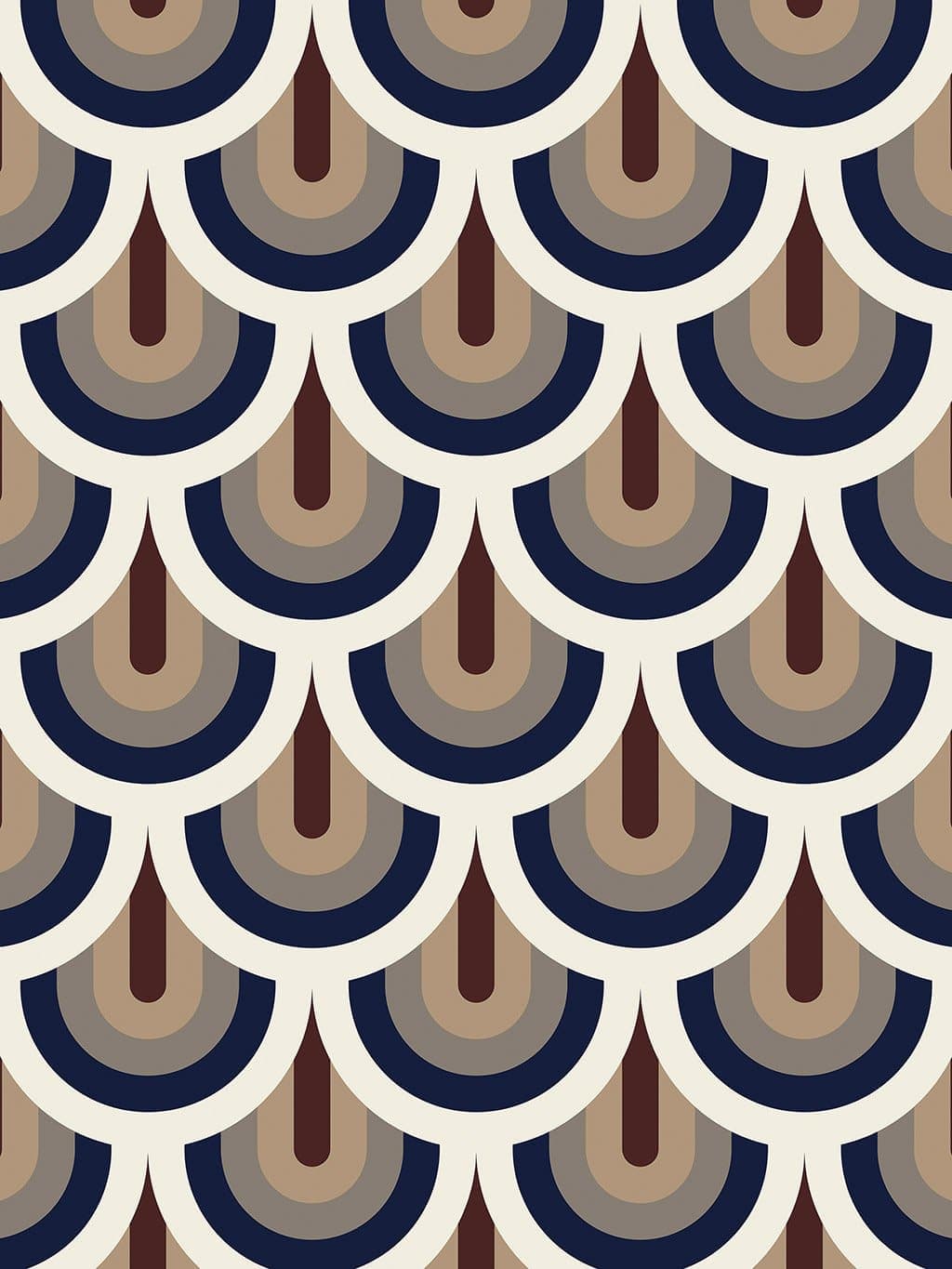
Repeating nested semi-circular motifs arranged in vertical columns. Cream arcs carry dark navy, taupe, warm beige, grey, and burgundy details. The central burgundy form reads like a narrow vertical drop, keyhole, or stylised pendant. The overall rhythm is rounded, ornamental, and architectural, with repeated half-circles creating a scalloped wall field.
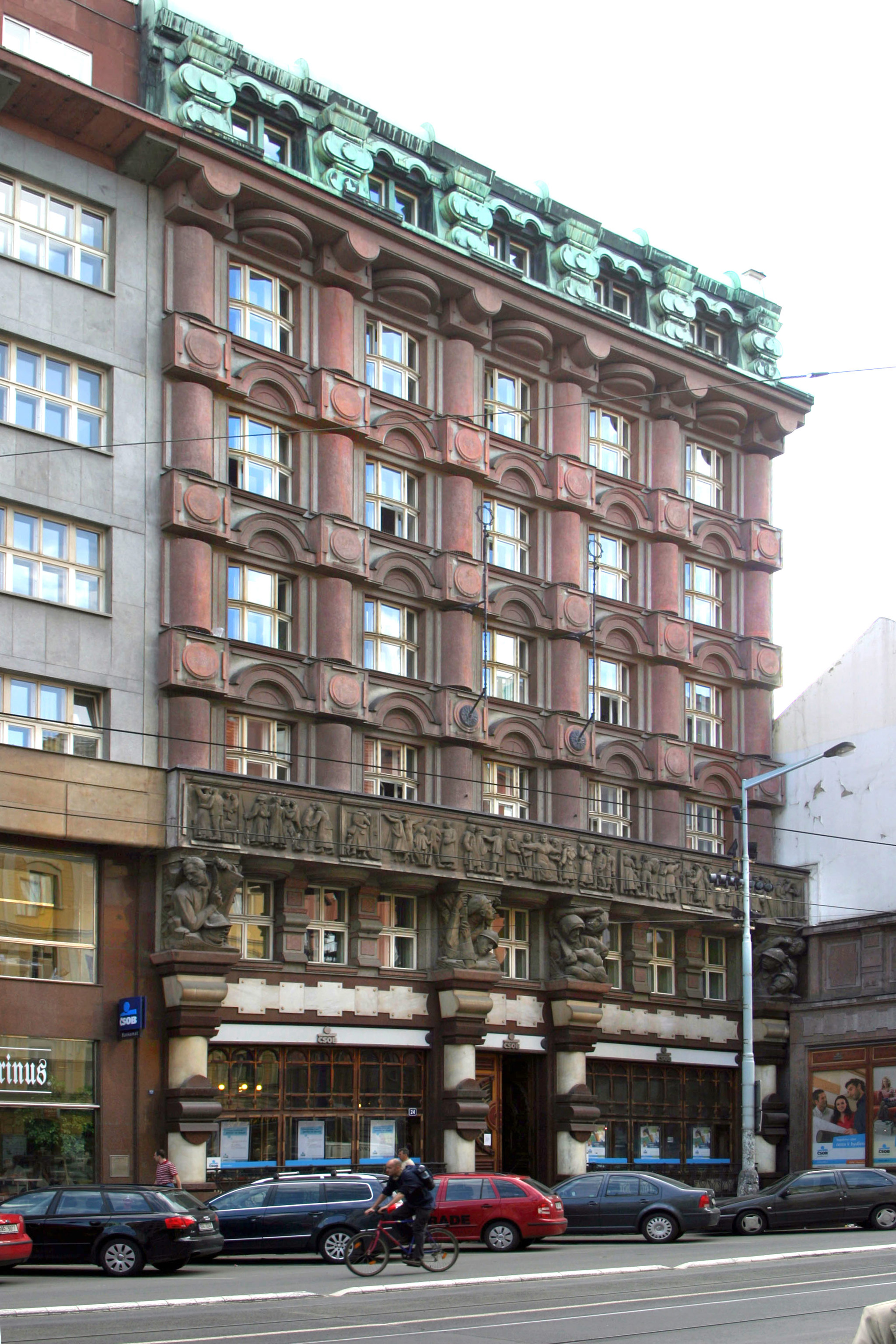
The strongest relationship is not just "Prague has architecture"; it is specifically the way Rondocubism makes round ornament architectural. The print's nested arcs and pendant-like vertical drops sit close to that language.
Nested cream arcs, navy bands, taupe centres, burgundy vertical drops.
Rondocubist architecture by Josef Gocar: stacked civic ornament, round forms held inside a built facade.
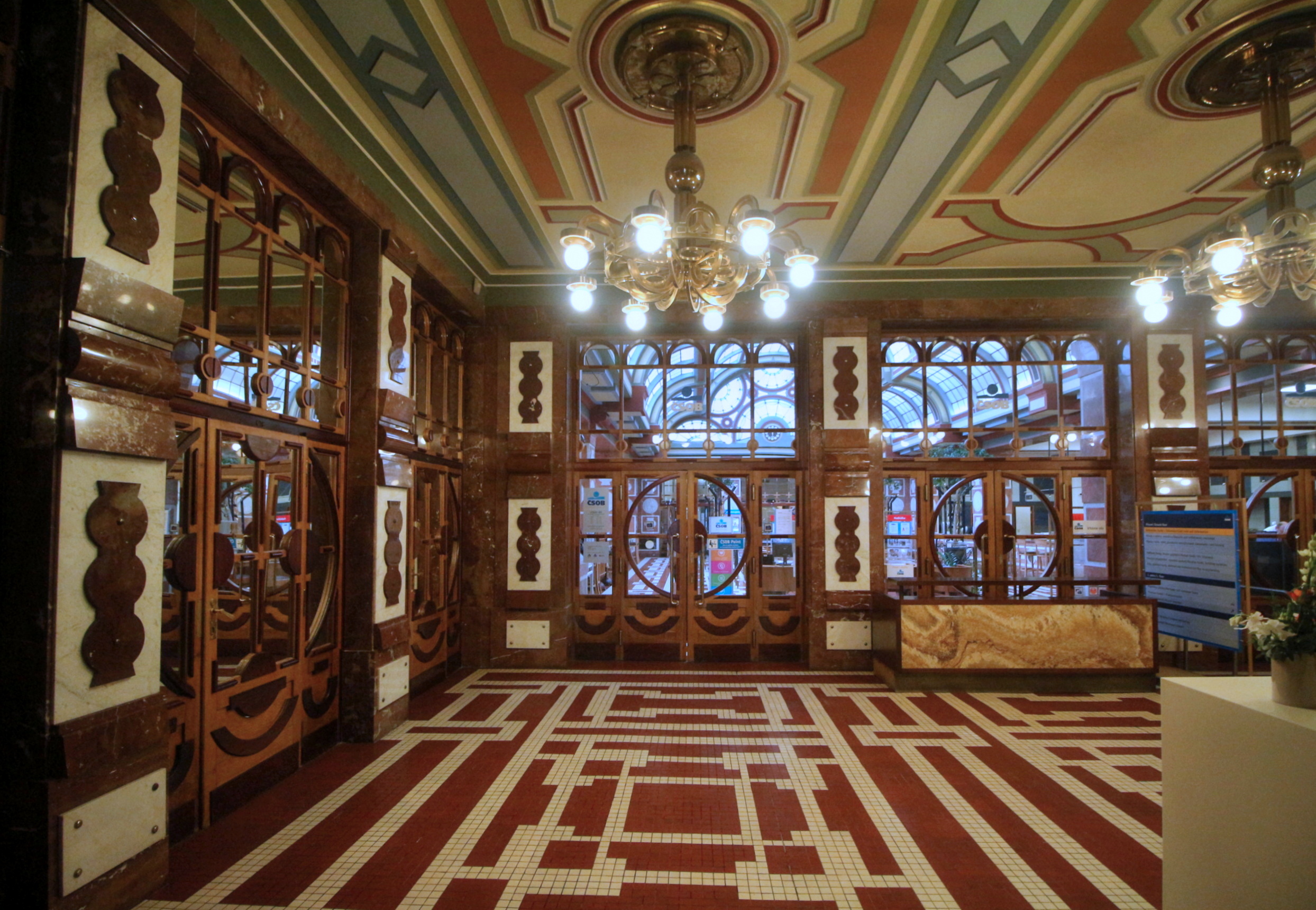
Interior rhythm, arches, repeated bands, and ceremonial geometry give the print a believable room-world.
This is the loose inspiration route: a place gathered through different times and surfaces, then pulled back into the print. The facts stay real; the generated studies can supply atmosphere where direct images are copyrighted or too literal.
Start with Legiobanka: Josef Gocar, rondocubism, civic architecture using round ornament inside a disciplined facade.
The print's half-circles become believable through Prague's rare fusion of cubist structure with circles, ovals, and arches.
The burgundy drops can be read through interior rhythm: pendants, arch shadows, civic halls, and repeated ceremonial bands.
Flow prompt candidate: "Prague rondocubist bank-hall detail, cream arches, navy insets, burgundy pendant forms, flat editorial drawing."
Legiobanka rondocubism is the clearest lead. It gives the print a real Prague-specific visual language, and the match between round forms, stacked ornament, and architectural cadence is unusually strong.
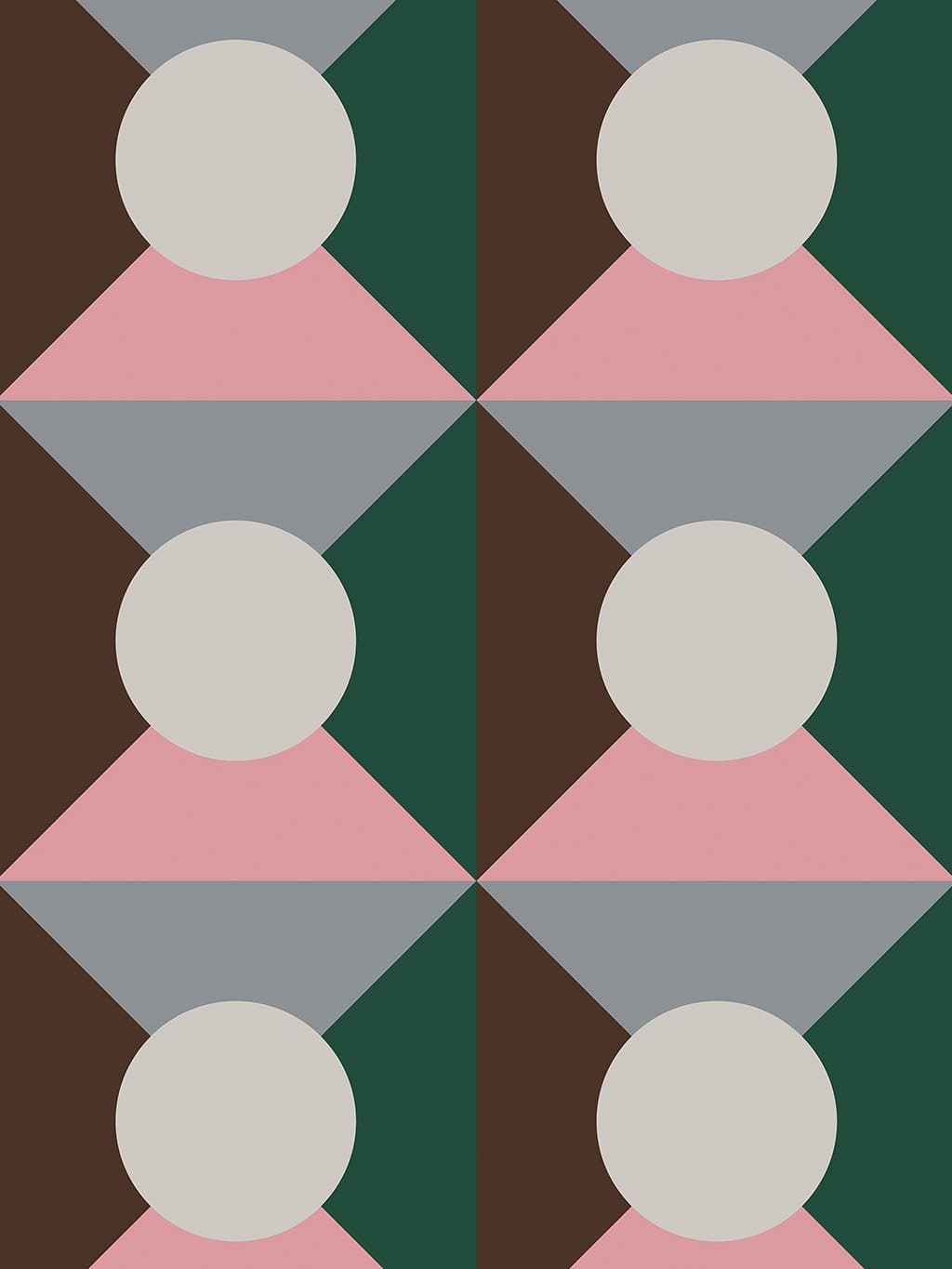
Large modular repeat made from off-white circles set over a diamond and triangle structure. Pink triangles sit below the circles, grey triangles above and below, with dark green and chocolate-brown side planes. The geometry is simple, bold, and balanced: circles, triangles, diamonds, and vertical joins create a decorative abstraction with a strong two-column rhythm.
The strongest Paris lead should move away from facade architecture and into the city's abstract-geometric circles: groups, journals, salons, and objects where circle, square, triangle, colour, and construction became a visual language. Delaunay remains a useful backup for rhythm and mural scale.
White discs over pink, grey, green, and brown triangles; bold modular rhythm.
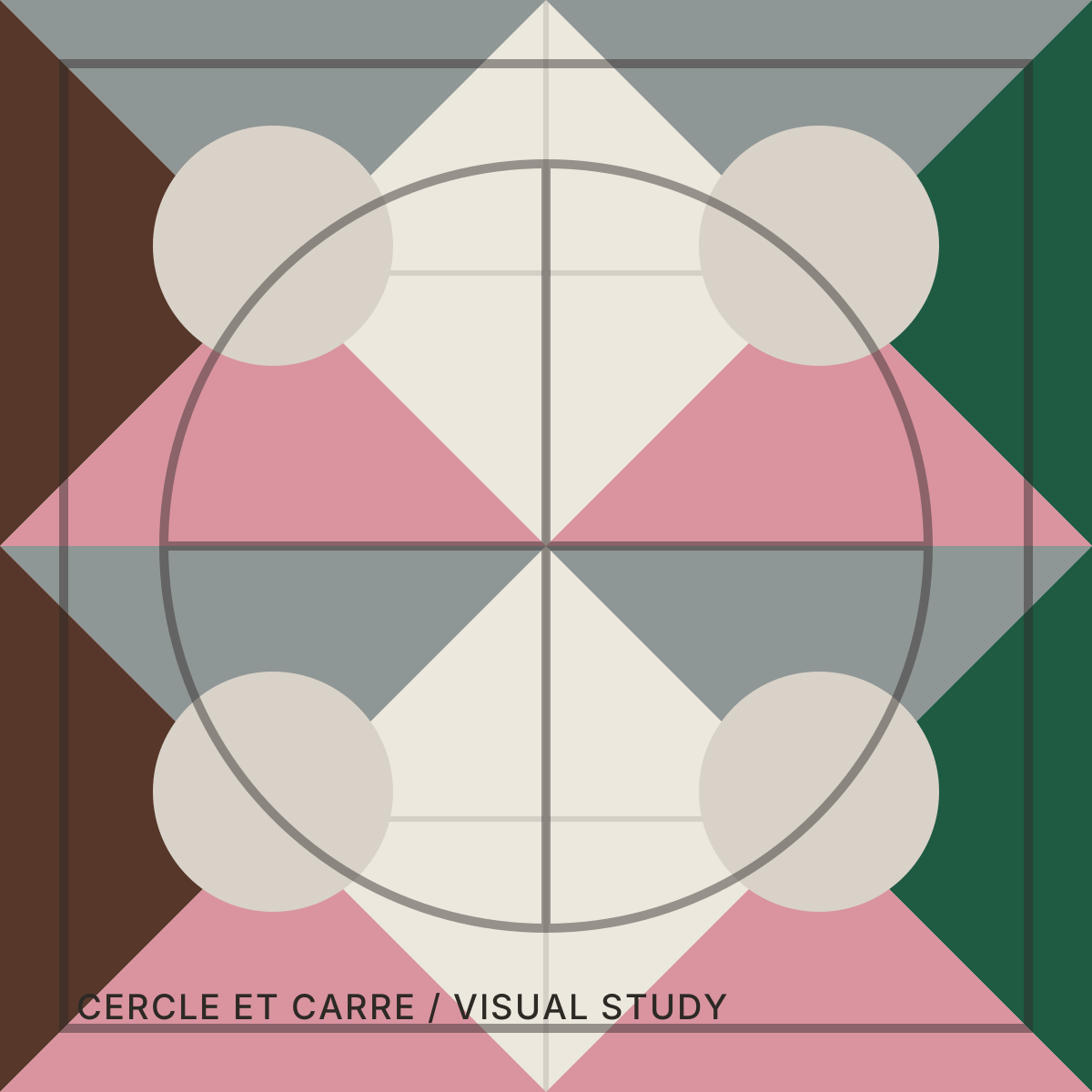
Generated study based on Paris geometric abstraction: circle, square, triangle, construction, equilibrium.
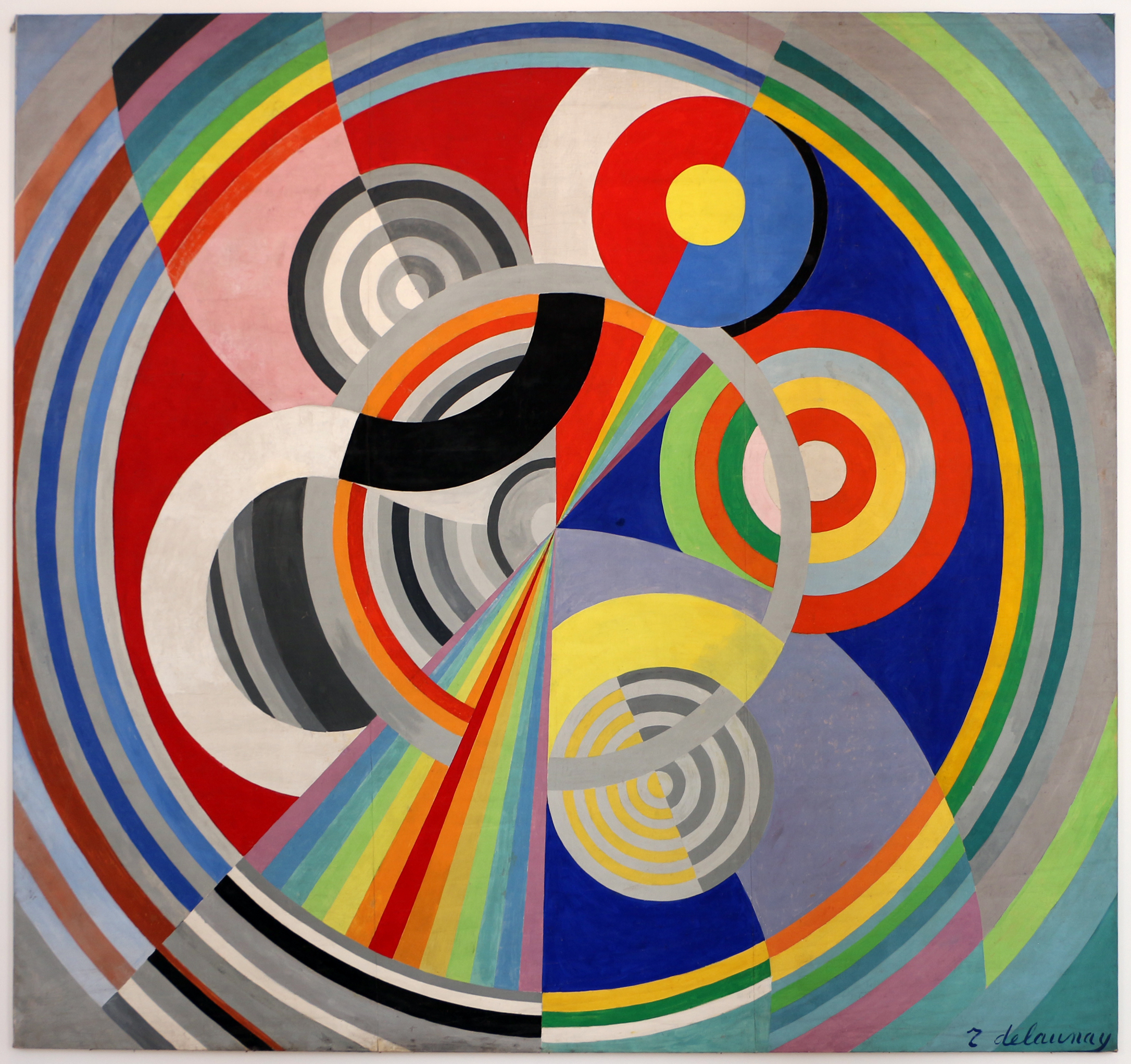
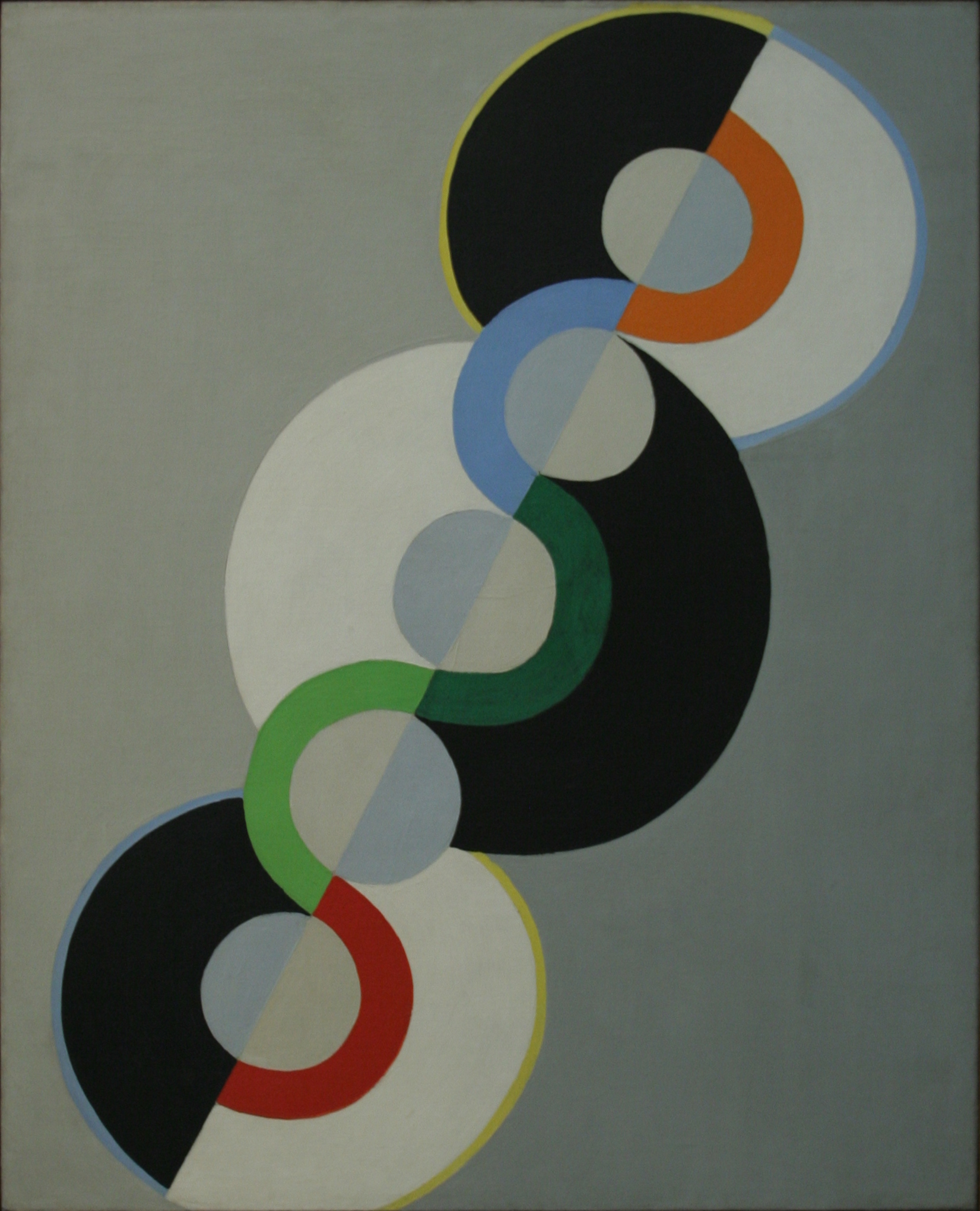
Useful for circular rhythm and mural scale, but less exact than the circle/square construction route.
This route lets Paris move across art, exposition, textile, and room memory. It does not need one literal source; it needs a chain of visual echoes that makes the print feel like it belongs to that place.
Begin with the Paris group founded in 1929 by Torres-Garcia, Michel Seuphor, and Pierre Daura: circle, square, construction, equilibrium.
The group held its 1930 exhibition in Paris. The print can borrow that salon-world of precise geometric abstraction rather than a street facade.
The wallpaper's white discs and square-diamond structure become the visual argument: the place memory is abstract, rational, decorative, and Paris-made.
Flow prompt candidate: "Paris 1930 Cercle et Carre inspired geometric abstraction study, cream circles, square grid, pink grey green brown triangles, flat gouache."
Cercle et Carre / Paris geometric abstraction is now the strongest lead. It has a cleaner visual argument than the earlier Paris architecture route and is more exact than Delaunay alone: the print is literally built from circles, square-diamonds, triangles, equilibrium, and repeated construction. Delaunay should stay as backup for circular rhythm, mural scale, and colour movement if we need a secondary reference in the Print Story.
Dark green-black ground with repeated vertical fluted forms, cream stripe columns, blue bases, triangular pediment-like caps, grey stone planes, ochre diagonals, and tan-brown slanted bands. The print reads as an architectural collage: column, roof triangle, shadow, beam, and fragment rather than a continuous stripe.
The stronger Athens route is not "classical columns". It is Athens as a city where fragments of antiquity were reworked by modern artists and architects: Dimitris Pikionis's Acropolis pathways and Yiannis Moralis's facade reliefs are better anchors because they already perform the act of recomposing memory into modern graphic structure. These reference images are for internal visual review only; generated studies are labelled separately.
Fluted columns, triangular caps, dark ground, ochre diagonals, stone-coloured planes.
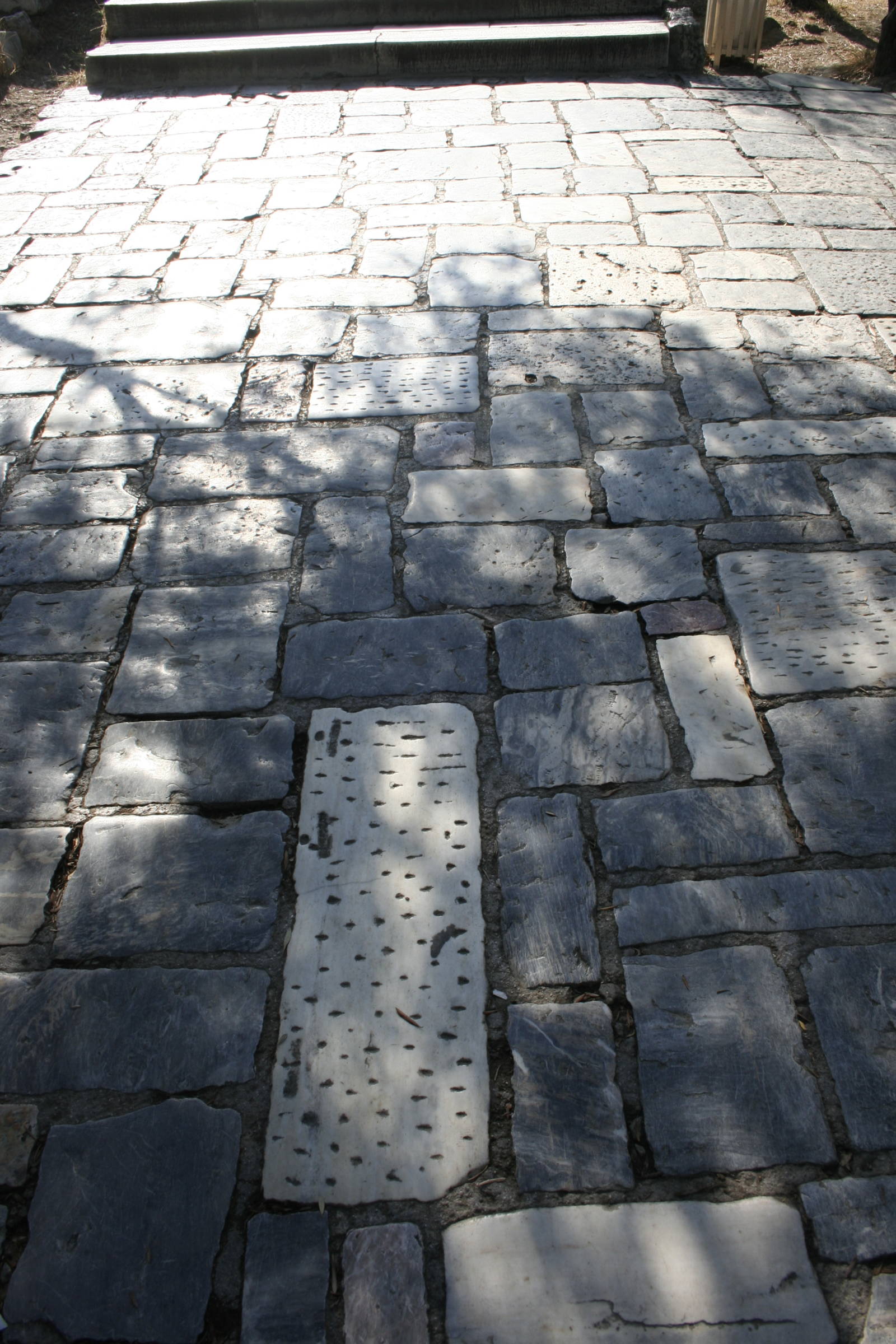
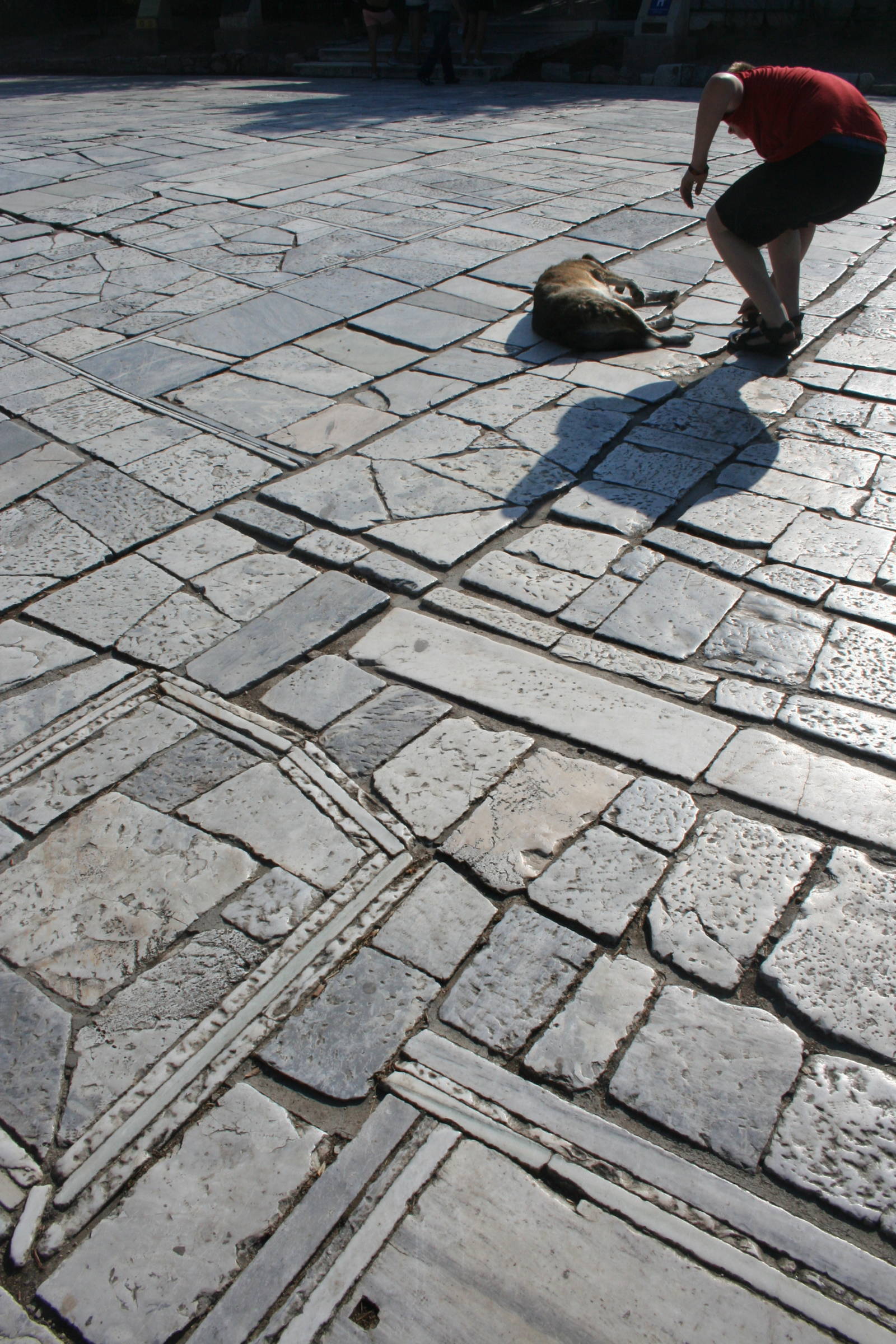
Real reference: rectangular stone fields, patched rhythm, pale slabs, dark joints, diagonal shade.
Real reference: irregular stone fragments, hard seams, angled cuts, recomposed ground.
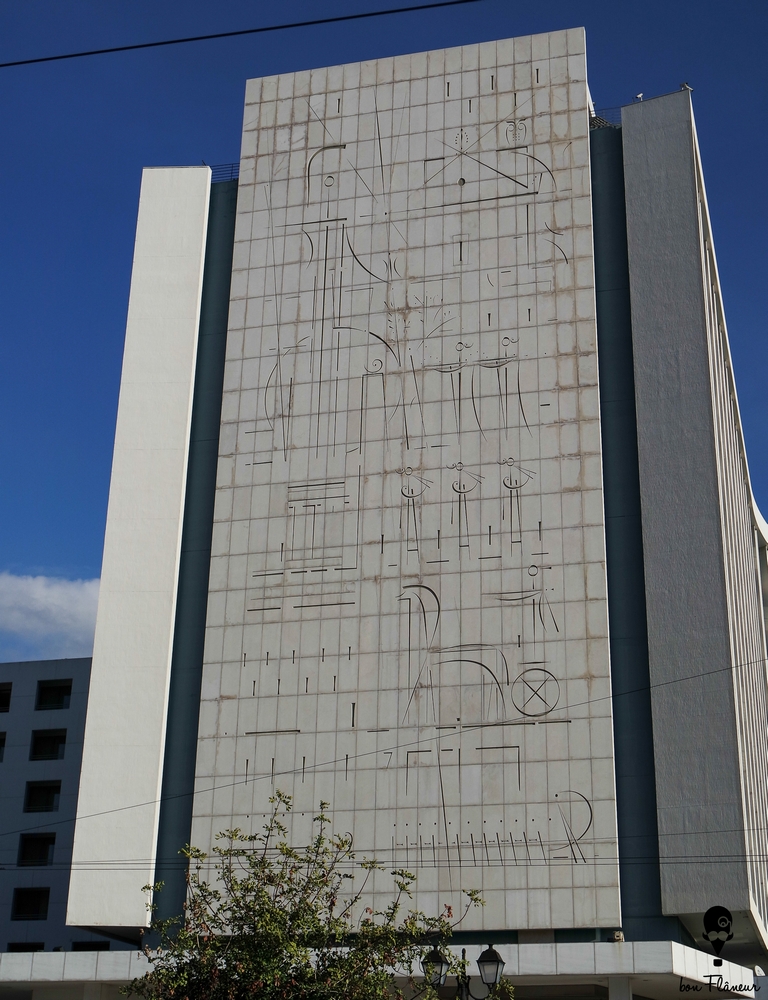
Real reference: incised verticals, facade grid, abstract Greek memory held on stone.
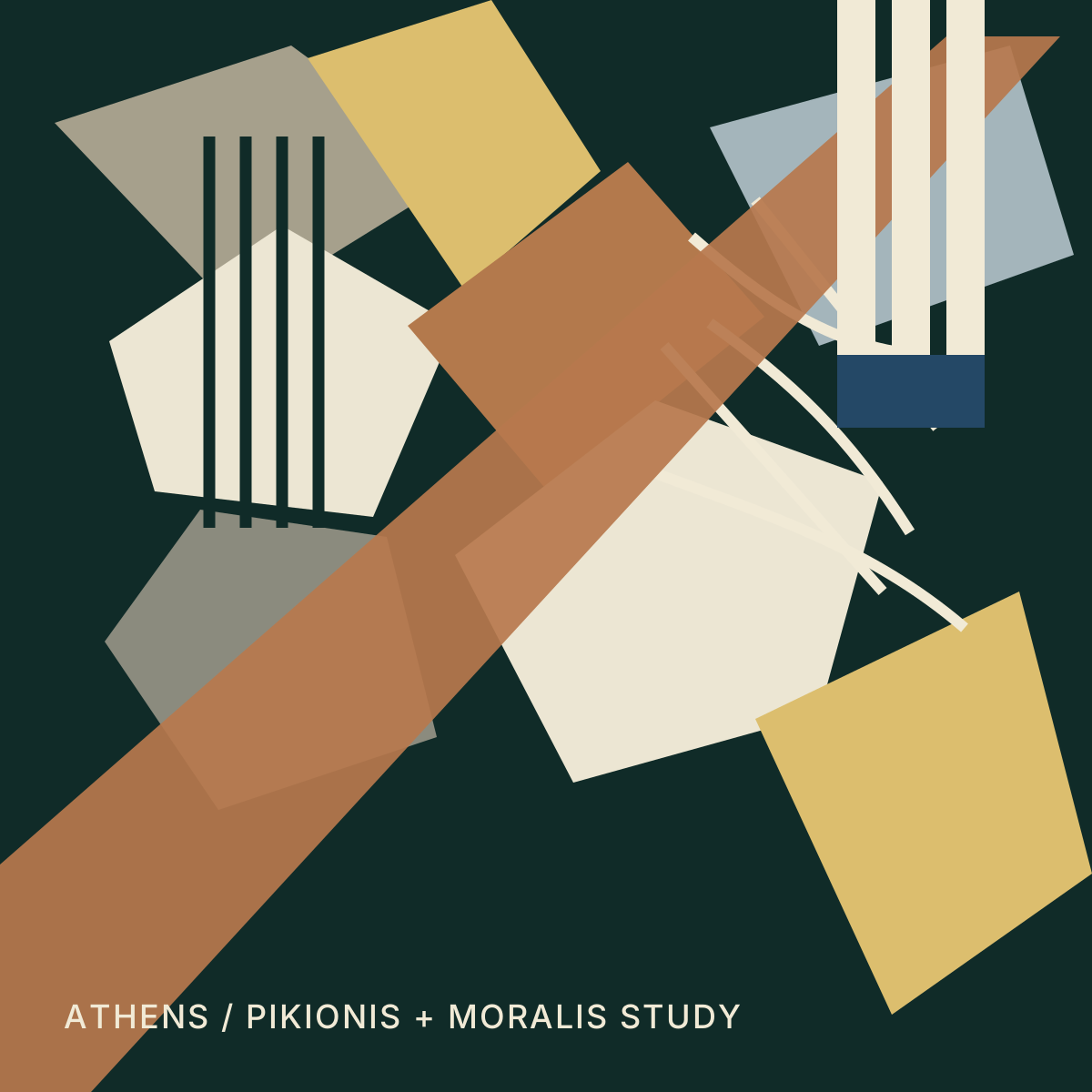
Flow candidate only: paving fragments, relief lines, fluted afterimages, diagonal cuts.
Begin underfoot: the 1950s paths around the Acropolis, assembled from stone fragments, spolia, and modern geometric decisions.
Move to the Athens Hilton: modern facade reliefs where Greek memory becomes incised abstract monument, not literal ornament.
The wallpaper's fluted forms become afterimages of columns inside a larger collage of paving, relief, diagonal shade, and urban reconstruction.
Flow prompt candidate: "Athens modernist memory study, Pikionis Acropolis paving fragments, Moralis facade relief lines, fluted column afterimages, ochre diagonal shadow, dark green ground."
Pikionis underfoot is the better lead. It is a real Athens reference and a surprise: the city is not approached through the temple facade but through the modern pathway made from fragments, spolia, diagonals, stone planes, and recomposed memory. Moralis/Hilton should sit beside it as the second anchor: Athens turning Greek memory into large-scale abstract architectural surface. The obvious column/fluting motif stays in the background as visible evidence, not the whole story.
Cream ground with repeated blush-pink half-disc forms, brown triangular planes, pale yellow stepped verticals, blue central bars, and slim black vertical bands. The pattern has a soft Art Deco geometry: fan, sunrise, stepped facade, racing stripe, and pastel block rhythm.
The Miami lead gets much stronger when it moves from broad Art Deco into a specific Ocean Drive facade hook. McAlpin gives the print a direct visual anchor: blush circular forms, mint-blue vertical spine, cream wall, coral ledges, grouped horizontal bars, and an almost face-like symmetry. Bacardi stays useful as a Miami tropical-modern backup, especially for tile, blue-white surface, and architectural art.
Pastel half-discs, stepped yellow verticals, blue racing stripe, brown triangular planes.

Real reference: mint vertical spine, coral discs and ledges, cream wall, grouped horizontal bars.
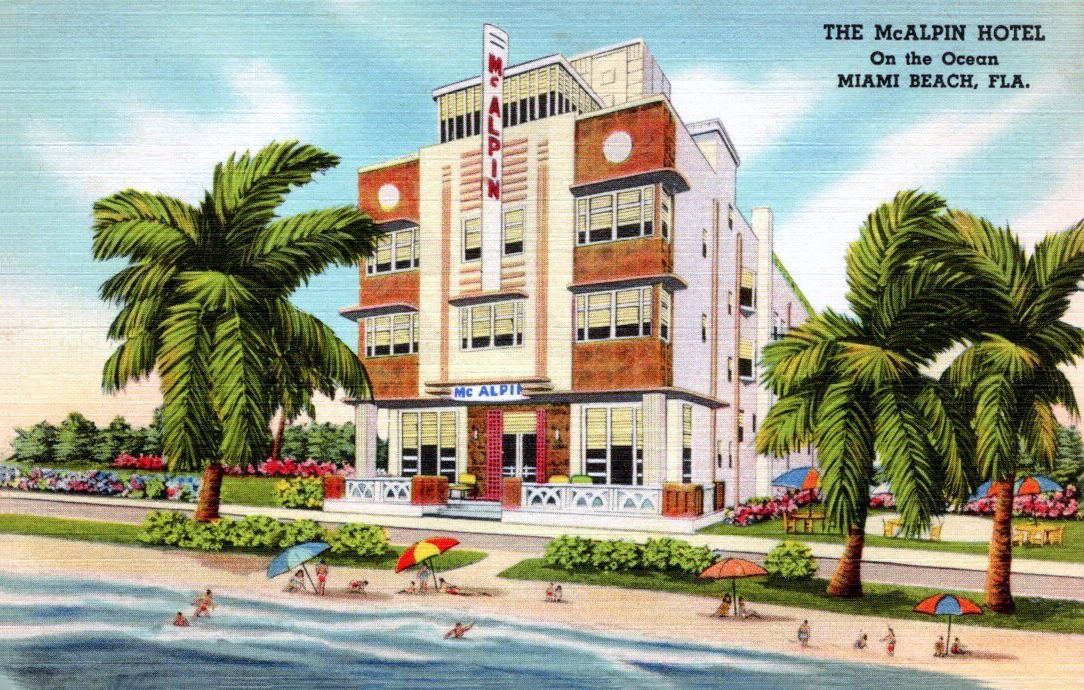
Real archive image: printed colour memory, beachside facade, coral/mint/cream travelogue mood.
Real backup: blue-white azulejo mural, tropical modern surface, art fused to a Miami facade.
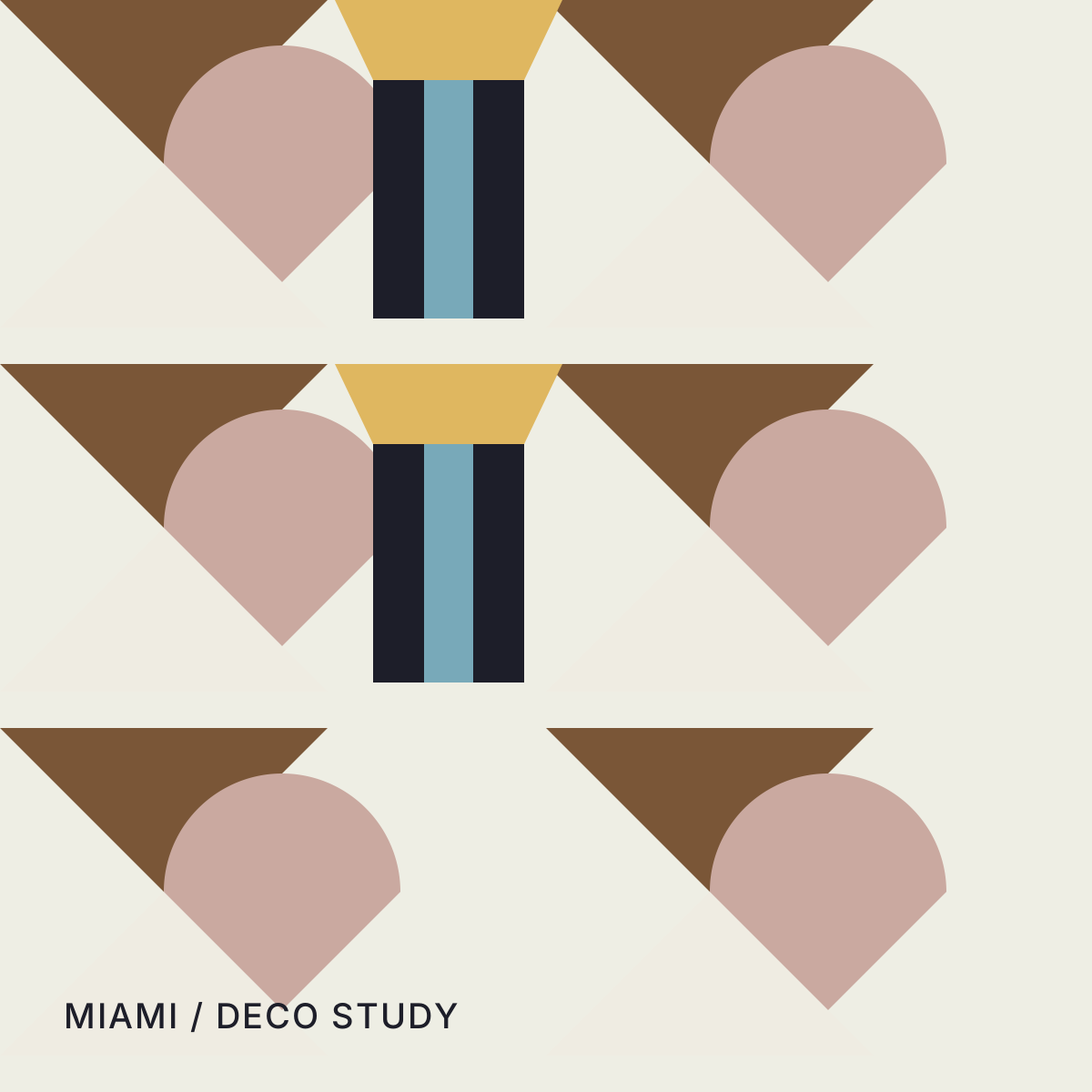
Flow candidate only: pastel facade geometry, circular plaques, central stripe, cream plane.
Start with Miami Beach's large concentration of Art Deco buildings: pastel colour, geometric forms, vertical emphasis.
The blue and black verticals can connect to Streamline Moderne bands, hotel signage, and facade strips.
The blush half-discs and cream triangles give the wall a softer tropical Deco mood without becoming beach literal.
Flow prompt candidate: "Miami Beach Art Deco facade study, pastel pink fan, cream geometry, blue racing stripe, stepped yellow verticals, flat gouache."
McAlpin facade memory is the strongest route. The print already contains the building's most useful visual hooks: cream ground, coral-pink circular forms, mint-blue vertical spine, grouped horizontal bars, and a playful symmetry that feels like a hotel facade remembered as pattern. Bacardi stays as the more surprising secondary reference if we want a Miami-modernism carousel behind the main story.
Block-built architectural repeat with tall ochre rounded arches set into cream bases and reddish-brown wall fields. Vertical stripe panels in sage, stone, cream, and very dark green interrupt the arches. The repeat is staggered and wall-like, reading as doors, arcades, shutters, awnings, or tiled architectural bands.
The Tangiers lead is strong when it is not just "Moroccan arch". The print is about arch plus stripe: medina gates, layered thresholds, striped shade, green tile, cream plaster, and brown shadowed walls. These references are for internal visual review; publication rights are not verified unless separately licensed.
Ochre arches, brown wall fields, cream bases, sage and dark green vertical stripe panels.
Real reference: white plaster arch, green tile bands, warm timber, upright threshold rhythm.
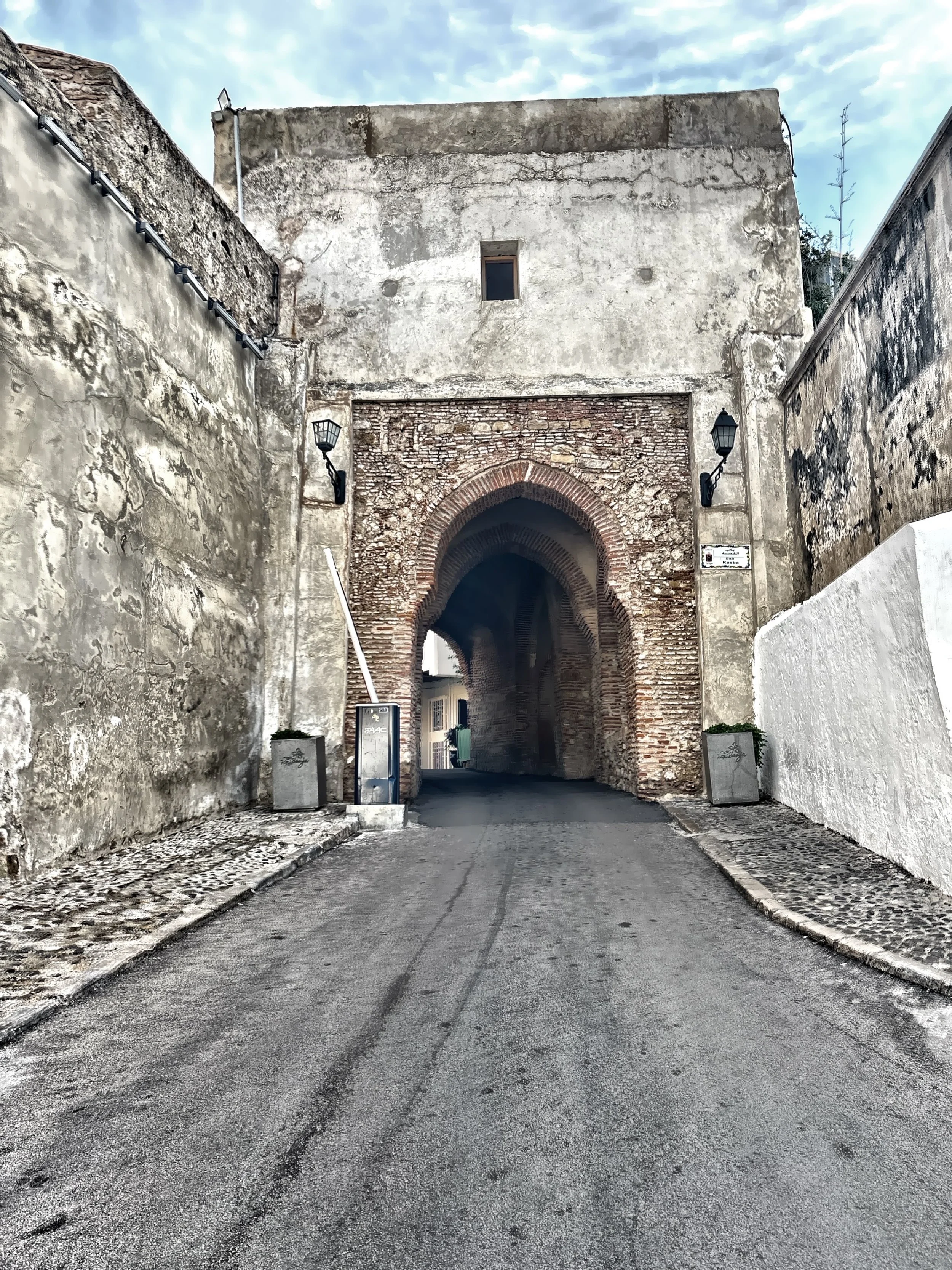
Real reference: rounded gate, ochre-brown wall mass, cream plaster, dark interior cut.
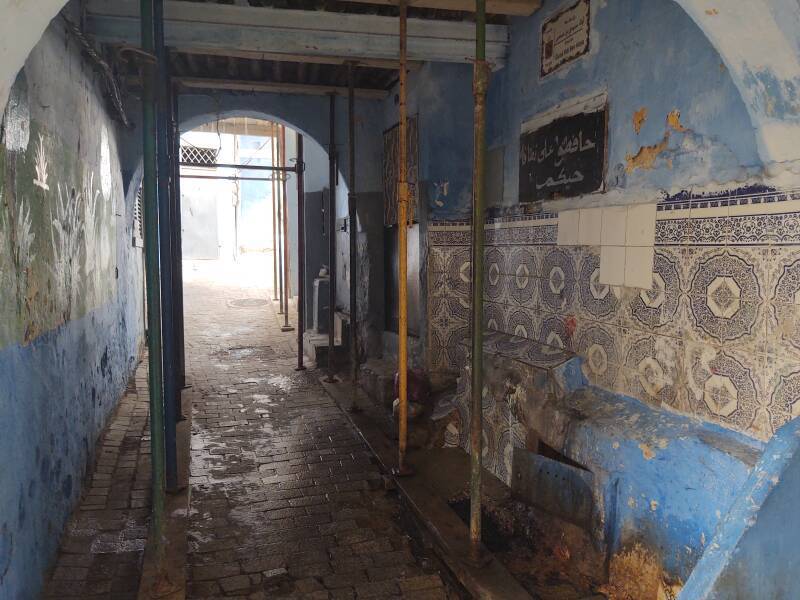
Real reference: repeated arches, tile banding, narrow uprights, shaded corridor depth.
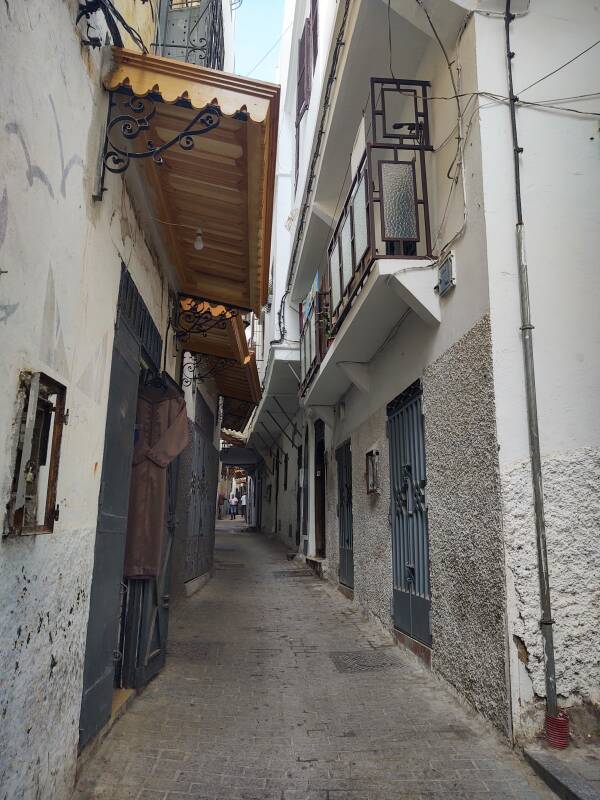
Real reference: projecting awnings, cream walls, narrow verticals, compressed street rhythm.
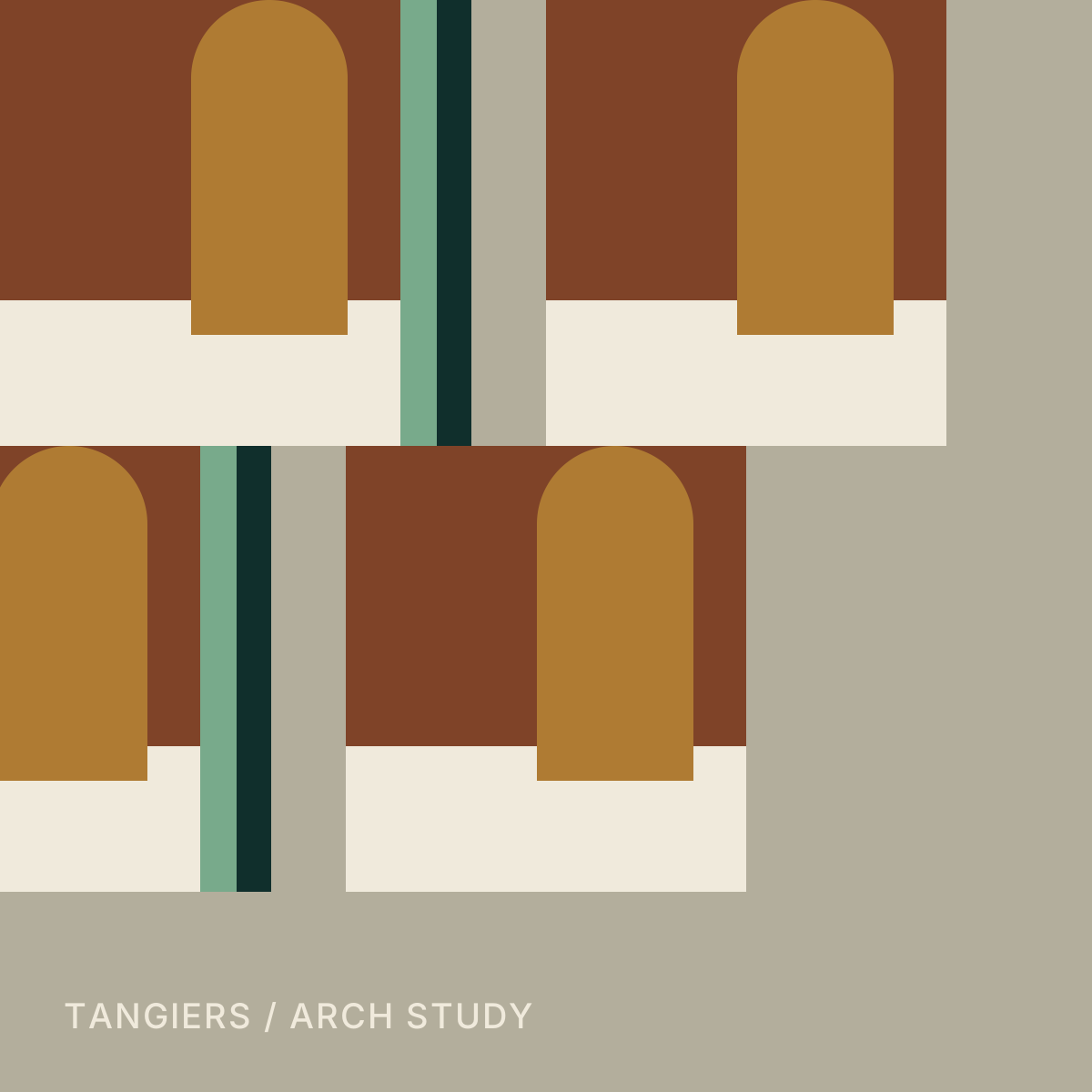
Flow candidate only: arch, striped wall panels, green tile, cream plaster, ochre wall fields.
Begin with Tangier as a city of thresholds: arches, gates, doorways, and layered entry points.
Use the green, cream, and ochre relationship through tile, plaster, mosque details, and shaded interiors.
The vertical panels can come from shutters, awnings, tiled bands, and narrow passages where light breaks into stripes.
Flow prompt candidate: "Tangier medina arch and stripe study, ochre horseshoe arches, cream plaster, green tile bands, brown walls, flat editorial drawing."
Arch and stripe threshold is the strongest lead. It gives the print a clear Tangier memory without reducing it to a generic arch: ochre thresholds, cream plaster, green tile, brown shadow, and striped shade.
Cream ground with alternating vertical totem forms. Each unit combines a deep navy rounded arch or half-disc, black rectangular side blocks, muted sage-grey vertical panels, ochre horizontal bars, blush-pink narrow inserts, cream line details, and pale taupe circles. The pattern reads as door, window, lintel, plaque, and column stacked into a repeated architectural rhythm.
The strongest Amsterdam route is not a simple De Stijl grid. The print has a warmer, more eccentric Amsterdam School logic: coloured door details, elongated windows, rounded brick-expressionist forms, and upright architectural panels. The relationship is strongest where the pattern becomes a memory of entrances and stained-glass cuts rather than a direct facade copy.
Deep rounded navy forms, sage panels, ochre lintels, blush inserts, taupe circles.
Real reference: Amsterdam School massing, rounded brick architecture, compressed window rhythm.
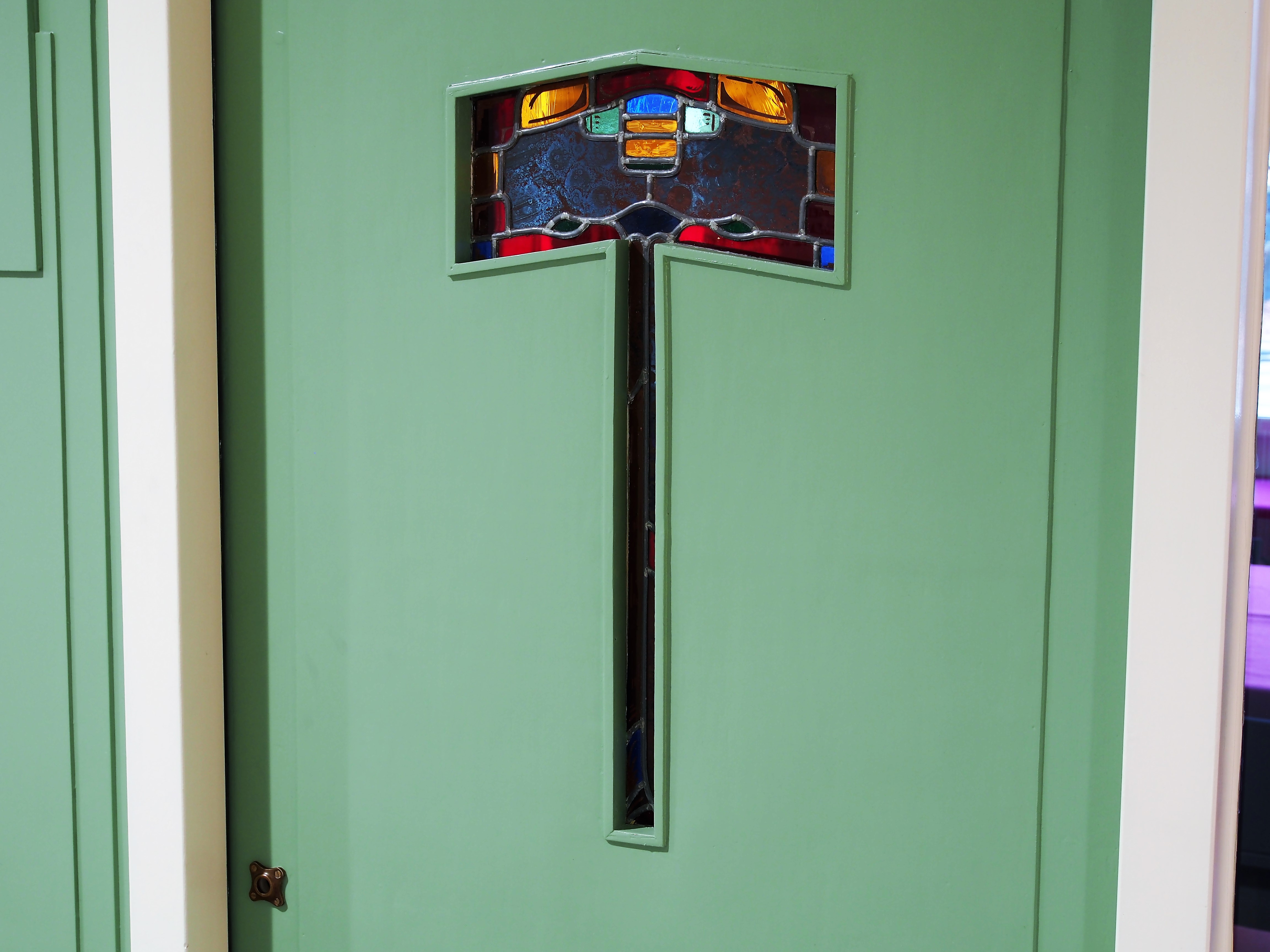
Real reference: mint-green door field, stained-glass colour blocks, narrow central vertical.
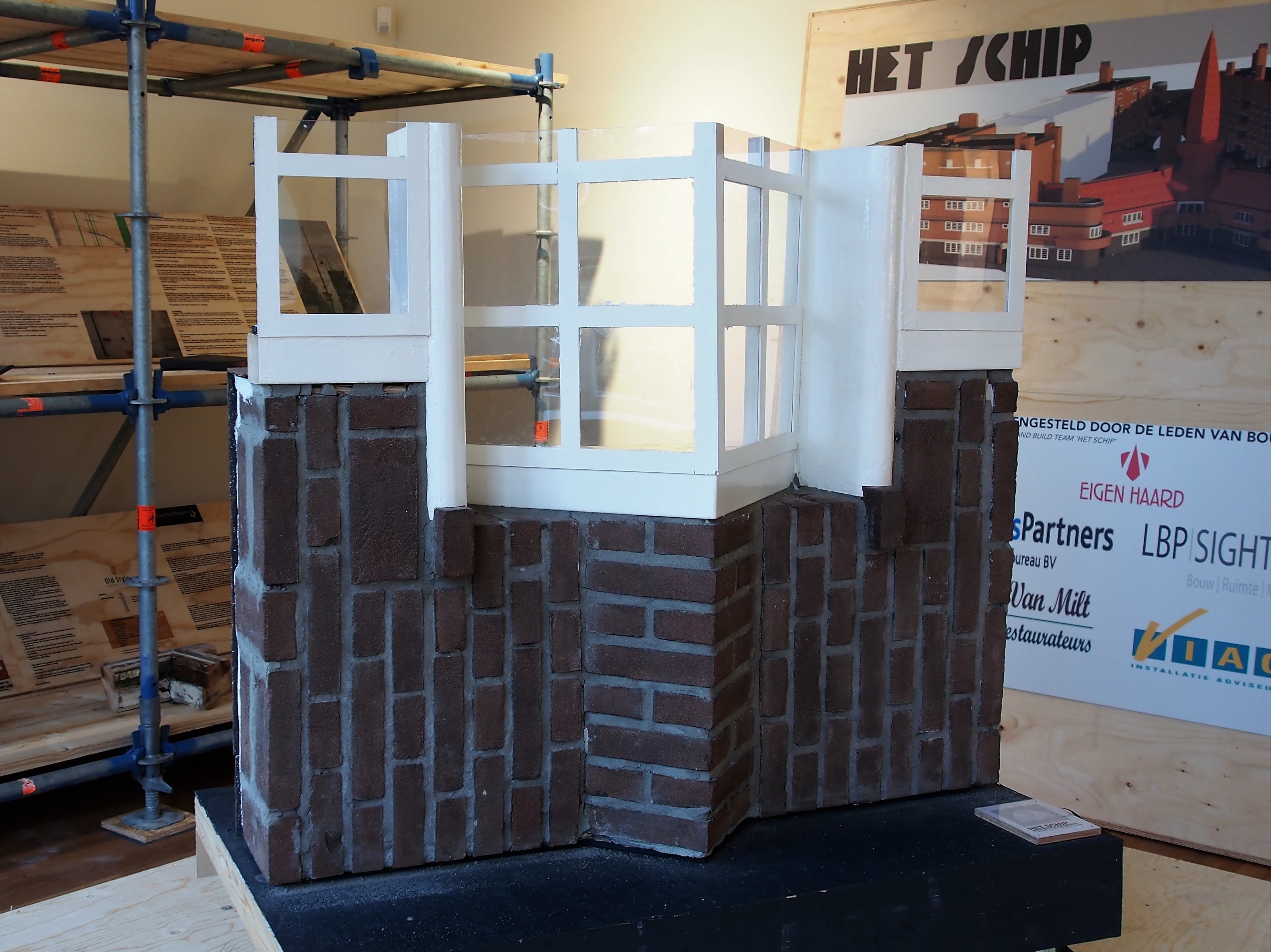
Real reference: white window frames over brick courses, vertical stacking, panelled domestic scale.
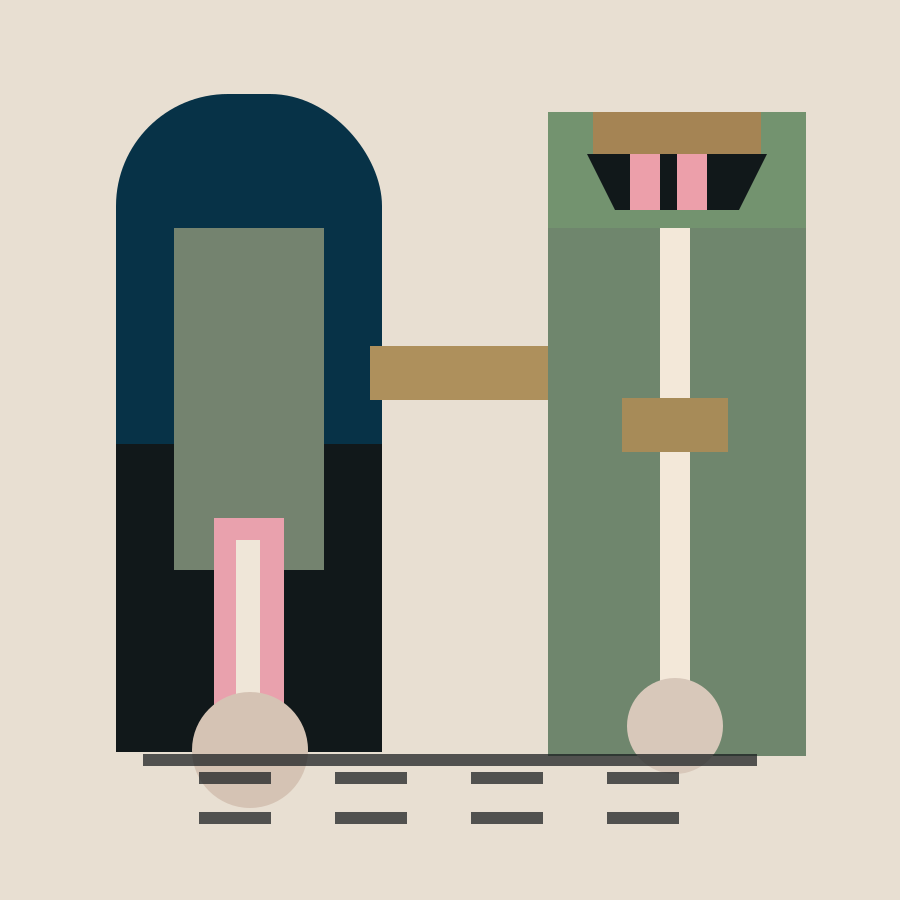
Flow candidate only: door, stained glass, rounded facade, sage panels, ochre bars.
Start with expressive brick housing, rounded corners, crafted doors, and domestic modernism with a human, handmade charge.
The blush verticals and pale lines can come from stained glass and door insets, scaled into a wall repeat.
The navy arches and taupe circles move the story away from strict modernist grid into Amsterdam's softer, idiosyncratic geometry.
Flow prompt candidate: "Amsterdam School doorway and Het Schip facade memory, rounded dark blue arch, sage door panels, pink stained glass strip, ochre brick lintel, flat gouache."
Amsterdam School doorway memory is the best lead. It gives the print a specific Amsterdam visual world without falling into canal cliche or De Stijl shorthand: rounded dark forms, sage door fields, stained-glass strips, ochre lintels, and repeated domestic thresholds.
Dark navy ground with large nested circular arcs and repeated U-shaped forms. Pale peach, cool grey, teal-blue, black, and warm brown lines wrap into overlapping loops, half-circles, and rounded channels. The design reads less like a conventional motif than a system of painted ribs, bracket curves, and roof-edge ornament folding back on itself.
The stronger Busan hook is Beomeosa rather than the Cinema Center. The dancheong under the eaves has the right kind of repetition: dark structural shadow, green-blue fields, peach and ochre bands, rounded painted brackets, and layered roof-edge rhythm. It gives the print a specific Busan source that is more surprising than film architecture and closer to the actual colour-and-line behaviour.
Overlapping circular arcs, U-shaped channels, teal-blue and peach lines on navy.
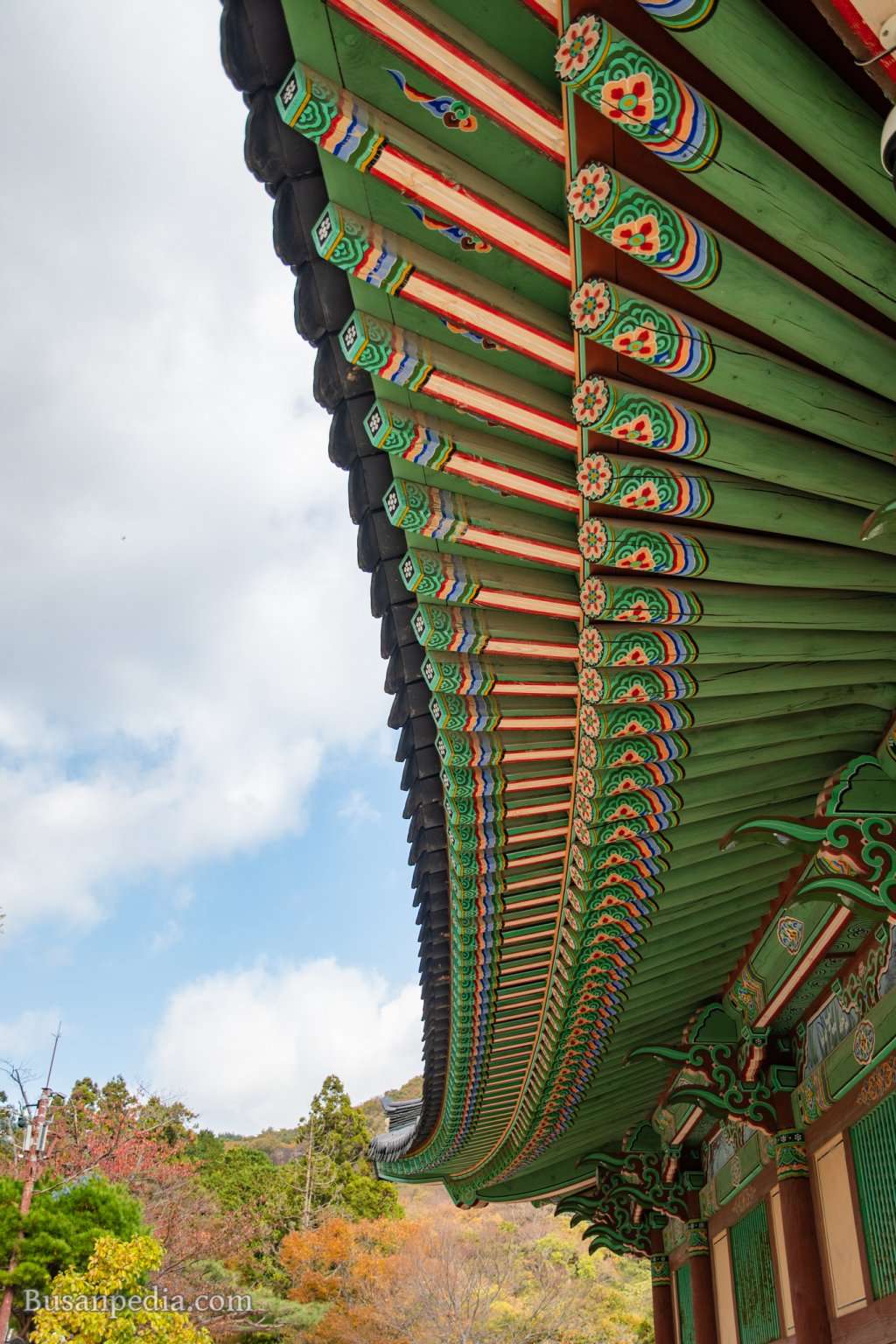
Real reference: painted eaves, green ground, peach/blue bands, repeated bracket rhythm.
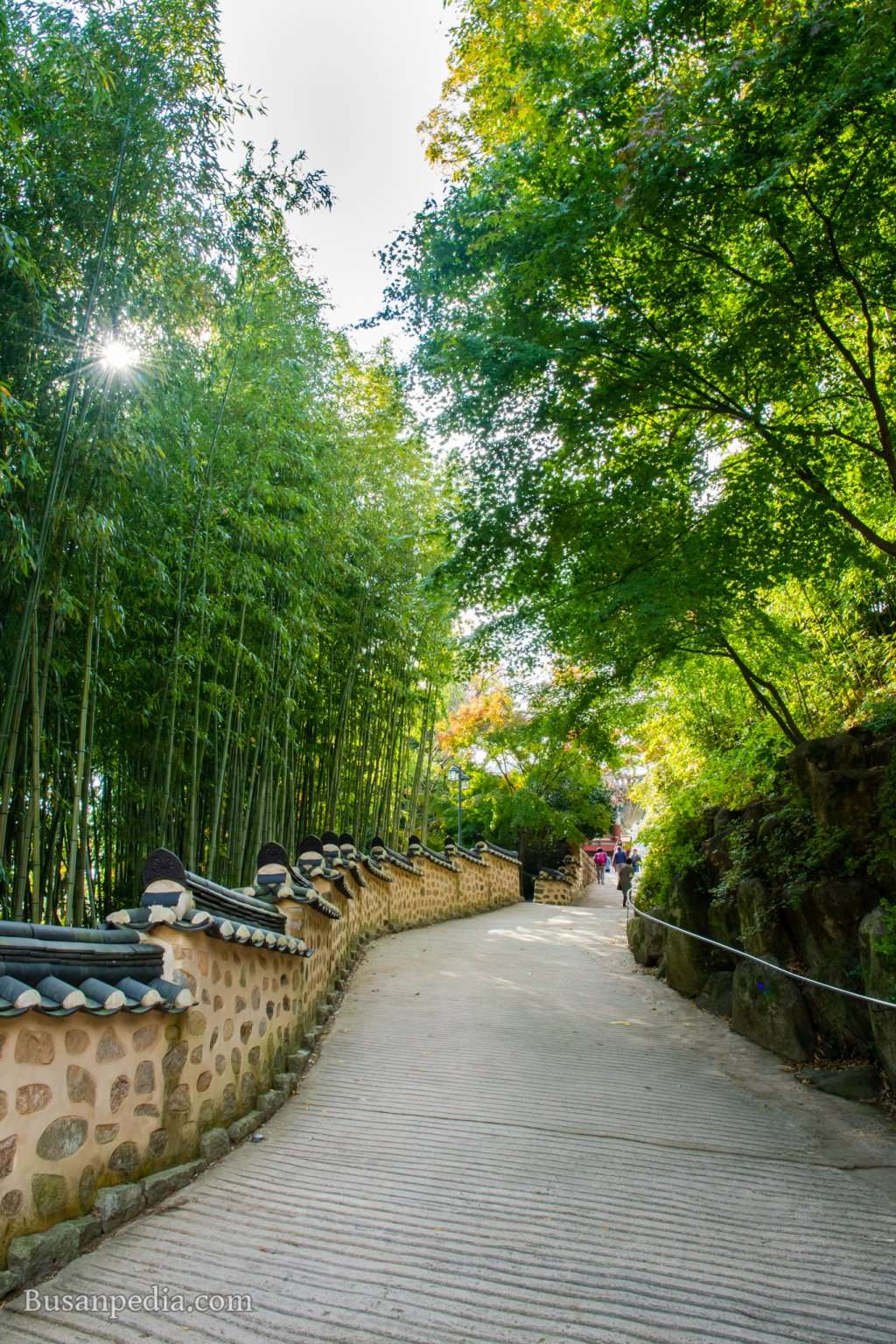
Real reference: approach, roof-tile curves, mountain setting, temple as Busan memory.
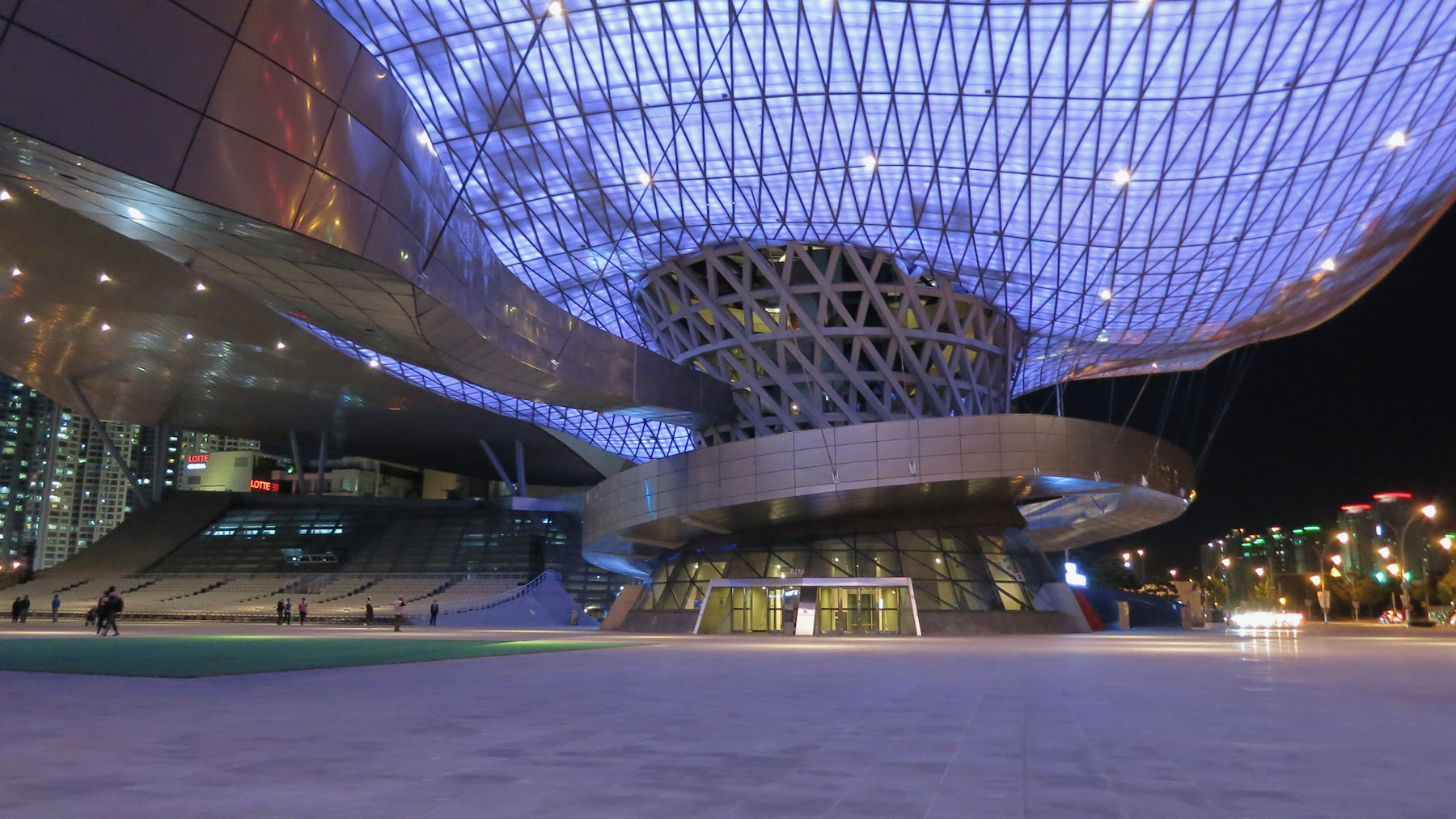
Useful secondary reference for night-blue architecture and looping public movement.

Flow candidate only: dancheong eaves translated into nested modern arcs.
Begin above the temple threshold: painted timber ribs, repeated brackets, colour bands, and dark roof shadow.
The peach, teal, grey, and brown outlines can be argued through painted beam ends and bracket patterns, not generic curves.
Beomeosa's name is tied to Geumsaem, the golden well, and a fish from the sky; this can softly support the rounded, swimming rhythm without becoming literal.
Flow prompt candidate: "Busan Beomeosa dancheong eave memory, dark navy shadow, teal painted brackets, peach and ochre line bands, nested U arcs, flat modernist wallpaper study."
Beomeosa dancheong eaves is the stronger lead. It is specific to Busan, materially rich, and visually closer to the print: repeated bracket rhythm, dark roof shadow, green-blue fields, peach bands, ochre-brown structure, and nested painted curves. Cinema Center stays as a backup if we want a contemporary Busan layer in the carousel.
Pale green-grey ground with large yellow discs and black concentric linework forming half-circles, quarter-circles, spiralling pivots, and dotted radial edges. The pattern has a clear optical structure: graphic circles sliced into moving segments, with yellow fields sliding behind dense black arcs.
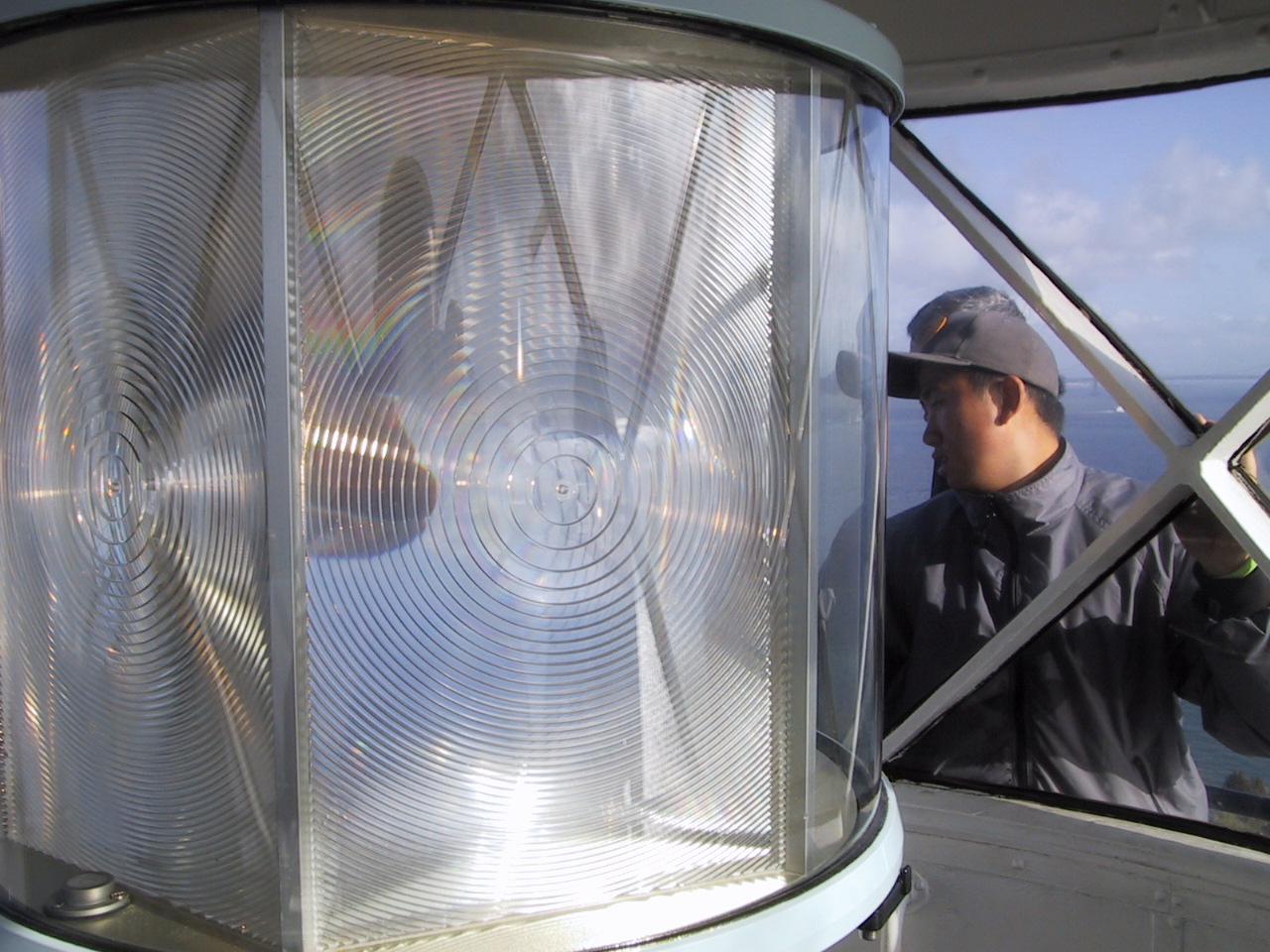
The stronger San Francisco route is optical light, not psychedelic style. The Alcatraz lighthouse Fresnel lens gives the print a real Bay object with concentric rings, radial pivots, glass arcs, yellow-white light, and a relationship to fog, water, and navigation. The poster route stays useful as a cultural backup, but the lighthouse lens is the cleaner surprise.
Yellow discs, black concentric arcs, radial pivots, dotted edges, pale green-grey ground.
Real reference: concentric glass prisms, radial light, Bay navigation, optical precision.
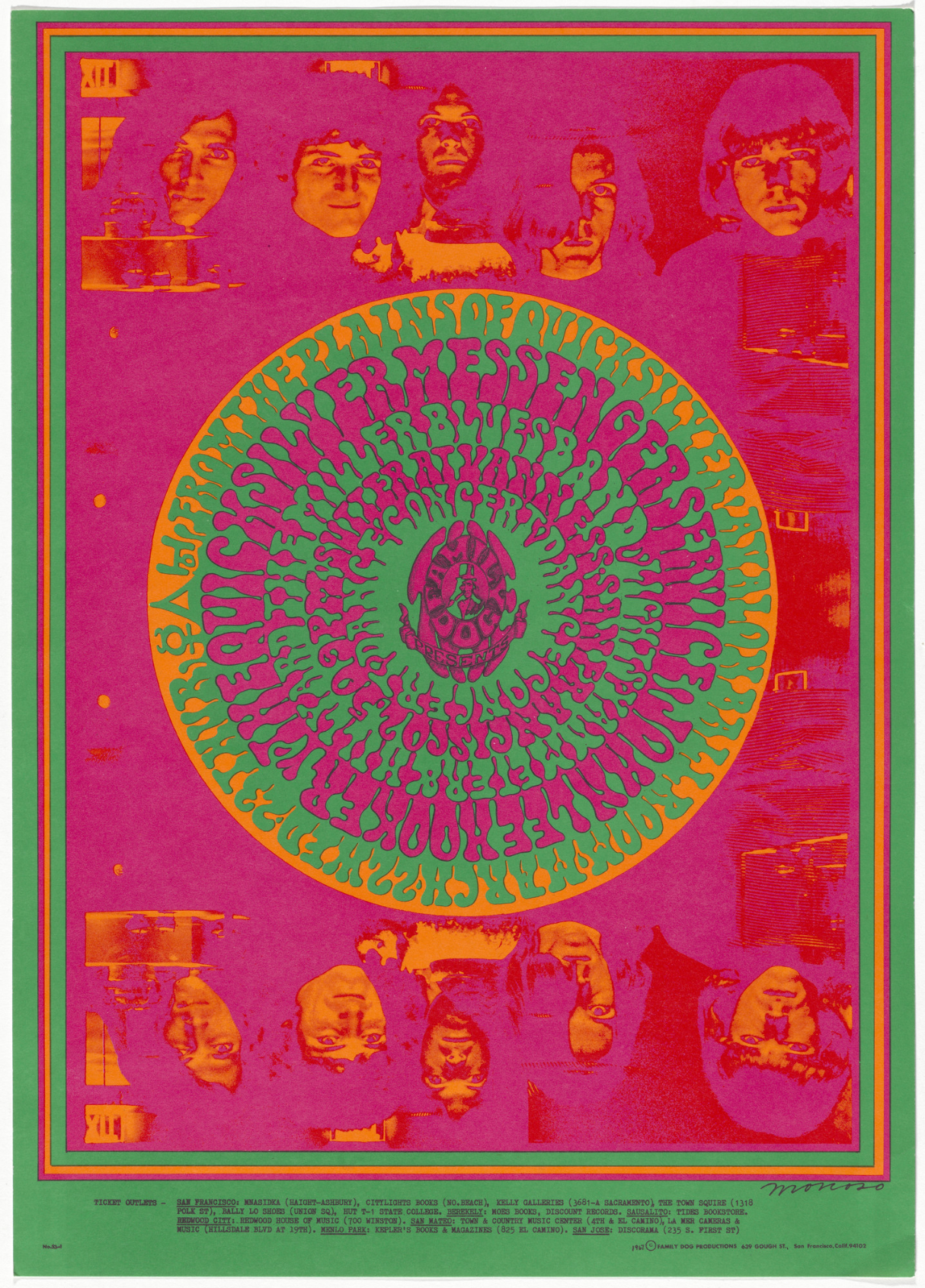
Real reference, rights not cleared: San Francisco poster culture with hypnotic circles inside circles.
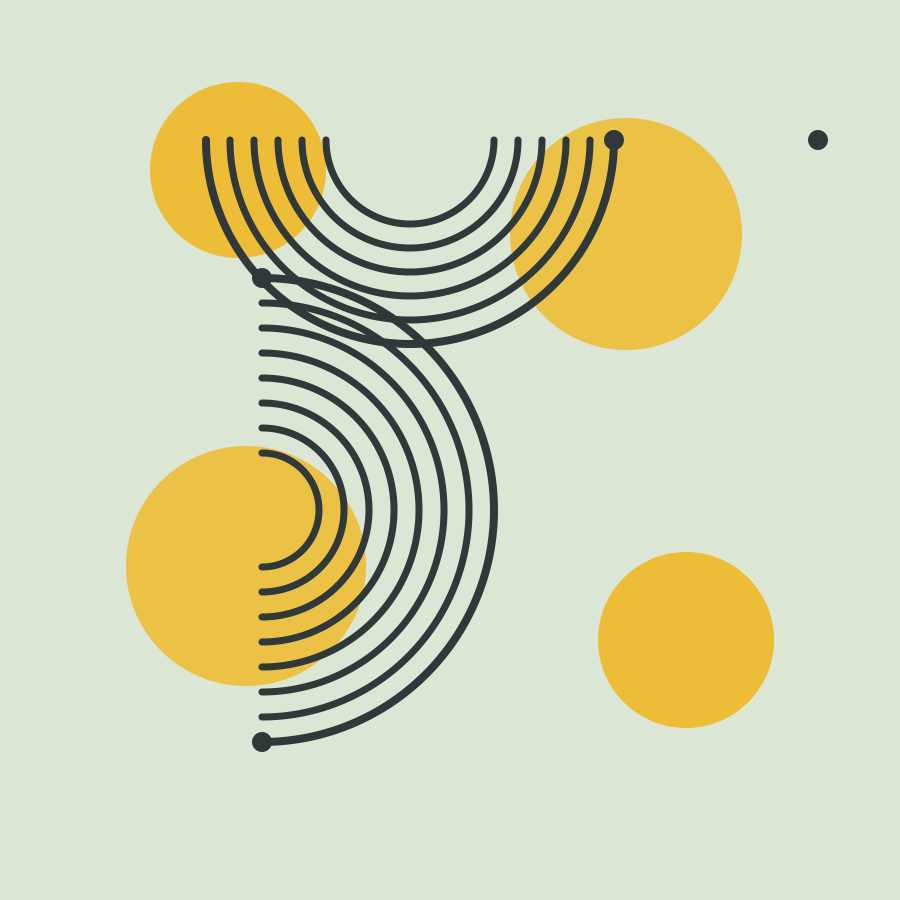
Flow candidate only: Fresnel rings, yellow light discs, optical arcs, fog-green field.
Start in the Bay: a lighthouse lens, concentric glass, fog, water, and rotating light rather than city iconography.
The wallpaper's black arcs can become simplified glass ridges and beam paths, with yellow discs as held light.
The same optical language can later pass through Avalon/Fillmore graphics, but only after the lens gives it a sharper origin.
Flow prompt candidate: "San Francisco Bay Fresnel lens origin study, Alcatraz lighthouse optics, yellow light discs, pale fog green ground, black concentric glass arcs, modernist wallpaper study."
Alcatraz Fresnel light is the stronger lead. It is more surprising, more specific, and visually clean: a San Francisco Bay object made from concentric rings, radial light, glass optics, fog, and navigation. Avalon / Moscoso stays as backup if we want to give the story a later cultural echo, but it should not be the main hook.
.jpg)

.jpg)
_-_Antwerpen_(Oeuvre_van_architect_Jules_Hofman).jpg)
,_Cogels-Osylei_46_11098.jpg)


.jpg)


